 Eski Pano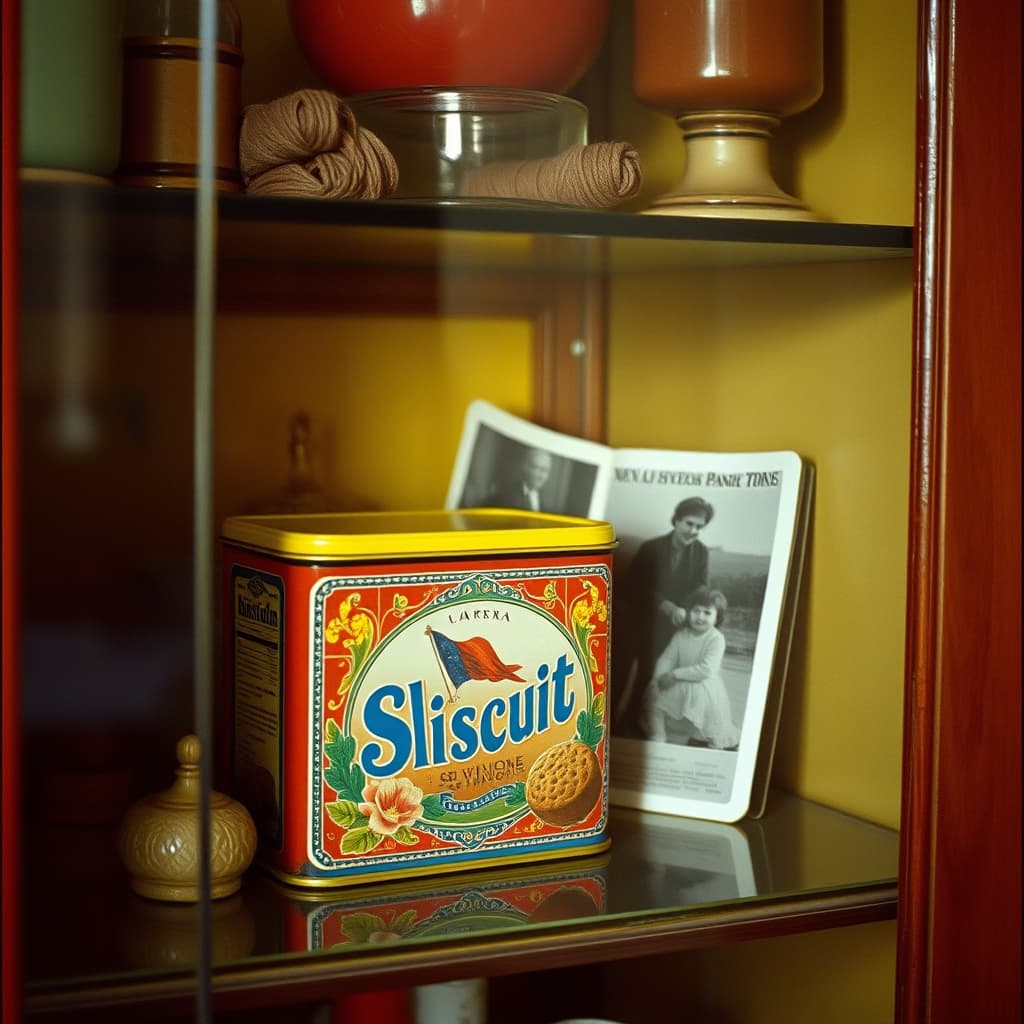
A decorative biscuit tin could remain in the household long after the last biscuit was eaten. Its printed lid gave colour to a cabinet, while the empty interior offered storage that cost nothing extra. Sewing thread, photographs, receipts, buttons or holiday sweets might replace the original contents. The tin's second life often lasted longer than its first.
Placed in a visible glass-fronted cabinet, the object sat between usefulness and display. Bright imagery suggested abundance and modern packaging, especially when branded goods were occasional purchases. Yet the family might value the box for an entirely local reason: it was brought by a relative, used during Bayram or chosen because its lid closed securely.
Printed Metal Was Designed to Travel
Tinplate protected dry food from crushing and moisture better than paper alone. Lithographed decoration turned packaging into advertising that could remain in view. Shape, hinge, rolled edge, maker's mark and printing method help date a container, but designs were sometimes reproduced across years and markets. An image that looks old is not sufficient evidence of age.
Labels in multiple languages, importer stickers and price marks can reveal distribution. Removing them to create a cleaner object destroys useful provenance. Even residue may show where a paper band once wrapped the box. Collectors should photograph every side, including base and interior, before cleaning.
Reuse Created a Private Catalogue
Households assigned tins according to size and memory. One held needles, another documents, another sugar cubes. A label might be added in handwriting, or family members simply knew the contents by the picture on the lid. This system made commercial design part of domestic organisation.
What survives inside deserves separate attention. Old medicines, sharp needles, leaking batteries or unidentified powders require safe handling. Photographs and papers should not remain in rusty or acidic containers indefinitely. Contents can be documented together while rehoused in suitable archival storage.
Condition Is History, Not a Beauty Contest
Scratches, fading and worn corners show use and display. Active rust, however, continues to damage metal. Water and aggressive abrasives can spread corrosion or remove print. A conservator can advise on dry cleaning, stabilisation and storage at moderate humidity. Closing a distorted lid by force may crack seams.
The cabinet environment could preserve colour while introducing other risks. Direct sunlight faded printing, damp encouraged rust and stacked objects scratched lids. A stable shelf liner and space around the tin reduced abrasion. Displaying the box closed protected its contents, but periodic inspection was still necessary to notice corrosion beginning along seams.
Market value depends on maker, design, scarcity, condition, demand and reliable provenance. Online asking prices do not prove rarity. Comparing verified sales and catalogues is more responsible than repeating an attractive claim. Sentimental value may be high even when monetary value is modest.
A Digital Nostalgia Archive can connect the tin to advertisements, shop records, family photographs and an inventory of its reused contents. The most revealing question is not simply which biscuits it once carried, but why the household kept it. In the cabinet's bright corner, packaging became furniture, advertisement became memory and an ordinary box became a map of small things considered too useful or meaningful to throw away.