 Eski Pano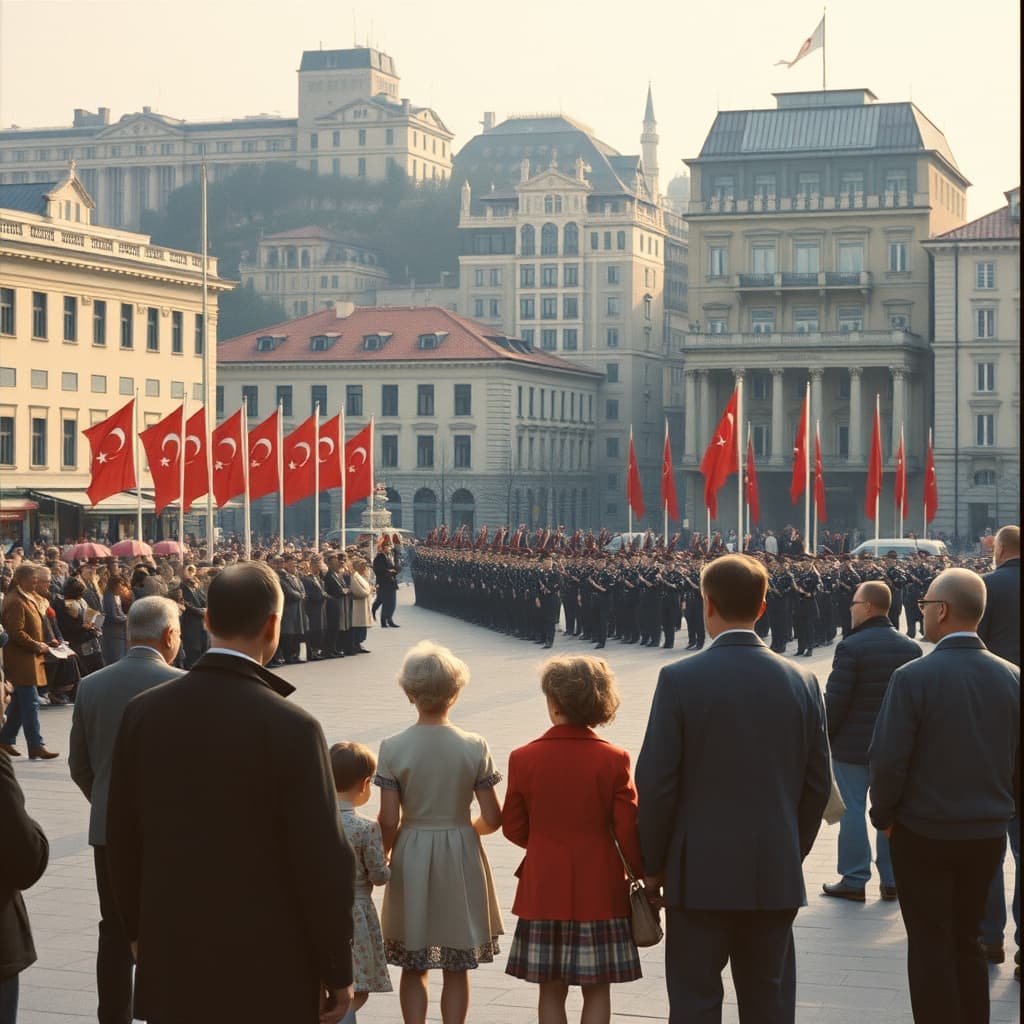
On 30 August, streets and squares across Türkiye carry a public memory formed around victory, sovereignty, and the end of a decisive military campaign. Flags appear on balconies and municipal buildings, ceremonies gather officials, veterans, families, students, and residents, and music travels along routes normally used for work. The morning feels collective because history is translated into repeated actions within the contemporary city.
The date refers to the Battle of Dumlupınar, also known in Turkish memory as the Commander-in-Chief Battle, fought on 30 August 1922 during the final phase of the Great Offensive in the Turkish War of Independence. Its military and political consequences belong within a longer chronology rather than a single isolated day. Operational records, parliamentary documents, contemporary newspapers, maps, and scholarship are necessary for precise interpretation.
Cities Gave Commemoration a Visible Form
A national date becomes local through place. Wreaths are laid at monuments, processions follow particular avenues, bands assemble near government buildings, and public transport adapts to closures. Each city develops routes and vantage points shaped by its geography and institutions. Photographs of a crowded square therefore document both national ceremony and the changing architecture, traffic, clothing, and civic life around it.
Ceremonial forms have changed across decades. Military parades, school participation, sports displays, concerts, torchlight processions, speeches, and official broadcasts have appeared with different emphasis according to period and locality. A memory from one year should not stand for every 30 August. Dated programmes, municipal minutes, radio schedules, film footage, and press photographs help reconstruct what actually occurred.
Family Memory Entered the Public Archive
Families preserved small traces: a child in ceremony clothes, a balcony flag, a handwritten programme, a veteran's photograph, a newspaper kept after the event, or a home movie of the procession. These objects connect state commemoration with individual biography. Identification should record names, location, date, photographer, and the source of information, especially when uniforms or crowds encourage confident but uncertain guesses.
Veterans' and civilians' experiences require care. Military victory involved death, injury, displacement, scarcity, separation, and lasting grief alongside national hope. Personal testimony should not be forced into one emotional register. Consent, family wishes, sensitive description, and historical context allow an archive to honour sacrifice without turning suffering into decoration or spectacle.
Celebration Also Requires Civic Care
Large public events depend on crowd management, accessible routes, emergency planning, heat protection, transport information, and respect for residents. Children, older people, disabled participants, workers on duty, and those sensitive to noise experience ceremonies differently. Fireworks, amplified sound, aircraft displays, and road closures need competent risk assessment. Public pride is strengthened, not diminished, by safe and inclusive organisation.
Flags, photographs, speeches, and recordings also have documentary lives. Fabric needs clean, dry storage without harmful folding; paper and film require stable conditions. Digital files should retain original metadata and verified captions. Images copied repeatedly online can lose date and place, allowing a photograph from another city or year to become attached to the wrong story.
Responsible commemoration distinguishes evidence from legend while recognising why symbols endure. It avoids fabricated quotations, misidentified images, and exaggerated numerical claims. It also leaves room for discussion of civic responsibility, independence, peace, and the institutions through which sovereignty is exercised. Historical respect is not served by making every detail simpler than the record permits.
A Digital Nostalgia Archive can connect official programmes, maps, medals, uniforms, family albums, oral histories, newsreels, radio recordings, transport notices, and photographs of the same square across generations. Victory Day echoes through cities because a national turning point is renewed in local space each year. Preserving that echo means holding courage and celebration together with documented history, private loss, public labour, safety, and the continuing responsibilities of citizenship.