Eski Pano
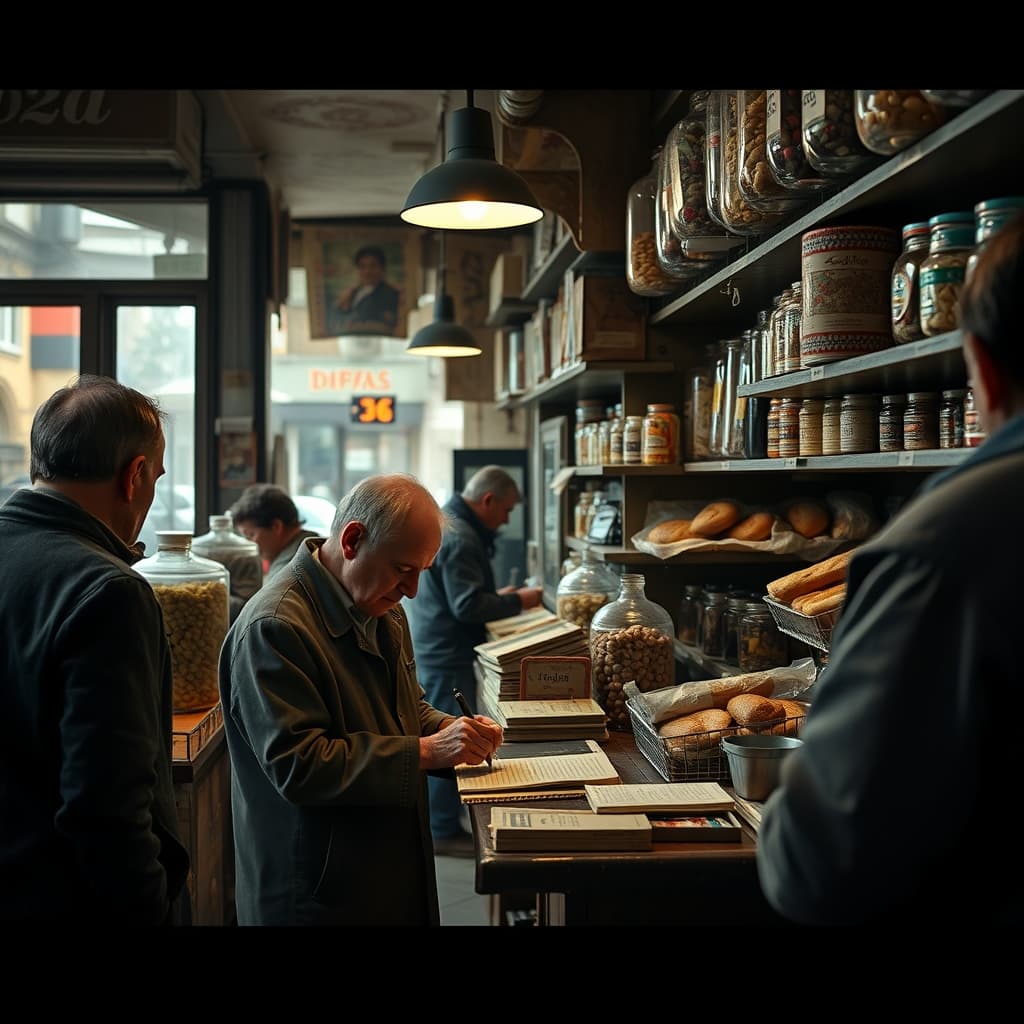
There was a time when the credit ledger in the grocer's shop was not merely a record of debts, but a daily language for the trust between people. Especially on holiday days, when the marketplace moved more slowly, the shade in front of the shop stretched longer and the conversation inside deepened. A child came in to buy bread, a mother asked for coffee and sugar to be written down for later, and the grocer calmly took the pencil from behind his ear and entered the name into the notebook. There was neither humiliation nor the hard feeling of accounting in this gesture. On the contrary, in old neighborhoods having something written on credit was the quiet expression of knowing one another, belonging to the same street, and believing that tomorrow would be as trustworthy as today.
Within neighborhood culture, the credit ledger tells more than an economic practice. It widened the relationship between shopkeeper and customer beyond a simple exchange of goods, tying it to familiarity, neighborliness, and mutual care. In old neighborhoods, shops were not just places where things were bought. They were places where news was heard, children were called by name, illness was asked about, and weddings were discussed. For that reason, every line entered into the ledger recorded not merely financial risk, but social connection. In the ease of holiday days this scene became even clearer. During hours when no one hurried, when people stayed a little longer in the shop, and when conversation mattered as much as what was purchased, trust became visible in its warmest form.
The warmth came less from the notebook's material form than from the human knowledge it contained. The grocer knew when someone would receive wages, noticed when a household had one more child, understood from the shopping list that guests had arrived, and tried not to leave anyone in difficulty. Writing on credit was therefore not a mechanical act of bookkeeping, but an extension of knowing the neighborhood person by person. The yellowing pages preserved not only numbers, but the smell of bread, the sugar bought before a holiday, the soda written down for children, and the small unspoken accommodations that were sometimes made. That was the warm scene of the old neighborhood: an economic relationship continuing without becoming harsh, while retaining its human measure.
Holiday days made that culture especially visible. Shop shutters opened a little later, steps in the street slowed down, and moments when neighbors stopped by not only for need but also for greeting created a small social theater around the ledger. While children stared at the candy jars, adults talked standing up, and the grocer weighed goods with one hand while adding a few lines to the notebook with the other. No one considered this extraordinary, because trust in that period was not a dramatic virtue but the natural infrastructure of daily life. Perhaps that is why it seems so warm to us now. Modern life often tries to build trust through contracts, applications, and digital records, whereas in those years it was often completed through a face-to-face glance.
When we look today at the trust once written into that credit ledger, we better understand why old neighborhoods are remembered as warmer. People were tied to one another not only through exchange, but through the desire to make life easier. Every name entered in the notebook was a face placed on the social map of the street. That small scene in the grocer's shop, unfolding within the softness of a holiday day, reveals a culture capable of keeping the economic side of neighborliness within human proportion. The warmth of old neighborhoods comes partly from this: from the ability of accounting and mercy, need and dignity, to stand side by side on the same page. That is why the credit ledger remains not only an object from the past, but a neighborhood memory in which trust became visible in writing.
Why the Trust Written into the Credit Ledger in the Ease of Holiday Days Was the Warmest Scene of Old Neighborhoods