Eski Pano
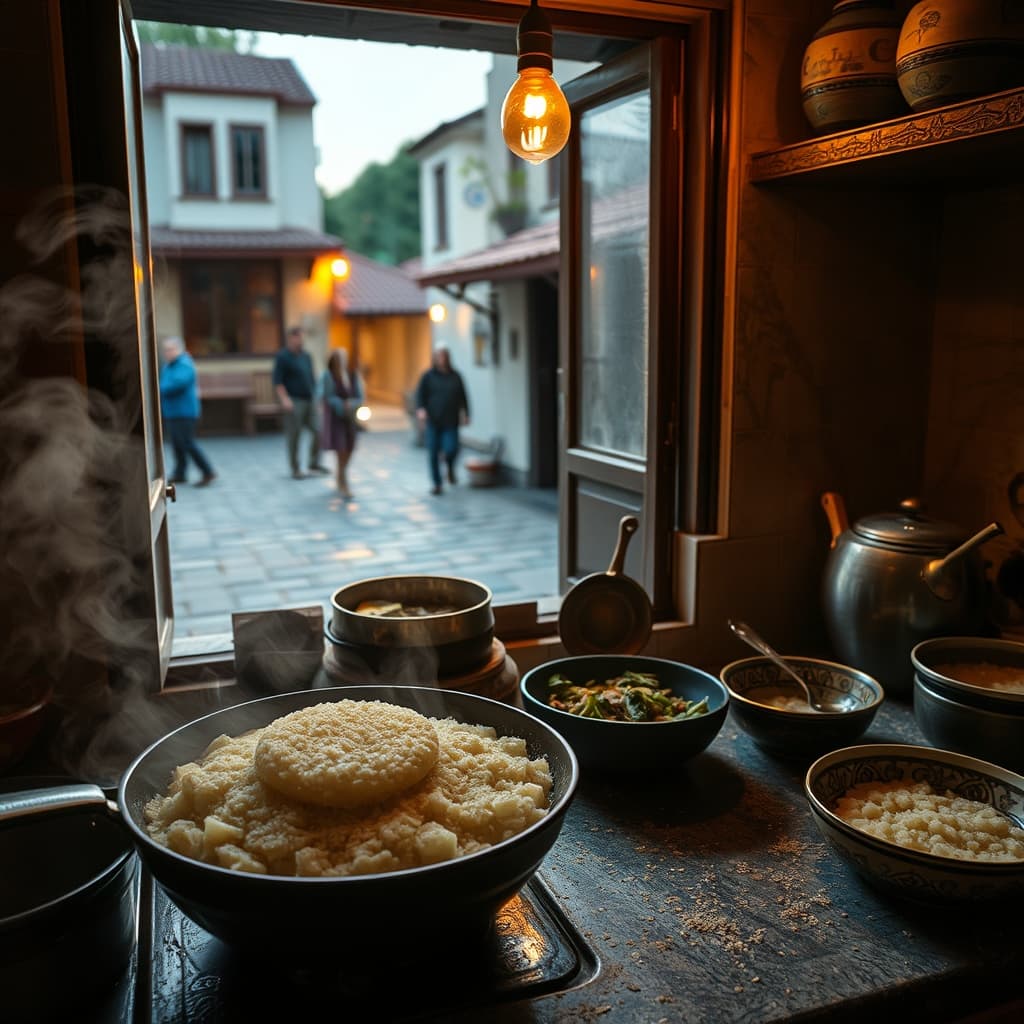
There was a time when semolina halva was anticipated not only as a dessert, but as the scent that gathered the whole house together. The sound of semolina roasting slowly in butter rose out of the kitchen, and the warm fragrance that followed moved through every room, reaching even the stone pavements outside if a window stood open. Before the dish ever reached the table, that aroma created an expectation inside the home. Children came into the kitchen to ask how much longer it would take, adults discussed the consistency of the syrup, and the sound of spoons being prepared began early. On summer evenings the scent felt even more distinct. While the street outside continued in its quiet flow, the warmth made of roasted semolina, butter, and sometimes pine nuts gathered the atmosphere of the house into a single memory.
From the perspective of taste memory, old-style semolina halva is one of those foods capable of building a strong emotional field out of simple ingredients. It is prepared with semolina, fat, sugar, and water or milk, yet the flavor that emerges belongs not only to the recipe, but to the family rhythm surrounding it. In older kitchens, halva was rarely made without meaning. Sometimes it was prepared for guests, sometimes to accompany an evening gathering, and sometimes for no special reason except to bring calm into the home. The semolina roasting patiently in the pot made the labor of the kitchen visible, and its smell turned the dish into a shared experience before it even reached the table. That is why, while halva was cooking, the household was not merely preparing food, but also preparing an evening that would later be remembered.
The strength of that old scent memory comes from the way it erased the boundaries between the kitchen and the rest of the house. Someone sewing in one room, someone else listening softly to the radio in the living room, another person gathering laundry from the balcony, all were tied to the same moment by the smell of semolina halva. For that reason, childhood memories often preserve the dessert not only through its taste, but through the way it spread through the entire house. As a silent summer evening moved along the stone pavements outside, the smell slipping from the half-open window could even tell the neighborhood what was being cooked. A neighbor calling out, "Did you make halva?" was one of the warmest examples of the social life that kitchen aromas created. Food thereby formed a ring of memory that included not only the family, but the street.
One reason the whole house seemed to fill when semolina halva reached the table lies in the ceremonial simplicity of the serving moment. No elaborate presentation was needed. It was usually set out on plain plates, sometimes without ice cream, accompanied only by tea or evening conversation. Yet because everyone already knew the scent, a sense of togetherness had formed before the dessert was even served. Someone lifted the spoon immediately, someone else waited for it to cool, one person spoke of a holiday from childhood, another remembered a mother's version of the dish. In that way, semolina halva became not only a dessert that satisfied hunger, but also a conversational ground linking generations. The spread of the aroma was an emotional invitation that arrived before the taste itself.
When we look back today, it is easy to understand why old-style semolina halva remains so deeply remembered. Some foods leave traces not only on the palate, but on the walls of the house, the curtains, the open window, and the quiet of the evening. Semolina halva is in this sense a complete domestic memory dish. The mingling of a summer evening advancing along stone pavements with the scent rising from the pot inside creates one of the simplest yet strongest scenes of the past. When we remember that smell today, we are recalling far more than a recipe. We are calling back family, anticipation, kitchen labor, and the old peace of a home briefly united around a single warm fragrance.
Why the Whole House Filled with the Same Scent When Old-Style Semolina Halva Reached the Table, Blending into a Silent Summer Evening Along the Stone Pavements