Eski Pano
There was once a different sound to Sunday mornings. Before the neighborhood had fully awakened, cool air mixed with the scent of linden drifted through half-open windows, and the smell of newly baked bread from a distant bakery joined the call of the simit seller moving down the street. One of the clearest signs of those mornings was the unhurried preparation inside the home. The cleanest shirt was ironed, children's hair was combed without rush, tea was finished without lingering too long at the table, and then the idea of going to the park as a family entered the day as if it were not a grand plan but the natural rhythm of the week itself. Mornings that made people open the windows announced not only fine weather, but the inner ease of hours that would be spent together outdoors.
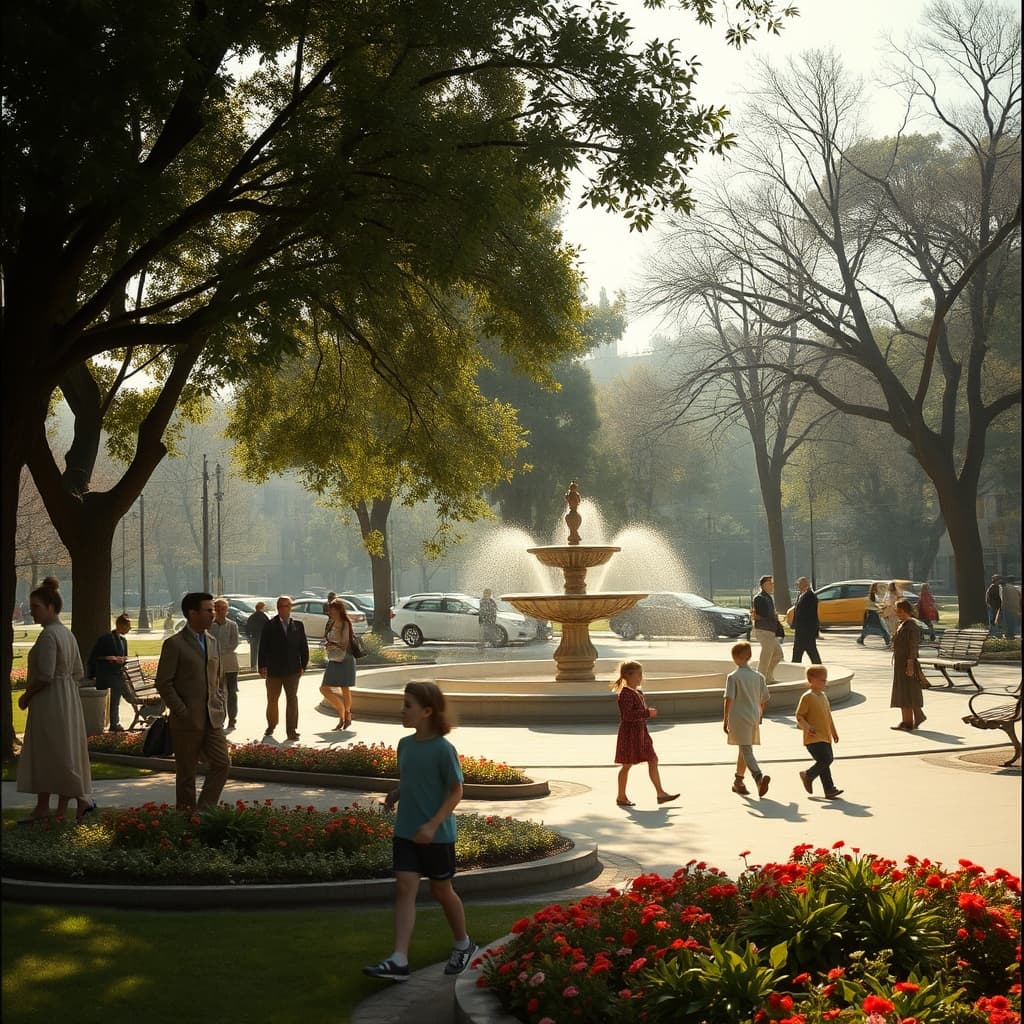
Seen in the trail of time, the way city parks turned into family outings on Sundays describes one of the gentlest public habits of urban life. Especially in the growing cities after the 1950s, municipal parks with ornamental pools, walking paths, benches, flowerbeds, and small playgrounds became not merely green areas, but shared spaces that quietly taught people how to inhabit the city together. Old newspapers often mentioned Sunday promenades, park concerts, families visiting these places to take photographs, and the small joys children found inside them. That was no accident. The park was the most graceful way of touching city life without shutting oneself indoors. It was a place to rest, but also a place to be seen, to greet others, to walk children about, and to carry the week with a little more lightness.
What gave these outings such a deep place in memory was not any single grand event, but their small details. Sometimes the sound of the iron gate at the entrance, sometimes the metallic note of a soda bottle being opened, sometimes the footsteps echoing on gravel paths were enough to summon an entire era. Children walked with their eyes on the balloon seller, mothers settled onto benches and watched the surroundings, fathers draped a jacket over one arm and moved slowly near the fountain. Having a photograph taken beneath the shade trees was itself a Sunday ritual. The sunflower seeds, wafer sheets, or seasonal lemonade sold inside the park were not only accompaniments to the outing, but details that sealed memory through taste. That is why the city park was more than a playground for childhood; it was also a visible stage for family life in adulthood.
The reason those window-opening mornings left such a mark on urban memory was also that Sunday changed the weekly sense of time. In homes ruled during the week by work, school, and hurry, Sunday morning was lived more broadly, more slowly, and with more breath. Going to the park meant not only getting fresh air, but stepping out of the repetitive order of the house and joining the calmer side of public life. People read a city's manners in one another's clothes, in the way they walked, in the patient care they showed their children. For that reason, city parks mattered not only as green spaces, but as carriers of etiquette, leisure, and shared civic culture. What warmed a generation's heart may have been exactly this: family hours that could remain peaceful even within a crowd.
When we think of those Sundays today, what first returns is often not the park itself, but the feeling that began indoors, moved into the street, and stretched onward into shaded paths. The morning entering through open windows, the scent of ironing, the unhurried dressing, the few hours spent in the park, and the sweet tiredness of returning home are remembered as the pieces that made urban life of that period warm and human. City parks hold so deep a place in memory because they were not only places for a stroll, but stages where calm happiness passed from one generation to another. Those window-opening mornings remind us today that a good city life is sometimes hidden in the most unassuming habits.
On Sundays When City Parks Turned into Family Outings in Days That Warmed a Generation's Heart: How Did Window-Opening Mornings Leave Such a Deep Mark on Urban Memory?