Eski Pano
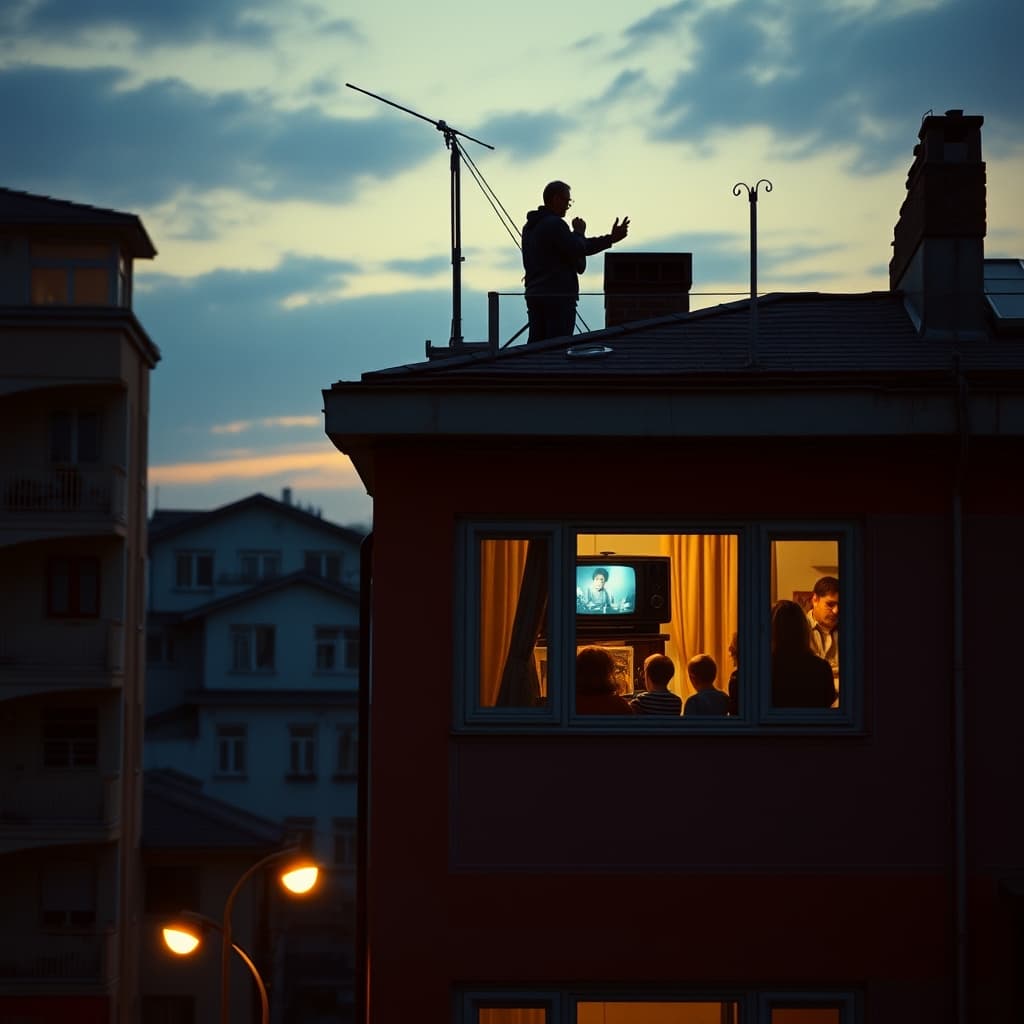
There was a time when the most exciting moment of evening began with turning the antenna fixed to the roof or the balcony railing slightly to the left or right. A voice from inside calling out "a little more" guided the hands outside, and when the picture sharpened or the radio static weakened, a small sense of victory rose inside the house. In those years that may well be called typewriter days, technology was not invisible and seamless as it is today. It asked for effort, demanded contact, and had to be persuaded with patience. For the child finishing a game beneath the street lamp and for the adults inside waiting for the evening news, adjusting the antenna was never just a technical task. It was a ritual of waiting, hope, and family members tying themselves to the same moment.
As a piece of technological heritage, this habit reveals one of the clearest scenes of domestic engineering in the analog age. The signal received by a radio or television changed according to the direction of the street, the height of the building, the weather, and the delicate angle of the antenna. Using technology therefore meant more than touching a set of buttons; it became a small problem solved collectively by the household. Old newspapers did not mention antenna sales, rooftop repairs, broadcast hours, and picture quality by chance. Receiving a broadcast was not merely consuming content, but a visible practice of joining modern life. One person called out from the window, one watched the screen in the sitting room, and another climbed to the roof to change the direction. Technology almost created a shared language of coordination inside the family.
The deeper reason this scene was never forgotten lies not in its technical difficulty, but in its emotional intensity. When the evening news was about to begin, it was no coincidence that many homes in the neighborhood were caught in the same mild urgency. In one house people waited for a football match, in another for the program of a beloved singer, and in another they tuned the radio to hear voices arriving from faraway cities. As the antenna made the signal clearer, it was not only the image that opened, but also the world entering the house. For children, this moment marked the curious edge from which they watched the seriousness of adults indoors. The child still playing hopscotch under the street lamp or waiting at the curb knew that the call to come home was near, yet the minutes spent dealing with the antenna suspended the whole neighborhood evening in a special kind of time.
The phrase typewriter days is not misplaced here, because the spirit of those years lived in the common patience of keyed and mechanical worlds. Just as writing on a typewriter left the trace of each strike permanently on paper, turning the antenna transformed a scattered signal in the air into a meaningful image or sound inside the home. In both, the human hand did not withdraw but remained the main force shaping the result. That is why the bond formed with analog devices became more personal, more laboring, and more memorable. When technology is imperfect, people move closer to it, spend more time with it, and experience its small successes as larger joys.
When we think today of those moments of antenna adjustment, what we remember is not only distorted pictures or crackling sound. What remains is the shared concentration inside a house, the rush to catch a broadcast, the neighborhood evening carried indoors, and the feeling of waiting at the edge of childhood. The hope that became clearer as the antenna turned, beneath the lengthening shadows of the street lamp, shows one of the most human faces of our older relationship with technology. That is why the habit was never forgotten: it told a story less about the device than about the people waiting together.
Typewriter Days: Why Was a Habit That Grew with Hope Becoming Clearer as We Turned the Antenna Never Forgotten, as If Waiting at the Edge of Childhood Beneath the Street Lamp?