Eski Pano
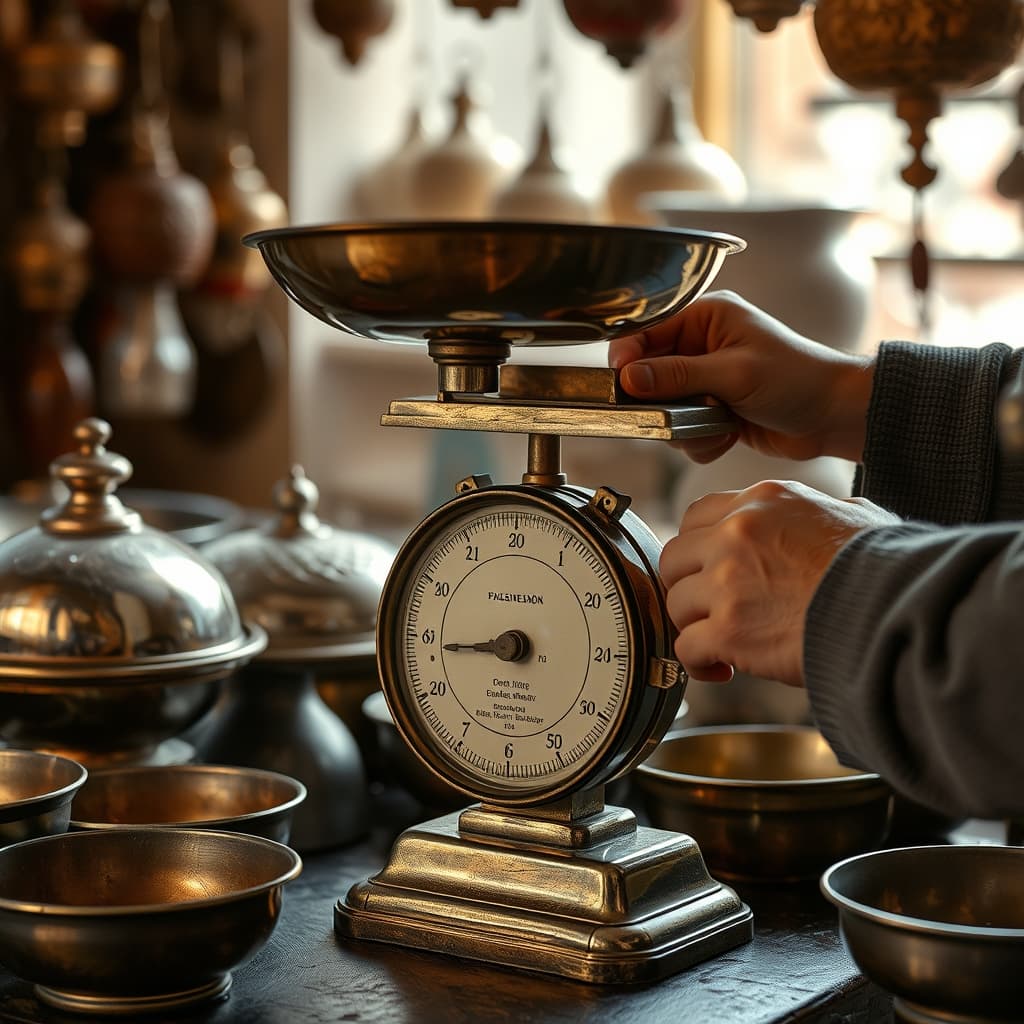
There was a time when the old scale standing in a corner of a shop or a house was not merely a measuring device, but a quiet object representing the order of daily life. With its brass pans, fine needle, wooden body, or metal tray, it gave seriousness to the place where it stood. As holiday cleaning approached, it was taken down from the shelf, wiped with care, its darkened face polished with ash-colored cloths, and placed once again where it could be seen. That polishing was not done only for cleanliness. It was also considered necessary to honor the object, to show respect for labor, and to present a sense of order to guests entering the home. The surface of the scale shining again in the light reminded people that well-made things do not fade through time alone, but through neglect.
Within the stories of objects, the old scale matters as much for design and discipline as for use. Unlike today's fast and nearly invisible measuring devices, it did not hide how it worked. The placing of weights one by one, the balancing of the pans, the slow centering of the needle all revealed both its mechanical intelligence and its demand for patience. In old groceries, herb shops, dry-goods stores, or household kitchens, the use of such a scale also showed that measuring was not only about quantity, but about correctness. Bringing it forward again during holiday cleaning was part of a family's or a shopkeeper's wish to make their sense of order visible. A cleaned scale restored not only brightness to a house or store, but trust.
The reason this object still carries traces of craftsmanship and patience lies in the material understanding of the era in which it was made. Thick metal, balanced mechanisms, hand-finished small parts, and a logic built for decades of use lift the scale beyond being an ordinary household item. The hands that cleaned it respected that structure as well. They did not strike the pans harshly, bend the needle, or try to make the brass shine at the cost of its character. Children often watched the cleaning with curiosity and learned from their elders why the scale deserved care. This scene, seen in homes and shops before the holiday, shows how instructive the relationship with objects once was. The attention given to the object was in fact an extension of the attention given to work itself and to the measure of life.
The marks remaining on the face of an old scale are signs not only of use, but of a memory left by generations. In one case there may be the trace of a grocer weighing sugar, rice, and coffee for years; in another, the care of a mother measuring ingredients for jam in the kitchen. During holiday cleaning, those marks are not erased entirely, but gently illuminated. The aim is not to make the object look new, but to carry its past into the present with dignity. Part of the value of old objects comes exactly from this quality: time passes over them, yet they preserve both their function and their character. The scale therefore remains not only a nostalgic image, but a concrete reminder of work ethic and the sense of proper measure.
It is not difficult to see today why the old scale still feels compelling in a world ruled by the speed of digital displays. The object tells us that accuracy belongs not only to the result, but to the process. Its face shining again during holiday cleaning reminds us that in earlier times objects, like people, were treated with regard, and maintenance was not a burden but a cultural habit. Craftsmanship lives in the hands that made it, patience in the person who used and polished it. That is why, when we look at the old scale, we do not see only an object. We see the quiet ethic of measured living, of doing work properly, and of carrying a labor-shaped thing from one generation to the next.
The Old Scale and Its Surface Shining Again in Holiday Cleaning: Why Does It Still Carry the Trace of Craftsmanship and Patience?