 Eski Pano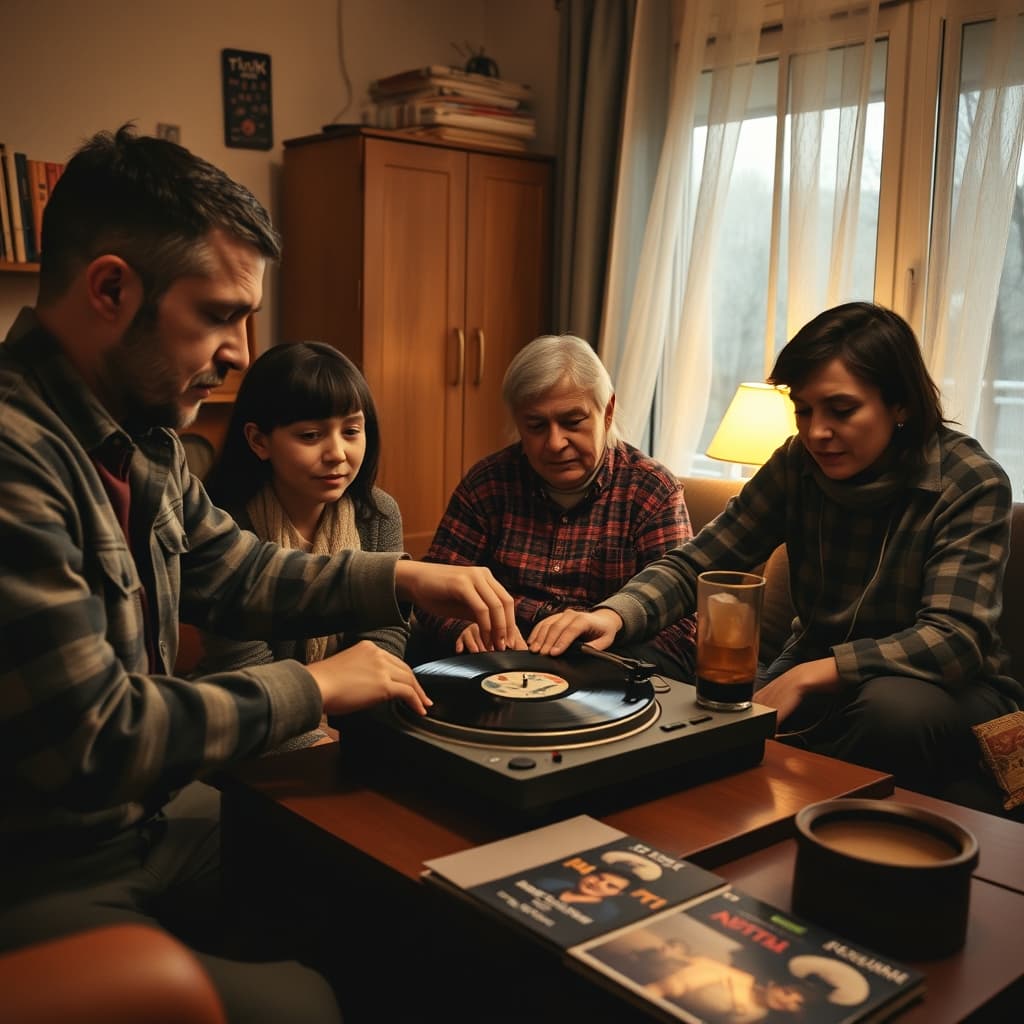
A turntable evening began with a choice that everyone could see. Someone approached the record shelf, read the spines, removed a sleeve and carried the disc by its edges. The room did not fill with sound immediately. The lid was opened, the record placed on the platter and the stylus lowered with a care that made the first faint crackle part of the event. Family attention gathered during those seconds of preparation.
The machine organised listening through physical sequence. A record had sides, tracks and a limited uninterrupted duration. The listener could not move casually through an endless catalogue. Selecting one album meant postponing another, and the choice might be negotiated among several people. An older family member controlled the equipment while a child watched; later, permission to turn the record could mark growing trust.
Lowering The Stylus Asked For A Steady Hand
The stylus was both small and consequential. Dropping it roughly could harm the groove or equipment, while dust produced noise and wear. Owners learned to clean records, check the needle and keep the player level. These routines varied with the quality and design of the machine, so a single technical procedure should not be presented as universal. What remained common was the understanding that sound depended on contact between delicate parts.
Listening together did not always mean silence. People identified musicians, remembered where a record had been bought or talked through a familiar passage. At other times, a favourite performance quieted the room. The turntable's position in the salon mattered: close enough to operate, stable enough to avoid vibration and visible enough to become part of the furniture. Its speakers shaped where listeners sat and how loudly music travelled into neighbouring rooms.
Turning The Record Divided The Evening
The end of a side created an interval. Conversation returned, tea could be refreshed and someone stood to lift the arm, turn the disc and begin again. This interruption was not necessarily a flaw. It gave the album a structure that the body had to acknowledge. The person responsible for the turn became briefly responsible for the room's continuation.
Records also demanded storage. Sleeves protected surfaces from dust and abrasion; upright shelving reduced pressure and warping. Heat and sunlight threatened vinyl. Repairs belonged mostly to the machine rather than the record: belts, wiring, motors, switches and audio connections could lead to a specialist workshop. A repaired player extended the life not only of an appliance but of the household's existing collection.
Digital music makes vast catalogues available without a stylus or side change, while turntables have returned for collectors and new listeners. Their current appeal should not blur the earlier domestic context. For a Digital Nostalgia Archive, the turntable matters because it turned listening into visible coordination. One person chose, another waited, someone handled the fragile disc and everyone heard the result at the same speed. The ritual endured in memory because the music arrived together with responsibility, pause and the quiet excitement of a room agreeing to share one record.