 Eski Pano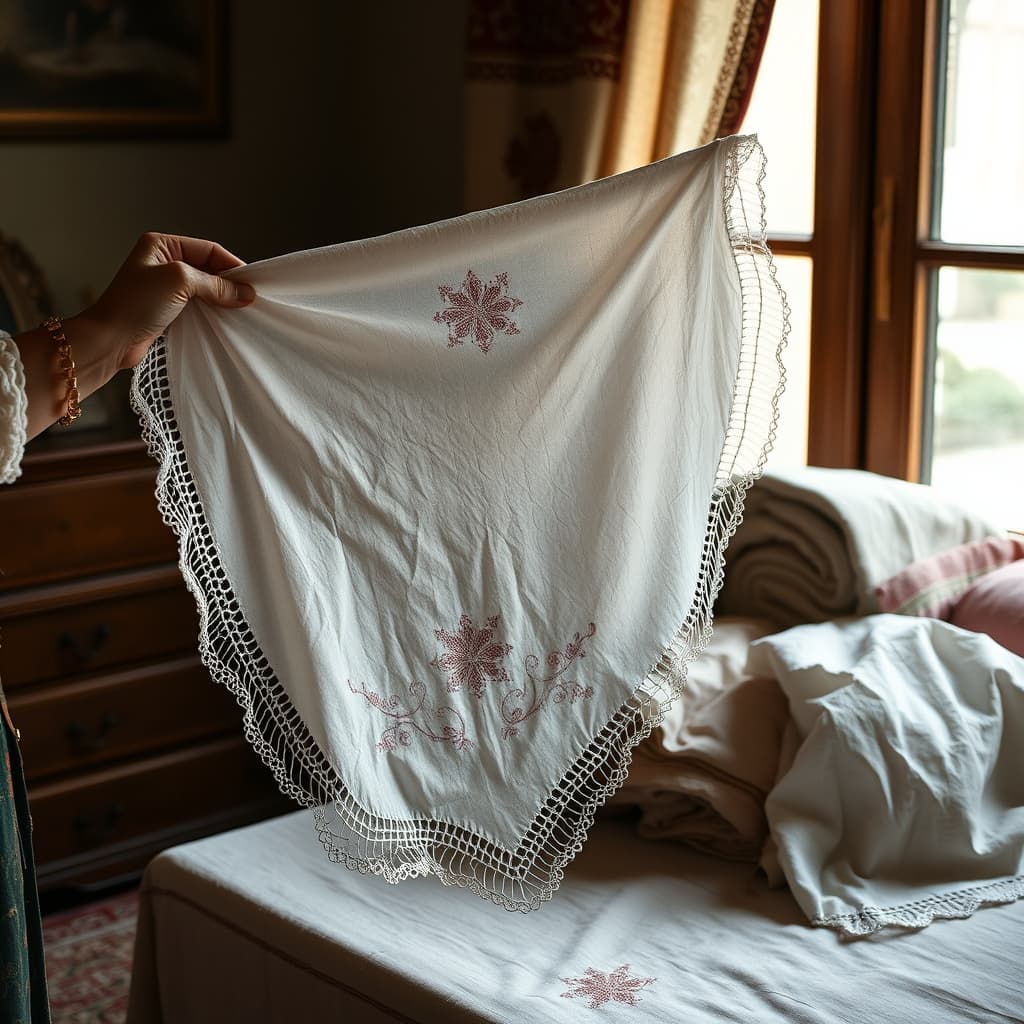
An embroidered handkerchief occupied little space in a dowry room, yet it could concentrate a great deal of work. Folded among linens or placed inside a box, it carried a border, corner motif or arrangement of initials made through repeated stitches. The cloth remained useful in principle, but careful preparation and storage could move it away from everyday use. It became an object waiting for an occasion, a new household or a future recipient.
Materials and techniques varied. Cotton, linen and blended fabrics accepted different threads; counted patterns, satin stitches, drawn work and crochet edging required distinct skills. A responsible description begins with what can be seen rather than assigning every piece to a particular region or maker. Thread tension, reverse-side finishing, repeated motifs and small irregularities can indicate handwork, but they do not reveal a name unless documentation survives.
Folding Protected The Work And Hid It
Storage balanced preservation with invisibility. The handkerchief was washed, dried, pressed and folded before being placed with other textiles. Dampness, insects, rusting pins, coloured paper and prolonged light could cause damage. Refolding helped prevent one crease from becoming permanent, although household practices differed. A clean wrapper or textile layer separated delicate embroidery from rougher surfaces.
The dowry room gave the object a temporal meaning. Items accumulated gradually, often through the labour or contributions of several women in a family network. Anticipation could carry pride and creativity, but it also reflected social expectations and unequal burdens. Not every woman experienced dowry preparation in the same way, and not every piece was handmade by its eventual owner. Honest memory allows affection, obligation and skill to coexist.
A Small Gift Could Carry A Large Expectation
Handkerchiefs could enter exchanges around visits, engagements, weddings or family milestones, depending on local custom. Their small scale made them suitable for personal ornament and portable gifting. Embroidery communicated attention because time had been invested in a surface that could fit in one hand. Yet interpreting a surviving motif as a secret message without evidence turns possibility into fiction. Provenance must come from a reliable label, record or family account.
Use and inheritance changed the textile. A stored piece might remain crisp, while one carried regularly acquired soft folds, faded thread or a repaired edge. Later generations could frame, collect, reuse or continue to store it. Each decision altered context. Conservation should avoid harsh washing and should document the object before separating it from its box, note or related linens.
The embroidered handkerchief belongs in a Digital Nostalgia Archive because it joins intimate scale with long duration. A few centimetres of thread preserve hand control, design choice and time spent preparing for an uncertain future. Its value does not require an invented romance. The fabric itself records waiting: made, cleaned, folded, opened for inspection and returned to its place. When inherited, it asks the next keeper to recognise both beauty and the domestic labour that allowed such a small object to survive.
The reverse side is especially instructive. Knots, carried threads and careful finishing reveal decisions concealed by the decorative front. Photographing both sides keeps workmanship from being reduced to appearance alone and gives future researchers a fuller record of technique.