Eski Pano
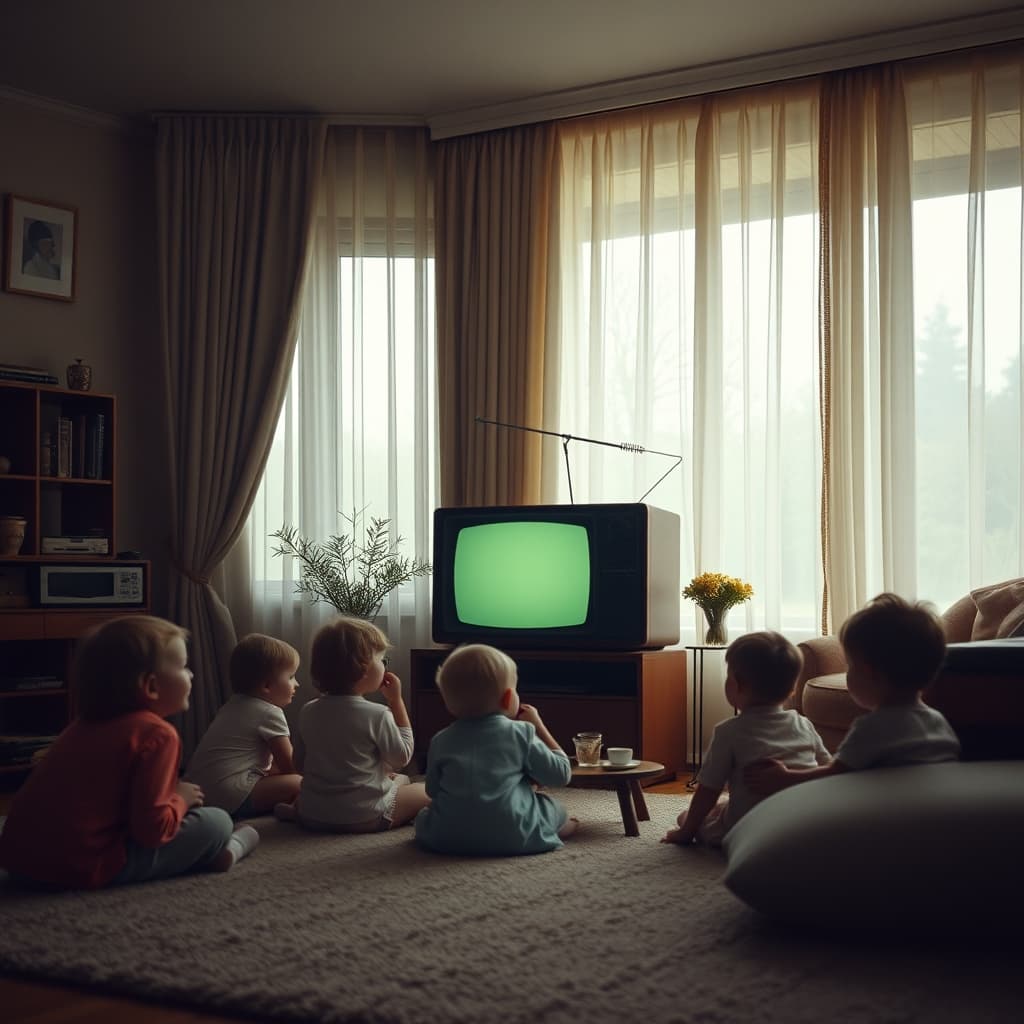
After a spring rain, that clean scent settling over the streets would also enter the house. Windows were opened a little, curtains filled with air, and when the tube television in the living room was switched on, the thin hum rising from inside it gathered the whole family around a single point. Children lay face down on the carpet, adults settled on the edge of the sofas, and the antenna was adjusted once more. The little happiness felt when the picture finally sharpened seems far more genuine than today’s uninterrupted screen habits. That television was not merely a device to watch. It was a threshold inside the home, one that turned waiting into excitement and held itself at the edge of childhood.
From the perspective of technological heritage, the tube television is among the clearest domestic symbols of the analog age. With wood-patterned frames, channel knobs, bodies draped with lace cloths, and sometimes artificial flowers placed beside them, such sets became part of the visual order of the living room rather than remaining mere technical tools. Before the television was turned on, people discussed which program would be watched, waited for the broadcast hour, went to the kitchen during commercials, and arranged their weekly rhythm around certain series, matches, or entertainment shows. The screen therefore did not provide endless flow. It opened like a ceremonial window that took the center of life only at certain hours. Much of its excitement grew precisely from that limitation.
The comparison to waiting at the edge of childhood after spring rain gains its meaning here. While the smell of wet asphalt rose outside, the first image appearing on the curved glass screen created the feeling that the world was arriving at the house anew. Cartoon hours, Saturday night variety programs, black-and-white films, or the late news each awakened a different curiosity according to age. For a child, what mattered was often not only the content, but the preparation for that moment. The tuning of the antenna, the slight static flicker on the screen, the sound made while changing channels, and the sentence “It’s starting” gathering everyone’s attention all settled in memory with greater force than the program itself. Technology thus became not just a viewing experience, but a discipline of shared anticipation.
Part of the unforgotten excitement of the device came from its imperfections. The image sometimes filled with snow, the volume jumped unexpectedly, and because there was no remote control someone always had to rise and turn the knob. Yet those shortcomings created participation more than annoyance. Tapping the frame lightly to steady the picture, calling out to the person holding the antenna to “leave it there,” or wondering whether the neighbors were suffering the same interruption transformed technology into a collective experience rather than a private one. The analog age formed a relationship that did not always work flawlessly, but drew people more deeply into the device. Perhaps that is why, from today’s distance, it still seems exciting: watching was not passive, but something almost assembled together.
When we remember the tube television now, what we miss is not only the screen but the life gathered around it. Crumbs on the carpet, the thin steam of tea glasses, conversations lowering as the broadcast began, and the post-rain coolness collecting near the window all make the excitement of the analog age tangible. Those hours remind us that technology is not valuable only through speed or resolution. Sometimes its worth lies in its capacity to produce shared time and shared attention. For that reason, the hours spent before a tube television are more than nostalgia for an old machine. They are the memory of days when the world entered the home a little more slowly, a little more noisily, yet far more collectively while childhood stood nearby, waiting.
The Hours Spent in Front of a Tube Television: Telling the Unforgotten Excitement of the Analog Age as If Waiting on the Edge of Childhood After Spring Rain