Eski Pano
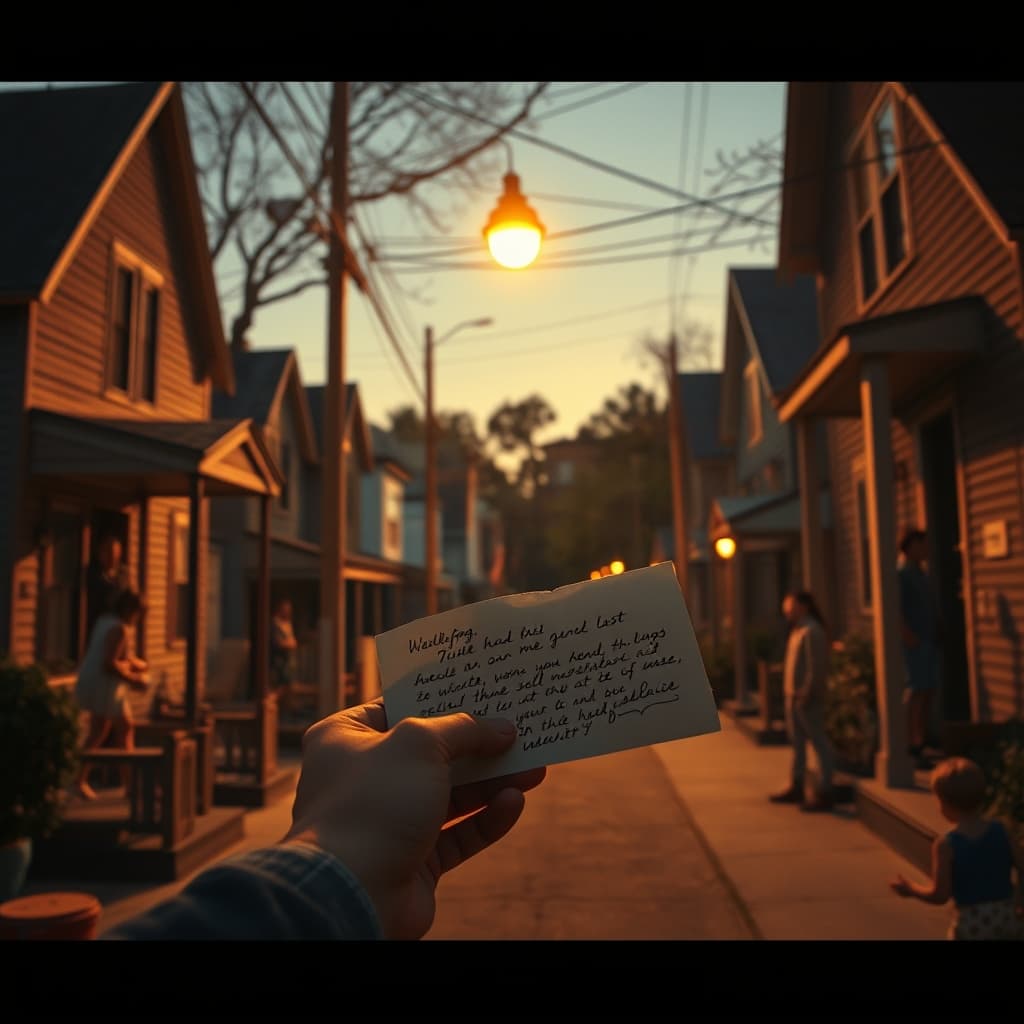
In earlier times, the hour of a summer evening was understood not by a clock, but by the way the light slowly withdrew along the street. As the sun descended from the tiled roofs, a thin coolness first spread through the neighborhood, followed by a feeling of expectation. In that brief interval before the lamp at the corner was lit, children chased one last game, mothers called names from the windows, and elders carried stools out to their doorsteps. At exactly that hour, someone would almost always ask whether the postman had passed during the day. Waiting for a letter was not only waiting for news; it was learning how to wait for emotion itself. The length of a summer evening was measured in part by whether an envelope would cross the threshold.
From the perspective of time, the letter was one of the simplest yet deepest vessels of old urban life. Newspapers recorded major events, yet the true pulse of households often beat in the rustle of envelope paper. News from military service, greetings from a father working far away, the careful sentences of an engaged couple, or the lines of a relative describing heat in the hometown all belonged to the same culture of waiting. Street lamps were not an accidental backdrop within that culture. After the day’s chores ended, after the steam of dinner had dispersed and the volume of the neighborhood fell, they established a light that allowed people to turn inward. Letters were often reread under that glow, their fold lines smoothed by hand, certain sentences repeated in silence.
That patience was wholly different from today’s habits of immediate communication. In those years, waiting for a reply was as much a discipline as writing one. People knew that not every feeling reached clarity at once, that some news remained on the road for days, and that sometimes a single sentence echoed in the mind for weeks. For that reason, the person waiting for a letter listened not only for the mail, but for an inner voice as well. Draft pages torn from notebooks, first lines scratched out with a fountain pen, hesitations too large to fit inside an envelope: all of these were among the invisible rituals of daily life. Summer evenings enlarged those rituals, because as darkness came late, thought also stretched, and the thickening quiet of the street made greater room for interior reflection.
Neighborhood life accompanied that waiting. When someone seated in front of the corner grocer said, “There was post today,” the information spread not only to one house, but across the surrounding social circle. Neighbors could sense each other’s joy and unease. It was difficult to hide the arrival of an envelope, and for that very reason the letter became an object of shared memory. Children studied the image on the stamp, while elders recognized the sender’s handwriting before the envelope was even opened. Some letters remained on lace-covered tables for days; others were placed in drawers together with the scent of lavender. Nights lengthened beneath the street lamp turned these small objects into more than messengers of news. They became quiet witnesses to family history.
When we look back on summer evenings now, the reason those forgotten details still speak becomes clear. Waiting for a letter taught people not emptiness, but how to carry meaning. Every delay was understood less as a lack than as a distance in which emotion could deepen. The memories that grew under street lamps are therefore not merely a romantic longing for the past; they are a cultural inheritance reminding us of patience, careful reading, and respect for words. Summer evenings still tell us this: a person often comes to know the self most deeply while waiting for news that does not arrive at once. The patience learned in those hours of faint light, quiet streets, and long night is not an obsolete habit left behind. It is a human knowledge worth reconsidering in an age of speed.
The Days When Waiting for a Letter Taught Patience in Memories Growing Under Street Lamps: What Do Summer Evenings Tell Us Through Their Forgotten Details?