Eski Pano
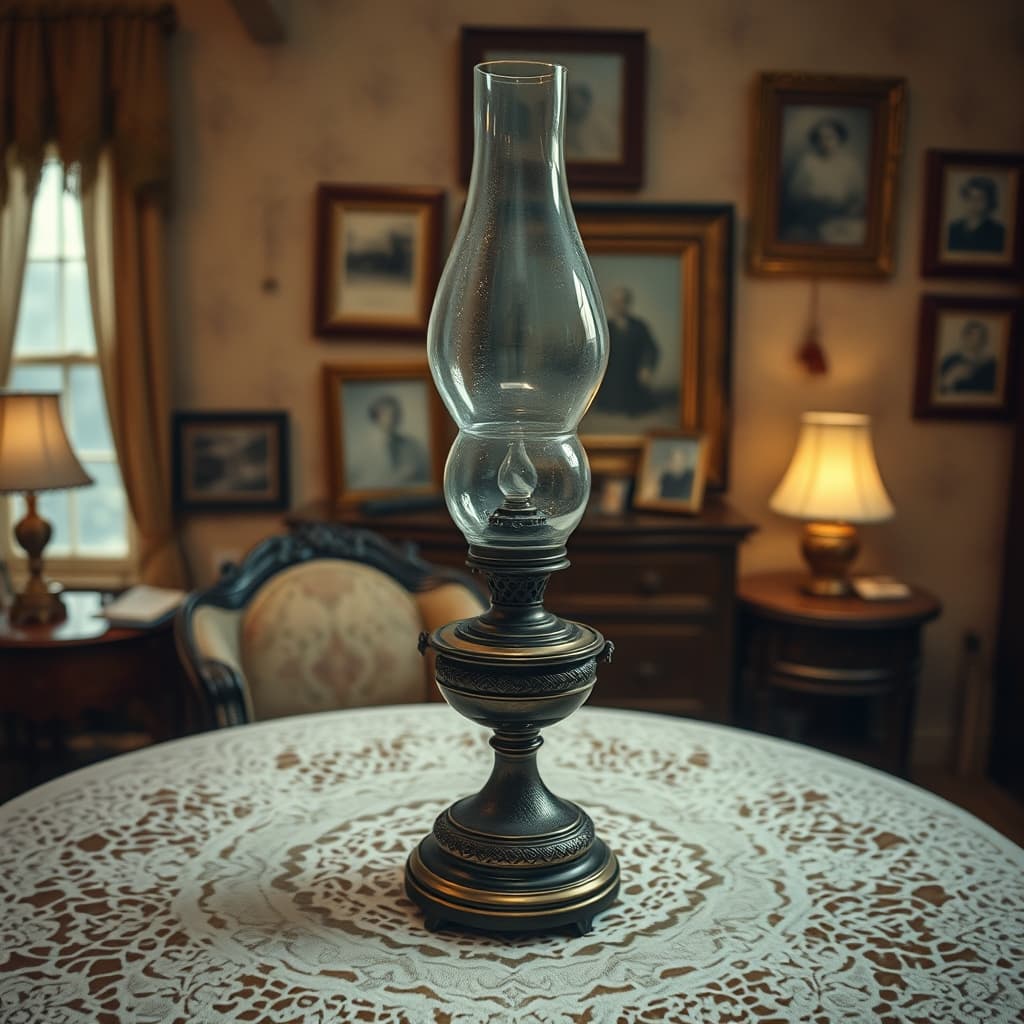
Some objects gain their meaning less by being used in one house than by being carried from one house to another. The oil lamp is one of them. Its glass was wiped carefully, its wick raised and lowered with patience, and when evening came it was placed at the center of the table. In that way, it remained more than a tool for pushing back darkness. The stories told around it, the meals shared beside it, and the quiet tasks completed under its light gradually settled into its metal body. Then one day, even when it was no longer needed for use, it would be taken from a chest and handed to another generation with words such as “this came from your grandmother” or “it belonged to your father’s family home.” Passed from hand to hand, the oil lamp turned from a light source into a visible part of family memory.
From the viewpoint of object stories, the oil lamp is a powerful article carrying both design and the discipline of use. With its metal reservoir, glass chimney, delicate adjustment mechanism, and structure requiring the wick to remain at the correct height, it demanded not only the skill of manufacture, but also the knowledge of careful handling. For the light to burn well, the oil could not run low, the glass had to remain free of soot, and the flame could neither rise so high that it blackened the chimney nor sink so low that the room was left dim. That balance was one of the small yet effective examples of the attentive relationship earlier generations formed with ordinary things. Those who used an oil lamp knew the value of operating an object without forcing it, keeping it clean, and giving every part the care it deserved.
Its worth as a family heirloom begins precisely there. The lamp passes down not only its visible form, but the discipline of time once spent with it. When a grandmother shows a grandchild how to light it, she is also teaching patience, the importance of not rushing, and the fact that even small tasks require care. When a father says he once studied beneath that lamp during a power cut, he is not merely sharing a memory, but revealing an older balance between scarcity and order. The object thus acquires a field of meaning wider than its material. Fragile in its glass, heavy in its metal, and lightly scented with old time, the lamp becomes a language through which experience is carried within a family.
One reason it still bears the trace of craft and patience is that it represents a world assembled by hand. An oil lamp does not function invisibly the way modern appliances do with the press of a button. To use it, preparation is required. Oil must be poured, the wick adjusted, the match struck, and the chimney set carefully in place. Each step draws the user into the working logic of the object. For that reason, the lamp becomes not only a tool, but a maker of rhythm. In old homes, it marked the hour when evening began, when sewing continued, when children did homework, and when the voices of adults softened. It produced order as much as illumination. That may be why, even when standing now in a cabinet or storage chest, it immediately calls up a domestic scene in the mind of anyone looking at it.
The survival of the oil lamp as an heirloom passed from hand to hand reminds us that cultural inheritance is carried not only by grand narratives, but by small household objects. It tells us how an earlier era lived with darkness before electric certainty, how home order depended on labor, and how craftsmanship moved quietly inside families. The fact that it still bears the marks of patience and skill comes from the way earlier generations related to objects not through rapid consumption, but through maintenance and continuity. For that reason, the oil lamp is more than a delicate decoration from the past. It is an object of memory that teaches through use, gathers meaning through keeping, and binds a family together through transmission.
The Oil Lamp and Its Life as a Family Heirloom Passed from Hand to Hand: Why Does It Still Carry the Trace of Craft and Patience?