 Eski Pano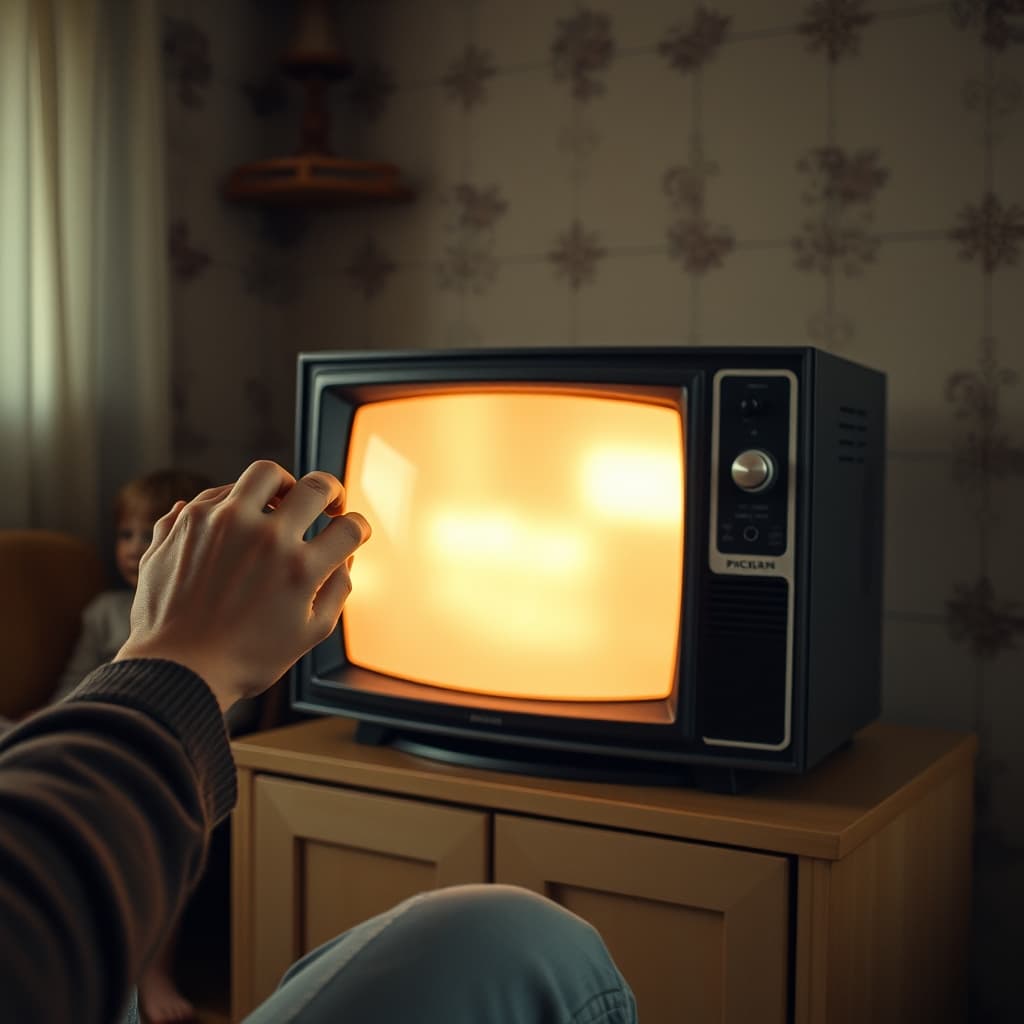
A tube television did not always present a settled picture the instant it was switched on. The screen could brighten gradually, the sound and image might demand attention, and the first minutes became part of watching. Someone in the room knew which control to try and when to stop. That practical knowledge—not simply the programme—shaped the excitement remembered around analogue television.
Sets differed by period, design and receiving system, so no single sequence applies to every television. Some controls were available to viewers; others belonged behind a service panel and required technical knowledge. A responsible account identifies the set when possible and avoids turning remembered tapping or knob-turning into universal maintenance advice.
Waiting for the Picture to Settle
Switching on established a short interval between intention and viewing. Family members might continue a conversation while the screen developed, then shift attention when the programme became recognisable. The delay could feel longer when a scheduled broadcast had already begun. Unlike on-demand viewing, the programme would not pause while the household corrected reception.
Broadcast schedules organised that urgency. Arriving late meant missing an opening, and an imperfect picture could consume part of a finite programme. The emotional charge around the set therefore came from timing as much as novelty. A remembered rainy evening or old film can be documented as personal context, but should not be assigned to a particular broadcast without a listing or reliable source.
Knobs Were a Form of Household Knowledge
Channel selection and accessible picture controls allowed viewers to respond to what they saw. Brightness or contrast adjusted appearance; tuning affected reception. The names and functions varied. A child might be told not to touch, while one adult became the person who “knew the set.” This authority could come from experience rather than formal technical education.
Improvised antenna changes belonged to reception, not to every image fault. Moving an aerial could help one condition and do nothing for another. Repeatedly striking a cabinet, opening it or experimenting near damaged wiring introduced risk. The boundary between ordinary operation and repair matters when nostalgia is presented to current readers.
When the Problem Belonged at the Workshop
A persistent rolling image, distorted geometry, unusual smell, sparking or unstable power was not an invitation to keep trying household tricks. Tube televisions contain hazardous electrical components and should not be opened by unqualified people, even after disconnection. A surviving set used for display can remain unplugged; documentation does not require reenactment.
The repairer’s diagnosis might involve the set, signal and peripheral connections, but an archive should not invent a component failure. A receipt, service note or replaced part can establish a specific intervention. Without those, a family memory of “the picture was fixed” is valuable at the level it actually supports.
Record the Screen and the Room Separately
Photographing the cabinet, controls, back, stand and room position preserves how the television occupied domestic space. A staged glowing screen can create false certainty about operation and expose equipment to unnecessary use. If a historical image shows a programme, rights and identification should be considered separately from the object record.
Oral history can ask who switched the set on, which controls were permitted, what happened when reception failed and when the family called a repairer. These questions recover skill and hierarchy without repeating a general story about everyone gathering happily. Not all viewers agreed on the programme; not every household could afford prompt repair.
The analogue excitement lived partly in this negotiation with an imperfect screen. Viewers learned the difference between waiting, adjusting and admitting that the set needed help. Preserving those distinctions gives the tube television a more useful history than the familiar glow alone: it shows a household reading a machine in real time, within the limits of its knowledge and the broadcast clock.