 Eski Pano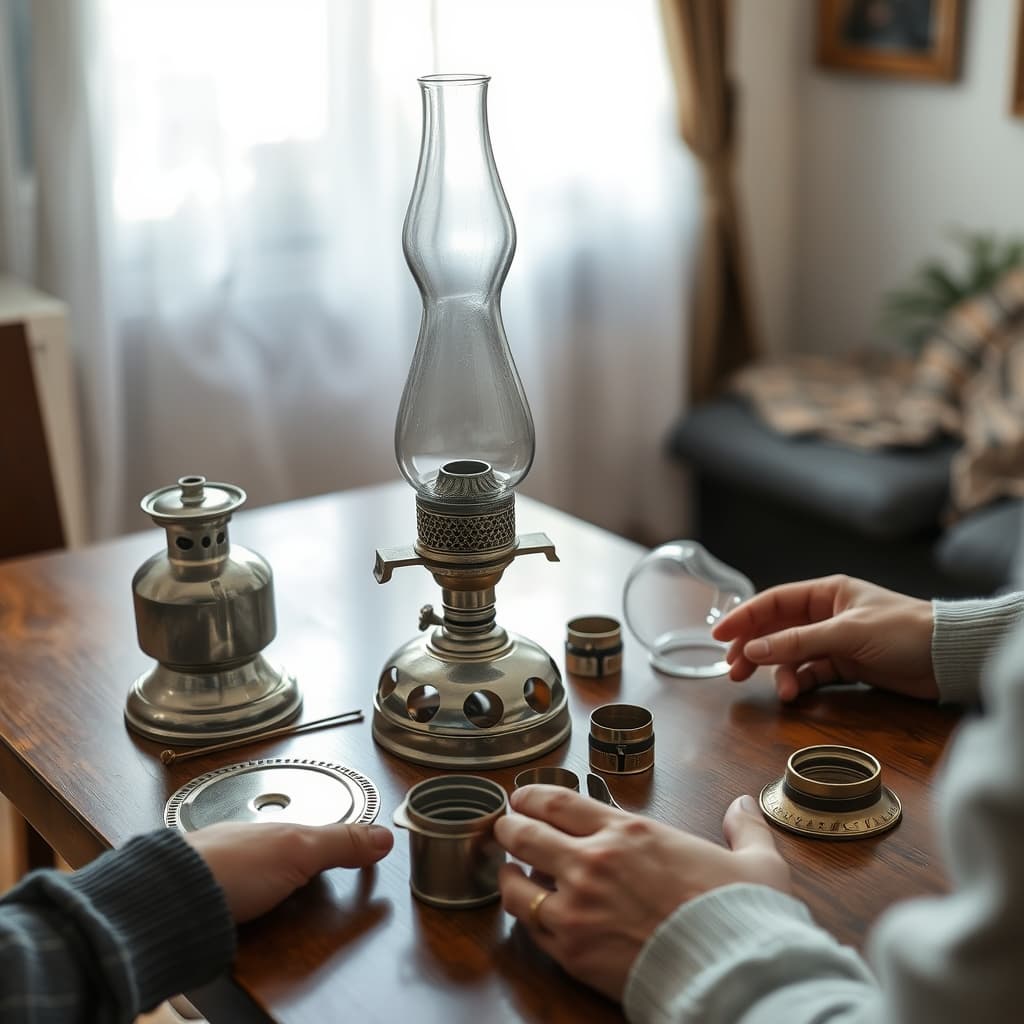
An oil lamp passed through a family may look like one complete survivor, but its parts can belong to different moments. Glass breaks, wicks are consumed, burners wear and small repairs keep an object usable. The inherited lamp may therefore carry continuity precisely because it changed. Calling every component original can erase the practical care that allowed the object to remain in the household.
“Oil lamp” covers objects with differing fuels, materials and mechanisms. A lamp should not be filled or lit merely to identify it. Unknown residues, corrosion, damaged glass and unstable fittings require careful assessment. Documentation can begin safely with the lamp empty, cool and unpowered, without recreating a flame.
Read the Lamp as Connected Components
The reservoir, burner, wick mechanism, chimney or shade, base and handle each provide evidence. Threads that do not align, a different metal finish or a glass chimney with another profile may suggest replacement or adaptation. They do not by themselves supply a date or prove that a family repairer made the change. Measurements and detailed photographs allow better comparison than a quick claim of authenticity.
Soot and discolouration can relate to use, combustion, handling or later storage. Aggressive polishing may remove finishes and evidence; washing an unknown reservoir can disturb residues or create corrosion. Before cleaning, record all sides, joints, marks, cracks and the inside only where it can be inspected without forcing access.
Replacement Was Part of the Lamp’s Life
A new wick was a consumable part, not necessarily a loss of heritage. Replacement glass could return a damaged lamp to service. A soldered seam or improvised fastener may document scarcity, local skill or simple necessity, but those interpretations need family testimony or technical assessment. Repair evidence should be preserved even when it appears visually untidy.
Ask relatives what they actually remember: the whole lamp, a particular room, a glass replacement or only its later display. One person may have known it as working equipment and another only as a cabinet object. Both accounts are useful when attributed. They should not be merged into a confident story of continuous use across unnamed generations.
Craftsmanship Is Found in Fit, Not in Praise
To discuss workmanship, describe observable features: evenly formed metal, the way a joint meets, tool marks, symmetry and the operation of a mechanism when it can be examined safely without forcing it. Ornate decoration does not automatically mean handwork, and a plain component can still show skilled manufacture. A maker’s mark identifies only what the mark reliably refers to.
Display can create its own layer of history. A family may add a support, replace a shade or polish the lamp for a cabinet. Catalogue these interventions instead of removing them silently. If a modern replacement is used for interpretation, label and store it separately from verified older components.
Inheritance Needs a Parts Record
Give the lamp one collection identity while recording detachable elements individually. Note which component was present at acquisition, what was already loose and what later conservation changed. Keep family photographs and receipts linked to the record, with privacy controls. This prevents a future custodian from treating an old replacement as original or a genuine repair as damage to be erased.
Fire safety is part of responsible preservation. An heirloom with unknown fuel history should not be lit for atmosphere, photography or demonstration without qualified assessment and suitable controls. A realistic digital or photographic record can communicate construction without returning the object to service.
The patience carried by an inherited lamp is visible in maintenance rather than perfection. Someone found a fitting glass, renewed a wick or protected a weakened joint so the object could continue. Recognising that layered history does not diminish the heirloom. It gives credit to the practical decisions through which a fragile source of light became a durable family object.