Eski Pano
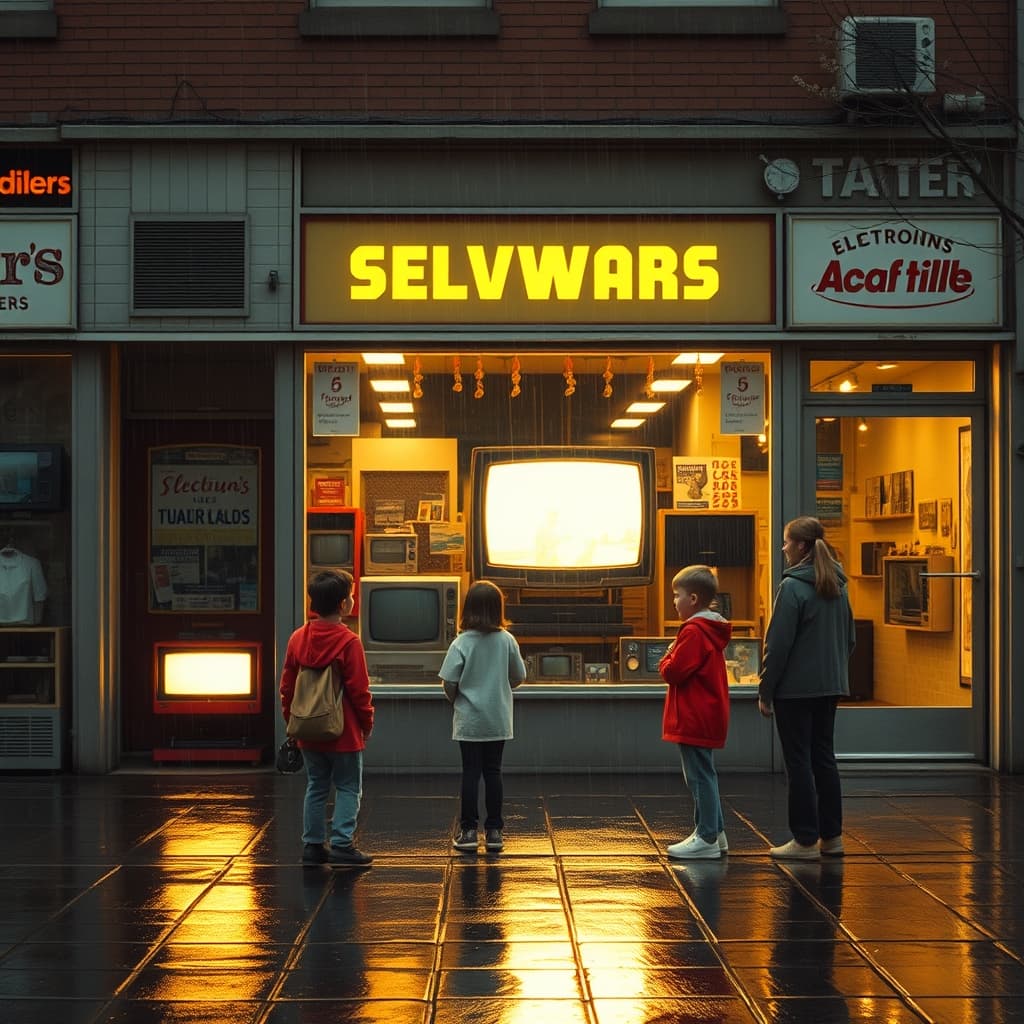
There was a time when, after a spring rain had ended, a different brightness began in the city. Wet pavements made the glass shop windows stand out more clearly, and the tube televisions displayed in electronics stores glowed like small stages after the gray air had passed. People often stopped not only to shop, but simply to look. The image on the screen might be a sports replay, a black-and-white film, or the serious face of a newsreader, yet for the curiosity gathering at the window it was more than enough. The hours spent in front of the tube television belonged not only to domestic life but also to the memory of the street. Children drew close to the glass, adults commented on the sharpness of the picture, and some could judge from a distance whether the antenna had been adjusted properly. That screen looking out at us from a display window after the spring rain both promised and embodied the excitement of the analog age.
From the perspective of technological heritage, the unforgettable power of the tube television lies not only in technical novelty but in the ritual of collective viewing it created. In those years, the screen was a dream object before it was a household object. Standing before a shop-window television felt like opening a brief window toward the future. With its wood-toned casing, curved glass, channel knobs, and sometimes a lace cloth placed on top, the tube television represented a face of technology that was not cold but almost familial. Once it entered the home, the arrangement of the living room began to revolve around it. Evening news was watched in rooms that fell suddenly quiet, children pulled their cushions closer when their program began, and when the image distorted someone would rise to wrestle with the antenna. The television’s stubbornness was as much part of the experience as its operation. For that reason, excitement grew not only while watching, but while trying to make the picture clear.
There was an invisible bond between the glance cast at the shop window after a spring shower and the act of watching inside the home. While still carrying the coolness of the street, the person looking at the display screen imagined that a similar image might someday be brought into the family living room. Buying a television was, for many families, not merely an economic decision but a cultural step that altered the rhythm of daily life. Dinner times adjusted themselves to the broadcast schedule, favorite programs were discussed in advance, and neighbors said let us watch it together tonight at our place. The excitement of the analog era came precisely from this: technology was not a solitary but a collective experience. A single screen gathered everyone in the room around the same point of attention and produced the same laughter, the same surprise, the same silence.
The reason the tube television is remembered as if it were looking back at us from the window is no accident. The screen often felt like an object that watched the viewer in return. Because its glossy surface reflected both the broadcast and the silhouettes approaching it, it created a two-way relation between the one watching and the one being watched. A child standing before a shop display could catch a glimpse of his own reflection beside the evening bulletin, and the raindrops on the glass made the image even more dreamlike. In such moments technology became not merely a device, but a machine for imagination. The television has remained in memory partly for this reason: it left its mark not only through what it showed, but through the waiting that surrounded it.
Today, when people remember the hours spent before a tube television, they think less of resolution than of feeling. The turning of the channel knob, the way the screen opened from a single point of light, and the way it collapsed into a line when the broadcast ended all belong to the patient rhythm of the analog age. The television looking at us from a shop window after a spring rain is no longer only an outdated technology; it is a symbol of shared excitement, domestic gathering, and a time when images were not instantly available. That is why it remains vivid in memory. It taught a generation that anticipation itself could be a form of joy.
Hours Spent in Front of the Tube Television: Telling the Unforgotten Excitement of the Analog Age While Looking at Us from a Shop Window After the Spring Rain