Eski Pano
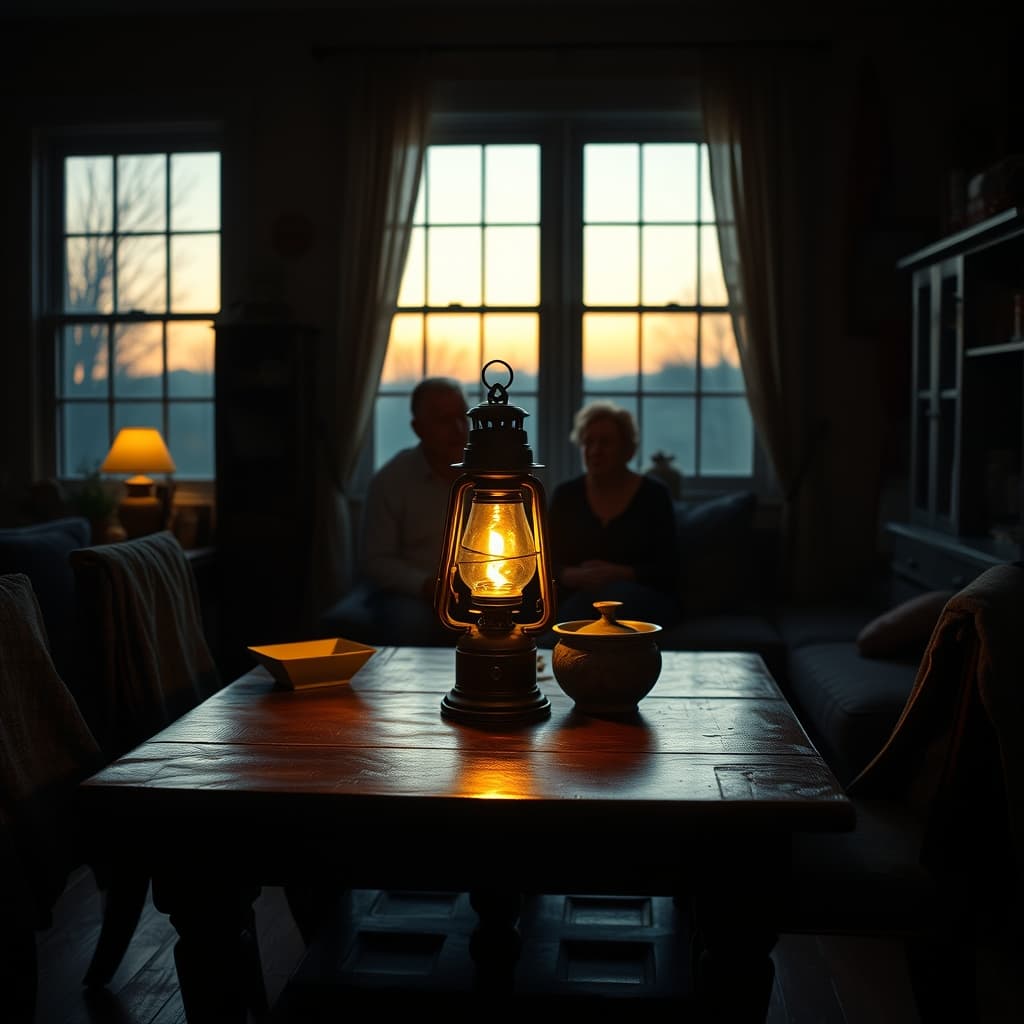
There was a time when the true beginning of evening was announced not by an electric switch, but by the lighting of an oil lamp. As sunset approached, the movements inside the house changed slightly: curtains were drawn, the sound of the cooking pot softened in the kitchen, children lowered their voices, and an elder carefully brought the lamp to the center of the room. The wiping of the glass chimney, the adjustment of the wick, the crackle of a match, and then the rise of that yellow, gently trembling light established a wholly different order within the home. The oil lamp was not merely a tool that pushed back the dark; it was a threshold that began the rhythm of the evening. Sitting around it, sewing, reading letters, studying, or quietly drinking tea became a repeated ceremony of domestic life. For that reason the lamp ceased, over time, to be an ordinary object and gained the meaning of a family heirloom passed from hand to hand.
From the perspective of object stories, the deepest power of the oil lamp lies in the way its use touches memory. It carried not only the technical conditions of an earlier age, but also a culture of care within the home. For the lamp to burn well, its glass had to be cleaned, its oil refilled, and its wick kept properly trimmed. This maintenance belonged to the patient relationship people built with objects in the house. Children grew up learning not to touch it too quickly, while elders kept an eye on whether the light had risen enough. In this way, the lamp became an object placed at the center of the home yet approached by everyone with a certain respect. Evenings formed around it depended more on measure than on speed. Because the light was limited, movements slowed, conversations deepened, and shadows gave the room’s objects another weight.
It is no accident, either, that an oil lamp was often passed down through the family. Such objects are preserved not only because they were useful, but because of the lives they witnessed. A lamp that once stood in a grandmother’s chest, then passed into a mother’s home, and years later was placed on a shelf as a memory entered each generation’s evenings in a different way. In the hands of its first owner, it may have been a necessary source of light; in the next generation, it could become a symbol of domestic refinement. The slight soot on the glass, the tarnish on the metal body, the wear on the handle, all speak of years of touch. That is why being a family heirloom is not simply a matter of age; it is a matter of awakening the same care in different hands.
The oil lamp shaped the rituals of home life partly because it organized the feeling of time. The moment it would be lit, the moment it would be extinguished, the light under which children would do their lessons, and the corner where elders would sit to knit were all determined by that glow. On winter evenings, gathering around it created a small inner world against the darkness outside. In summer, when carried to the courtyard or balcony, the lamp accompanied conversation with neighbors and the coolness of the night. In that way, the oil lamp became not only an object in a room but a quiet arranger of the family’s way of spending time together. The limits of its light also drew the limits of movement inside the house.
Today, when people look at an oil lamp, they often see more than an old object. It reminds them not only of the hardship of life before electricity, but also of its calm discipline. Having passed from hand to hand gives it not only material value, but emotional brightness. That is why the oil lamp remains one of the unforgettable symbols of home life: it was once the light that truly began the evening, the center that gathered the family together, and the quiet force that determined the tempo of everyday rituals. What memory keeps is sometimes not the light itself, but the lives that drew closer beneath it.
The Oil Lamp and Its Passing from Hand to Hand as a Family Heirloom: How Did It Shape the Rituals of Home Life?