Eski Pano
Sometimes, to believe that a morning can change history, it is enough simply to look at a street. In Portugal, the morning of April 25, 1974 was exactly like that. Before shop shutters were fully opened, while the smell of coffee rose from home kitchens and people waited at tram stops to begin an ordinary day, something else was already moving through the stone streets. Along with footsteps there came the release of a breath that had been held in for years. Military vehicles, signal songs carried by the radio, and above all the red carnations appearing in people’s hands quietly but irreversibly altered the familiar order of the city. Lisbon’s avenues still looked, at first glance, the same as before: the same balconies, the same corner cafes, the same newspapers. Yet the attentiveness on people’s faces, the longer glances exchanged between strangers, and the thickening pulse of the streets made it clear that this day would not resemble any other.
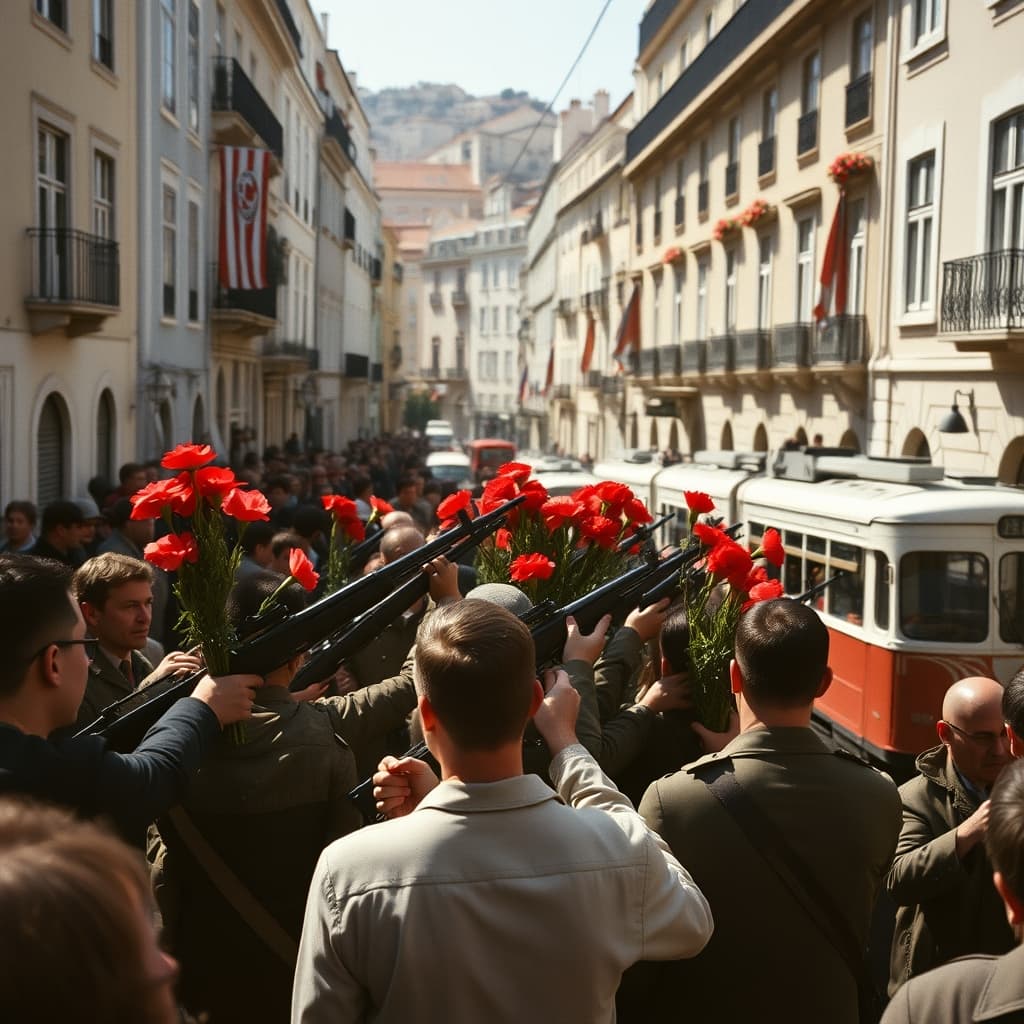
Seen in the trace of time, the Carnation Revolution was not only a political break; it was also a cultural awakening that changed the tone of daily life. After long years of repression, that morning gave people not only the possibility of a new regime, but also the chance to feel public space again. Squares that were usually crossed in haste became places of gathering. Those waiting for newspaper headlines, women who bought bread and lingered a little longer on the corner instead of hurrying home, mothers holding their children while watching the street from the window, all became witnesses to the same transformation. Freedom was felt first not in grand speeches, but in the courage to remain in the street. On that day people did not only pass news to one another; they passed courage as well. A flower placed in the barrel of a rifle changed the image of the soldier at once. The carnation became not a sign of violence, but of shared relief.
What makes that historical moment so striking is that it entered memory not mainly through leaders or official declarations, but through the details of ordinary people. That morning a florist had extra carnations, and according to the best-known account people handed them to soldiers, creating an image that spread around the world. Yet the real force of the event comes from the fact that the flower belonged to everyday life. A carnation was not a ceremonial object, but a familiar flower placed on windowsills, bought in the market, and carried home. That is why freedom overflowing into the streets became possible through a symbol that emerged from the people’s own lives. While the clink of coffee cups continued in corner cafes, the tone of conversations changed. Generations raised on the language of controlled newspapers searched for the news of tomorrow in the faces of today. The city experienced not only a change of government, but the experience of hearing its own voice.
From today’s perspective, that Portuguese morning also appears as the moment when daily rituals gained new meaning. Balconies ceased to be only places for laundry and became viewpoints from which to witness history. Radios became not merely devices for music, but boxes through which history entered the home. Squares, metro entrances, paving stones, and the petals that softened the hardness of military boots together formed a new visual memory. That memory did not erase the years of pressure; instead, it laid another emotional layer over them, one of collective release. Cultural transformation begins when a city’s morning feels, for the first time, as though it belongs to everyone. That was what happened in Portugal on that day.
Today, when the Carnation Revolution is remembered, people think not only of a date but of a particular morning light. Freedom overflowing into the streets stopped being an abstract idea and blended into the bodies, voices, and gestures of the people standing there. The morning opened by carnations reminds us of something simple: great history often becomes visible in the very first step taken from the house into the street. A city learns freedom first not through laws, but through people making room for one another in public space. That is why Portugal’s day remains fresh in cultural memory. What changed that morning was not only power, but the spirit of the streets themselves.
The Morning Opened by Carnations: The Day Freedom Overflowed into the Streets in Portugal