 Eski Pano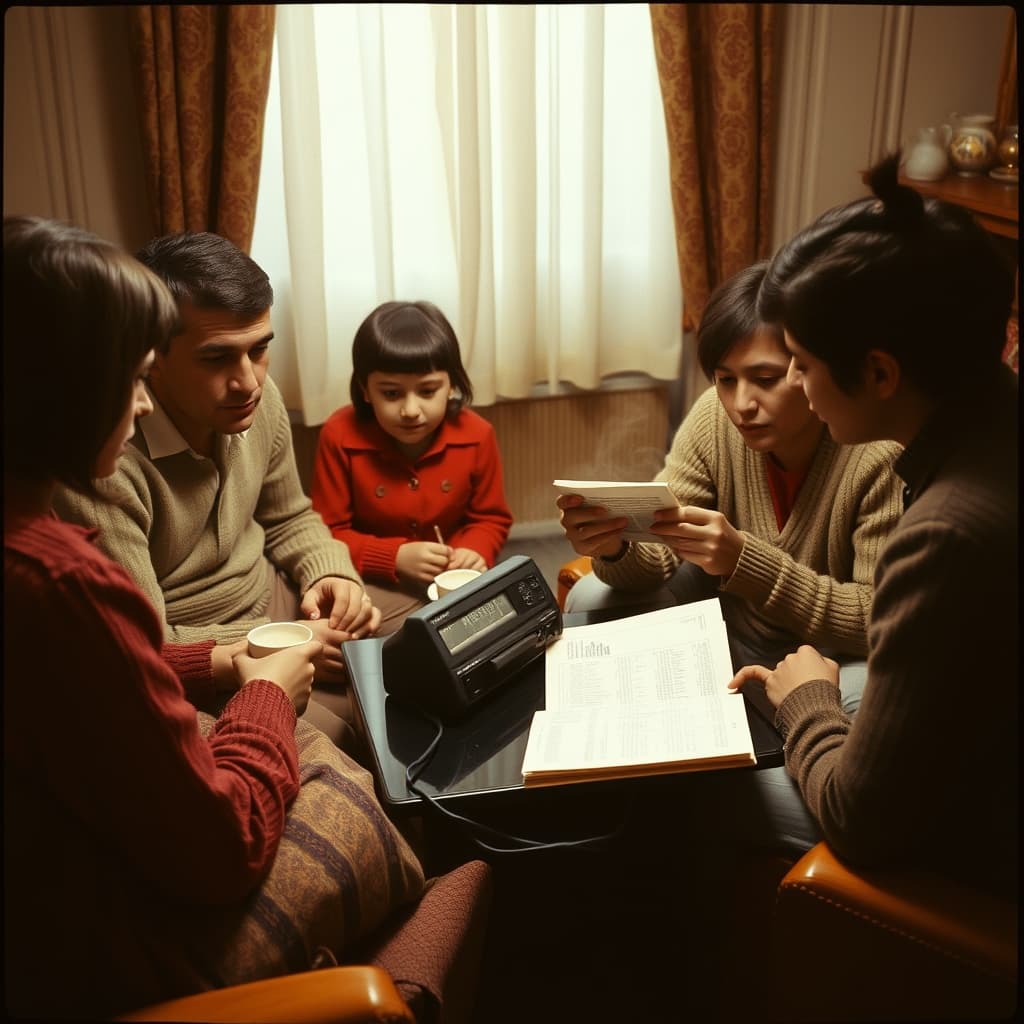
A transistor radio could become the quiet centre of a sitting room without occupying much space. It waited on a shelf until a familiar news bulletin, radio play, music programme, sports commentary, or weather report drew the family closer. Listeners lowered their voices, adjusted the dial, and supplied expressions the broadcast could not see. Repetition turned a technical receiver into a household appointment.
This domestic use differed from carrying a pocket radio outdoors. Tabletop and portable transistor sets varied in cabinet, speaker size, frequency bands, antenna, controls, power supply, and reception quality. Some operated on batteries, some on mains electricity, and some allowed both. Model labels, circuit diagrams, station scales, import records, and service manuals help identify what a particular family could receive.
The Programme Schedule Organised Attention
Printed radio listings and spoken announcements helped households anticipate broadcasts. A programme might fit after dinner, before sleep, during ironing, or around a visitor. The set did not always command silence: people knitted, repaired objects, prepared tea, or discussed what they heard. Listening was collective but uneven, shaped by age, authority, language, education, hearing, and control of the tuning knob.
Broadcasting connected the room to institutions beyond it. Public broadcasters, commercial stations where available, foreign services, and local transmitters differed in reach and purpose. News and commentary were not neutral simply because they came through a respected voice. Comparing outlets, dates, recordings, newspapers, and official documents remains essential when using a remembered broadcast as historical evidence.
Clear Reception Was a Household Skill
Listeners rotated the set, extended an antenna, moved closer to a window, reduced electrical interference, or tuned slowly between stations. Medium-wave reception depended strongly on internal antenna orientation, while FM and shortwave systems behaved differently. Fading could come from atmosphere, terrain, buildings, transmitter conditions, battery voltage, or a fault. Not every burst of static meant the radio needed repair.
Batteries offered mobility and operation during some power cuts, but they leaked, weakened, cost money, and required replacement. Corroded contacts need careful handling, and old cells should enter appropriate collection rather than household fire or ordinary dumping. Mains-powered sets require safe cables, plugs, insulation, fusing, and qualified assessment before an old radio is connected today.
Repair Extended the Conversation
Technicians traced faults through switches, volume controls, solder joints, capacitors, transistors, transformers, speakers, tuning cords, and battery compartments. Random component replacement could erase originality without solving the problem. A documented repair records symptoms, measurements, replaced parts, safety upgrades, and the name of the technician. Household oil and untrained work on mains circuits are unsafe.
Listening volume also matters. A shared speaker at moderate level differs from prolonged loud use close to the ear. People with hearing difficulty may need accessible alternatives rather than simply increasing room volume for everyone. Clear speech, seating, subtitles in later related media, and hearing support can make communal listening more inclusive.
Family memory often attaches a broadcast to a major event, but dates can drift and repeated retrospective programmes can be mistaken for the original transmission. Archivists should ask which station, approximate time, language, location, set, and other people were present, then mark uncertainty. Emotional certainty is valuable testimony, not automatic chronological proof.
A Digital Nostalgia Archive can connect the radio with programme guides, station schedules, batteries, service notes, recordings, listener letters, furniture photographs, and oral histories from different family members. The habit endured because the receiver created a scheduled place for attention and conversation. Preserving it means keeping the warmth of shared listening beside broadcast power, media literacy, electrical safety, hearing access, and the repair knowledge that kept the voice in the room.