 Eski Pano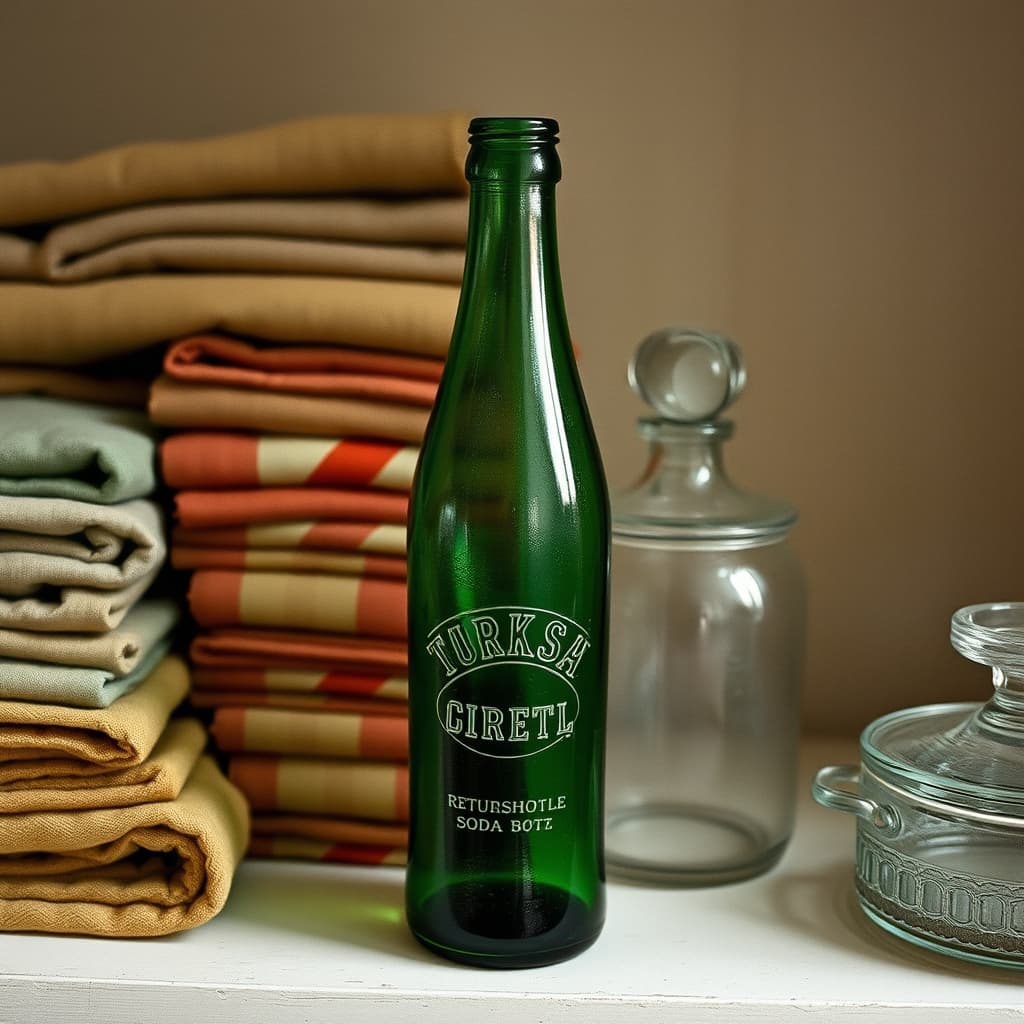
A glass soda bottle was designed to circulate, not remain in a family room for decades. It left a bottling plant, travelled in a crate, reached a shop or celebration, and was meant to return for washing and refilling. When one bottle stayed behind in a dowry room or cabinet, its ordinary commercial journey changed into a household story. The reason for that change needs evidence, not assumption.
Bottles varied by company, town, period, volume, colour, closure, glassmaker, and return system. Embossed names, base codes, seams, crown-cap forms, printed labels, and crate markings help identification. A familiar brand shape may have been used across several years or plants. Collectors should compare catalogues, advertisements, registered designs, invoices, and verified examples before assigning a precise date.
Returnable Glass Created a Local Network
Deposits encouraged customers to bring empty bottles back to grocers and drink sellers. Bottlers sorted, inspected, washed, and refilled suitable containers, while damaged glass left the cycle. The system depended on transport, clean water, quality control, crates, retailers, and consumer cooperation. Reuse reduced demand for new containers but was never free of energy, breakage, labour, or sanitation requirements.
Local bottlers gave bottles a strong sense of place. A town name moulded into glass can lead to factory addresses, delivery routes, workers, flavours, and neighbourhood shops. Yet business histories may include mergers, trademark disputes, closures, and reused bottle pools. The object should not be made to tell a simpler local story than company and municipal records support.
The Dowry Room Changed Its Meaning
A dowry room held textiles, household goods, gifts, and expectations for a future home. A soda bottle might be kept because it came from an engagement visit, held a flower, represented a relative's business, or simply looked attractive beside glassware. Those possibilities should be presented as questions until a named family member supplies a documented account.
Dowry traditions also carried unequal pressure. Women and their families often bore substantial labour, expense, display expectations, and judgement. Turning the room into a purely romantic backdrop can hide negotiation, postponement, financial strain, and changing ideas about marriage. The bottle's memory belongs within that social context rather than being treated as an isolated decorative curiosity.
Old Glass Has Practical Limits
A vintage bottle may have chips, cracks, internal residue, unknown chemical exposure, weakened surfaces, or paint and labels that cannot tolerate washing. It should not be refilled for drinking merely because it once contained a beverage. Dishwasher heat, boiling, sudden temperature change, abrasive wire, or pressure can break old glass and erase labels. Display and food use require different standards.
Safe handling includes supporting the base, wearing suitable protection for damaged pieces, keeping bottles stable away from shelf edges, and avoiding direct sunlight that fades labels. Cleaning should begin with documentation and material-specific conservation advice. Never seal fermenting liquid inside an unsuitable old bottle; gas pressure can cause dangerous breakage.
Collectors need provenance and ethical acquisition. Bottles removed from private property, archaeological contexts, shipwrecks, protected sites, or municipal dumps may be subject to law and community concern. Market value does not authorise excavation or trespass. Purchase records, previous owners, find location, and uncertainty should remain attached to the object.
A Digital Nostalgia Archive can connect the bottle with bottling records, shop ledgers, deposit tokens, crates, advertisements, factory photographs, dowry lists, engagement stories, and oral histories. It became an heirloom when circulation stopped and a family attached a reason to keeping it. Preserving that transition means studying manufacture and return systems while respecting dowry labour, provenance, fragile glass, and the difference between a remembered container and a safe modern vessel.