 Eski Pano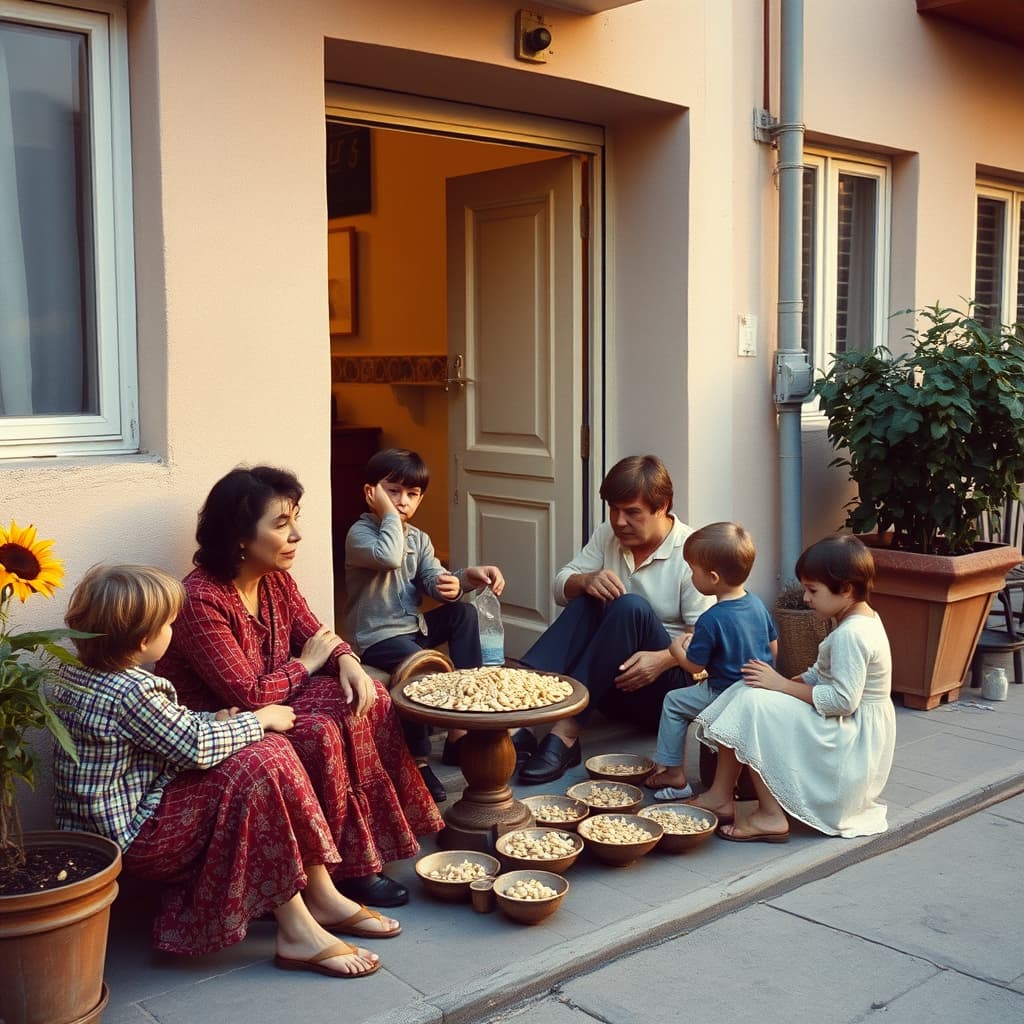
A few chairs and a bowl of sunflower seeds could turn an apartment entrance into an evening salon. Shells cracked in a steady rhythm while news moved between neighbours, children played within sight, and someone greeted each person entering the building. The gathering felt informal, but it depended on an unspoken agreement about space, sound, cleaning, hospitality, and how long the conversation would continue.
Practices differed by city, climate, street design, building rules, season, and household. People sat on doorsteps, low walls, garden edges, pavements, or chairs brought from home. Tea, fruit, or other snacks might join the seeds. One building's warm routine could be another resident's blocked entrance or unwanted scrutiny. Neighbourliness should be described without assuming unanimous comfort.
The Threshold Became a Social Room
Apartment interiors were private and sometimes small or hot, while the entrance offered air and passing company. Residents exchanged practical information about water cuts, deliveries, illness, repairs, school, transport, and local shops. A newcomer could learn names quickly. The threshold linked household and street, creating contact without the formality or preparation of a home visit.
This contact also produced informal watchfulness. Neighbours noticed an unattended child, an older resident returning late, smoke, a leaking pipe, or an unfamiliar vehicle. Such attention could support safety and mutual aid. It could also become gossip, pressure, surveillance, or exclusion of tenants who lived differently. Care requires consent and boundaries, not simply constant observation.
The Sound Had Social and Physical Edges
Cracking shells, laughter, chairs, tea glasses, and children's games created a recognisable evening sound. Volume that felt ordinary to the group might disturb infants, ill residents, night workers, students, or people seeking quiet. Local rules and respectful hours matter. A neighbour should be able to request less noise without being treated as hostile to community.
Seating could narrow a doorway, ramp, pavement, or emergency path. Chairs, prams, bicycles, and bowls need placement that preserves accessible passage and fire exits. People with mobility, visual, or sensory needs should not be forced into traffic or excluded from the gathering. The most sociable arrangement is one that leaves the threshold usable.
Sharing Food Required Small Disciplines
Individual portions or clean serving methods reduce repeated hand contact in a communal bowl. Sunflower seeds can present allergy risks, and salt levels matter for some diets. Young children need supervision because seeds and shells can be choking hazards. Food should be stored dry and protected from pests, damp, dust, and street contamination.
Shells created visible waste and slippery surfaces. Dropping them on the ground shifted cleaning to residents, caretakers, or municipal workers and could attract animals. Containers for shells and a final sweep made hospitality more responsible. Birds and pets should not be fed salted shells, and waste belongs in appropriate collection rather than drains or garden soil without consideration.
The labour of hosting was not equally shared. Someone bought and roasted seeds, carried chairs, brewed tea, watched children, welcomed guests, and cleaned after the group. Women often performed much of this work while public conversation appeared spontaneous. Recording names and tasks gives the social scene a more honest structure.
A Digital Nostalgia Archive can connect seed packets, roasting shops, tea glasses, folding chairs, building plans, caretaker notebooks, local rules, photographs, sound recordings, and oral histories from enthusiastic and reluctant residents. Sunflower seeds strengthened ties by giving hands a rhythm while conversation unfolded. The memory remains warm when mutual aid is preserved beside privacy, noise, access, litter, allergy awareness, and the right to cross one's own doorway freely.