 Eski Pano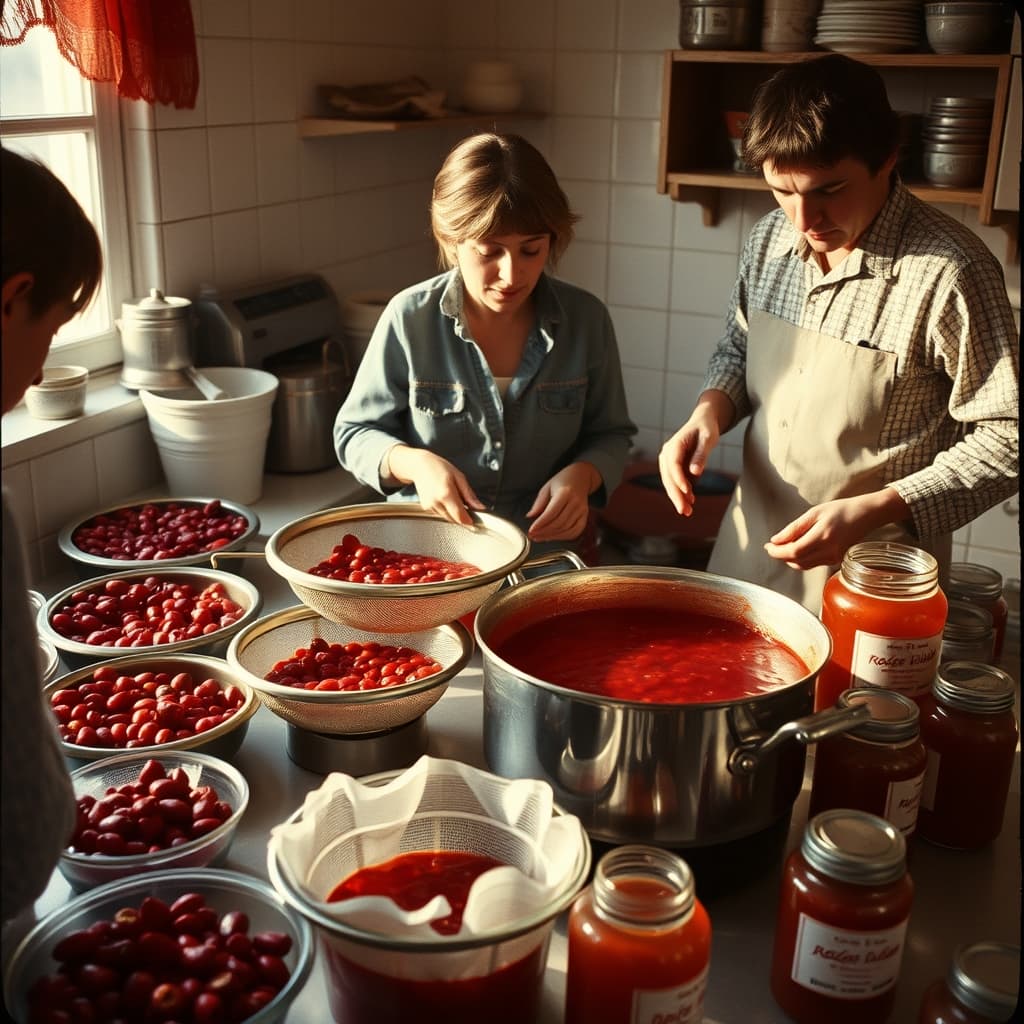
Rosehip marmalade can return a family table with the first spoon. Its deep colour, tart sweetness, and dense texture recall bread at breakfast, tea steam, autumn baskets, and a pot watched for hours. The flavour feels immediate, but the jar represents a long chain of decisions: where fruit was gathered, who cleaned it, how pulp was strained, how sugar was judged, and whether preservation was safe.
Rosehips come from different wild and cultivated rose species, and local names, fruit size, ripeness, flavour, and processing vary. Not every red hip should be identified casually. Foraging requires reliable botanical knowledge, permission, and awareness of pesticides, roadside pollution, animal contamination, protected areas, and the need to leave fruit for wildlife and plant regeneration.
Sorting Began before the Pot
Sound fruit was separated from mouldy, fermented, insect-damaged, or contaminated material. Stems and dried flower remains were removed, and the hips were washed with safe water. Gloves can help with thorny branches. Gathering after suitable ripeness may soften fruit, but weather and species affect quality; a family rule about the first frost should be recorded as local practice rather than universal science.
Inside the fruit, seeds are surrounded by fine hairs that can irritate skin and the digestive tract. Traditional processing often cooks the hips with water, then passes the softened pulp repeatedly through sieves or cloth to remove seeds, skins, and hairs. Equipment must be intact and food-safe. A coarse single pass may not be sufficient, and children should not handle irritating waste.
Texture Came from Repeated Judgement
The cook balanced pulp, water, sugar, acidity, heat, and evaporation. A broad pot increased evaporation; steady stirring reduced sticking and scorching. Desired thickness differed between households, and marmalade continues to set as it cools. Colour alone cannot indicate completion. Written quantities, batch weight, temperature where relevant, yield, and sensory cues make a family recipe reproducible.
Long cooking changes flavour and heat-sensitive nutrients. Rosehips are associated with vitamin C, but the finished sweet should not be promoted as a medicinal cure or guaranteed vitamin source without analysis. Sugar contributes sweetness, texture, and preservation properties, yet its role depends on the full tested recipe. Reducing it casually can alter safety, set, and storage life.
A Memory Jar Still Needs Tested Preservation
Shelf-stable canning requires a current tested recipe appropriate to the fruit preparation, jar size, acidity, altitude, and processing method. Sterile-looking jars, hot filling, an inverted lid, or a family history of success do not independently establish safety. Damaged jars, failed seals, mould, gas, leakage, or suspicious odour require disposal without tasting according to current public-health guidance.
Refrigerated or frozen storage may be suitable for recipes not validated for room-temperature keeping, provided containers, cooling, dates, and storage times are managed correctly. Clear labels should include ingredients and batch date. Shared kitchens need clean surfaces and separation from raw foods. Hot pulp can splash and cause serious burns, so stable pots, long utensils, uncluttered floors, and supervised work are essential.
The finished jar can hide unequal labour. People gathered fruit, carried baskets, removed stems, cooked, strained, washed sticky tools, prepared jars, labelled, stored, served, and gave jars to relatives. Women often performed the longest stages while the recipe circulated under a family name. Recording each contributor turns nostalgia into a fuller account of knowledge and time.
A Digital Nostalgia Archive can connect rosehip marmalade with botanical records, gathering maps, baskets, sieves, pots, tested recipes, jar labels, breakfast photographs, gift lists, and recorded cooks. It tastes like childhood because flavour, season, work, and affection repeatedly met at the same table. Preserving that memory means keeping regional variation and pleasure while respecting plant identification, sustainable gathering, irritating hairs, hot-pulp hazards, sugar, and modern food-safety evidence.