 Eski Pano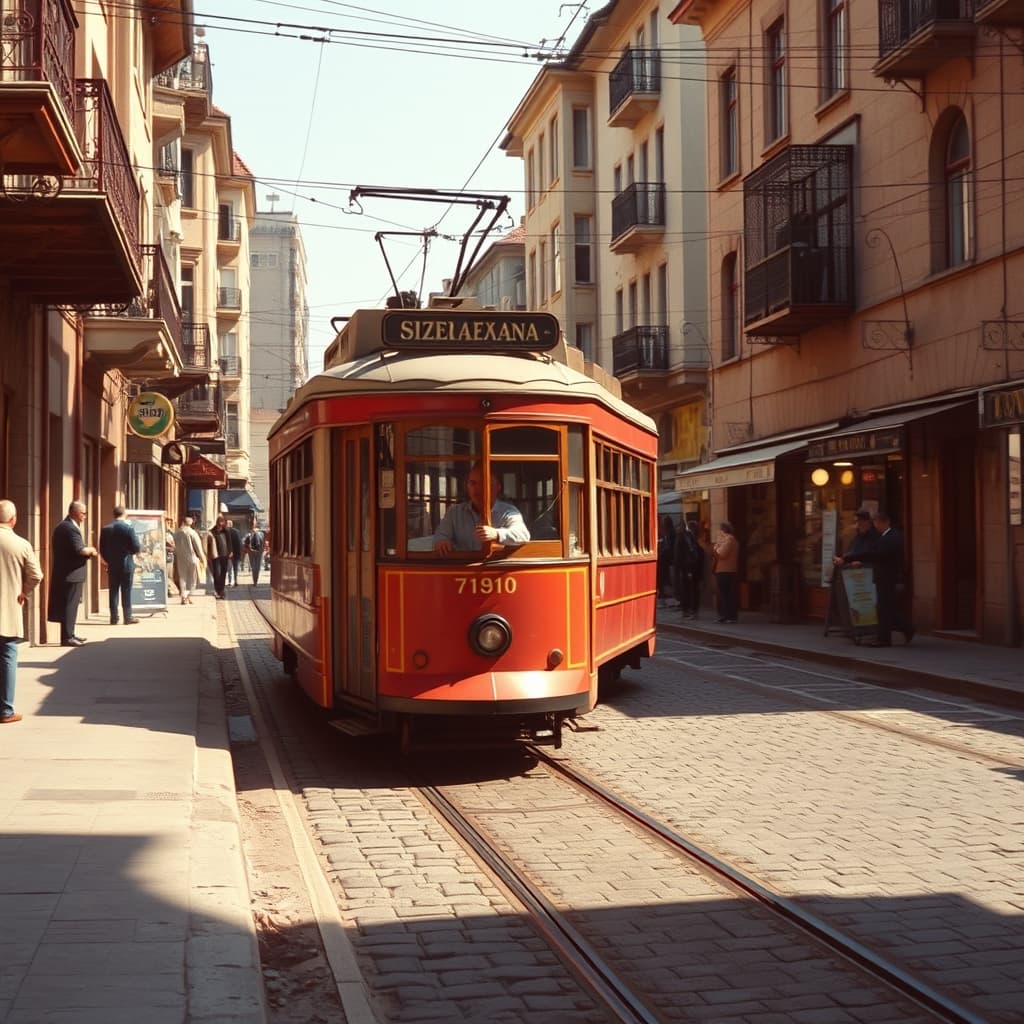
A tram announced its place in the city through sound before it reached the stop. The bell warned pedestrians, steel wheels spoke against curves and the motor changed tone as the car climbed. These repeated signals divided the day into arrivals and departures that shopkeepers, workers, pupils and residents learned to recognise without constantly consulting a clock.
The rhythm was not produced by the vehicle alone. Tracks fixed a path through streets shared with carts, early motor traffic and people on foot. Stops gathered passengers into temporary queues. Electricity, maintenance depots, schedules and trained staff supported every visible journey. When one part failed, the delay travelled along the line.
The Stop Became a Small Urban Centre
Newsstands, food sellers and shops benefited from predictable foot traffic. Passengers used waiting time for small purchases or conversation. A stop could make one corner commercially valuable while leaving another quieter. Shelter, lighting and clear information determined whether waiting felt manageable in rain, wind or summer heat.
Boarding demanded coordination. Conductors sold or checked tickets, called stops and watched the platform or step. Crowding made movement difficult for older people, children, disabled passengers and anyone carrying parcels. Romantic images of people clinging to an open car should not obscure the injuries and exclusions unsafe travel could produce.
Rails Required Constant Street Work
Track grooves collected dirt and water. Points, overhead wires and road surfaces needed inspection. Repairs disrupted traffic and generated noise, yet neglect created greater danger. Depot workers maintained brakes, motors, wheels and wooden or metal bodies after passengers went home.
Weather changed adhesion and visibility. Drivers needed distance to stop, while pedestrians had to understand that a rail vehicle could not swerve. The bell was communication, not decoration. Street rules developed around the physical limits of a tram sharing dense urban space.
The Timetable Linked Separate Lives
An early service made factory or school arrival possible; a final service defined how late an evening could extend. Missed connections had consequences for wages, lessons and family routines. Regular fares also affected household budgets, so walking part of the route or buying period tickets could become an economic calculation.
As buses, cars and road planning expanded, many tram networks contracted or disappeared before some cities later reconsidered rail. Removal altered more than transport. Shops lost passing customers, streets gained other traffic and familiar sounds vanished. Revival systems often use new technology and should not be treated as simple returns to the past.
Ticket design also deserves attention. Transfers, punched zones and fare classes reveal how passengers proved a journey and how conductors accounted for cash. A tiny cancelled ticket can link one passenger route to a wider administrative system.
A Digital Nostalgia Archive can connect tickets, timetables, route maps, depot records, driver testimony, stop photographs and street sound. Exact line numbers and dates help prevent memories of different routes from merging. Trams remain vivid because they made public time audible. Their tempo came from thousands of coordinated acts: current reaching the wire, a conductor closing the platform, a bell clearing the rail and a city adjusting its steps to the next scheduled car.