 Eski Pano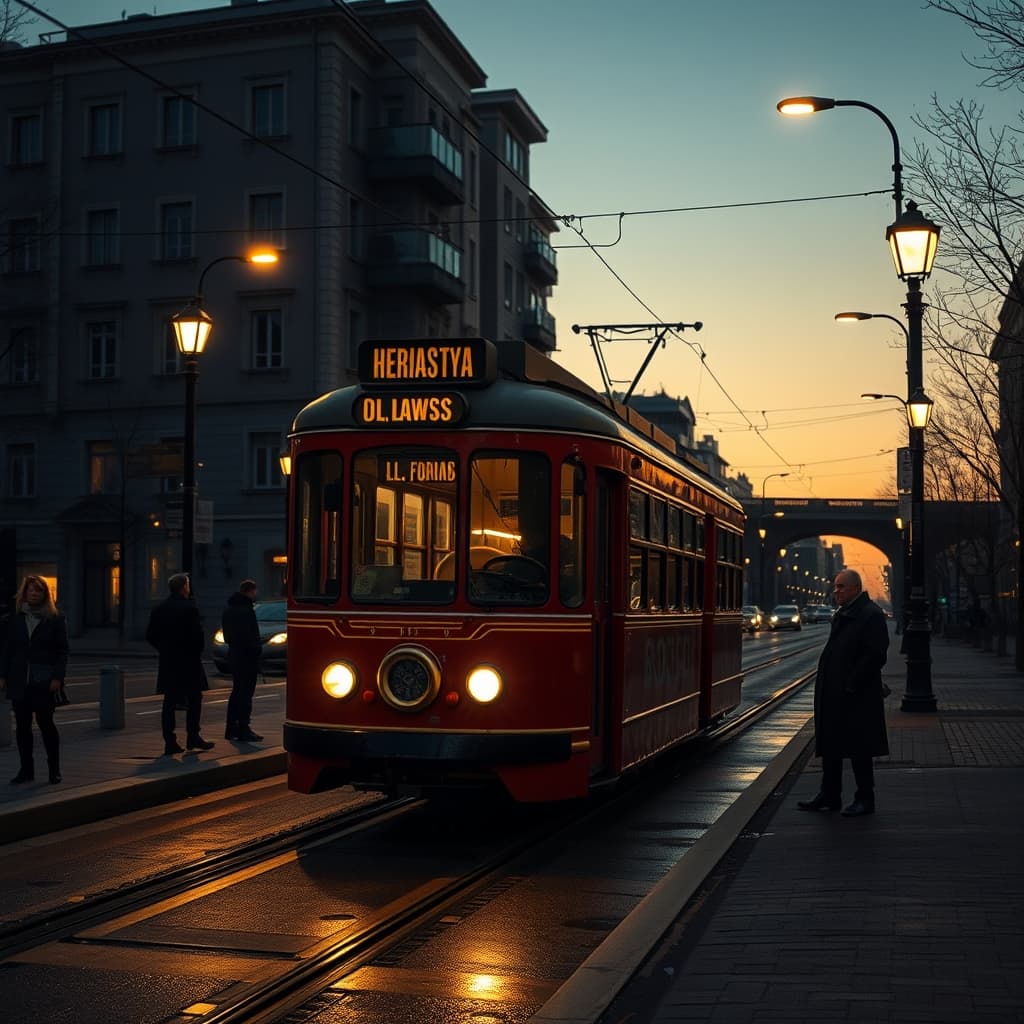
An old photograph of a tram beneath street lamps contains two overlapping systems. The rails organised movement along the road, while pools of light helped passengers judge the pavement, find a stop and recognise where to leave the car. The scene may look calm from a distance, yet evening travel required constant attention to vehicles, pedestrians, conductors, weather and the uneven visibility between one lamp and the next. Reading those details makes the image more useful than a general symbol of urban nostalgia.
Begin with what the photograph can actually establish. Note the position of rails, overhead equipment, platforms or stopping signs, kerbs, crossings, shop fronts and lamps. Record the direction of shadows and whether the tram interior is lit. Do not identify a district, route or decade from atmosphere alone. A vehicle number, architectural feature or track layout can become a research lead, but it needs confirmation from maps, timetables, municipal records or another dated image.
A Tram Stop Could Exist Between Pools of Light
Not every stop had the same relationship to a lamp. Some waiting areas were clearly illuminated; others borrowed light from a shop, vehicle or nearby entrance. A bright photograph can also be misleading because long exposure, retouching or modern scanning may reveal more than a passenger saw. When cataloguing the image, distinguish visible light sources from inferred brightness and avoid describing every dark area as unsafe without supporting evidence.
Passengers used more than signage to orient themselves. A bend in the track, the sound of wheels, a familiar shop window, a square or a change in gradient could signal the next stop. Conductors and fellow passengers sometimes supplied information, especially where signs were small or literacy and vision varied. These practices mattered, but they should not be romanticised as a substitute for clear, accessible wayfinding. Dependence on local knowledge could disadvantage a visitor or anyone unable to ask for help.
Rails Changed How Pedestrians Crossed the Street
Tracks created a predictable line for the tram but a complicated surface for everyone else. Pedestrians had to judge the tram, other traffic and gaps between rails. Rain could add reflection and reduce contrast; coats, umbrellas and crowded pavements could narrow sight lines. Historic images rarely show the full risk pattern, so an archive should not turn a quiet captured second into proof that older streets were automatically safer.
Street lighting also shaped work around the tram. Drivers and conductors needed to recognise stops and movement outside; maintenance crews had to inspect visible equipment; nearby businesses adjusted closing routines to the arrival of evening passengers. The lamp was therefore not merely decoration. It extended the usable hours of a transport corridor, although coverage, reliability and brightness differed from place to place.
Photographing the Night Could Rewrite the Night
Camera technology influenced what survived. Motion blur can make a tram appear faster, while a stationary exposure can empty a busy street. Reflections may enlarge a lamp, and damaged negatives can erase wires or faces. Keep an unedited scan, document tonal corrections and preserve the photograph’s borders and reverse. A printed caption should be transcribed as a source, not accepted automatically as fact.
Comparing several images is more reliable than reading one in isolation. Place views from different seasons and times beside route maps and service notices. Look for relocated stops, altered kerbs, new lamps, removed tracks and changing shop uses. The aim is not to reconstruct a perfect cinematic avenue, but to understand how transport and illumination were coordinated—or failed to be coordinated—in everyday movement.
Privacy and rights remain relevant. A street photograph may contain identifiable people, private interiors, advertisements or a credited photographer. Ownership of the print does not necessarily include permission for unrestricted reproduction. Record creator, source, date range and rights status separately, and use limited display or redaction where justified rather than stripping the image of context.
The enduring tempo of the tram came from repeated decisions: when to step forward, where to wait, how to recognise a stop and when the last service had passed. Street lamps made some of those decisions visible while leaving spaces of uncertainty between them. A Digital Nostalgia Archive can preserve that relationship with precision, showing the old city not as a permanently glowing stage but as a working night environment assembled from rails, light, sound and learned routes.