 Eski Pano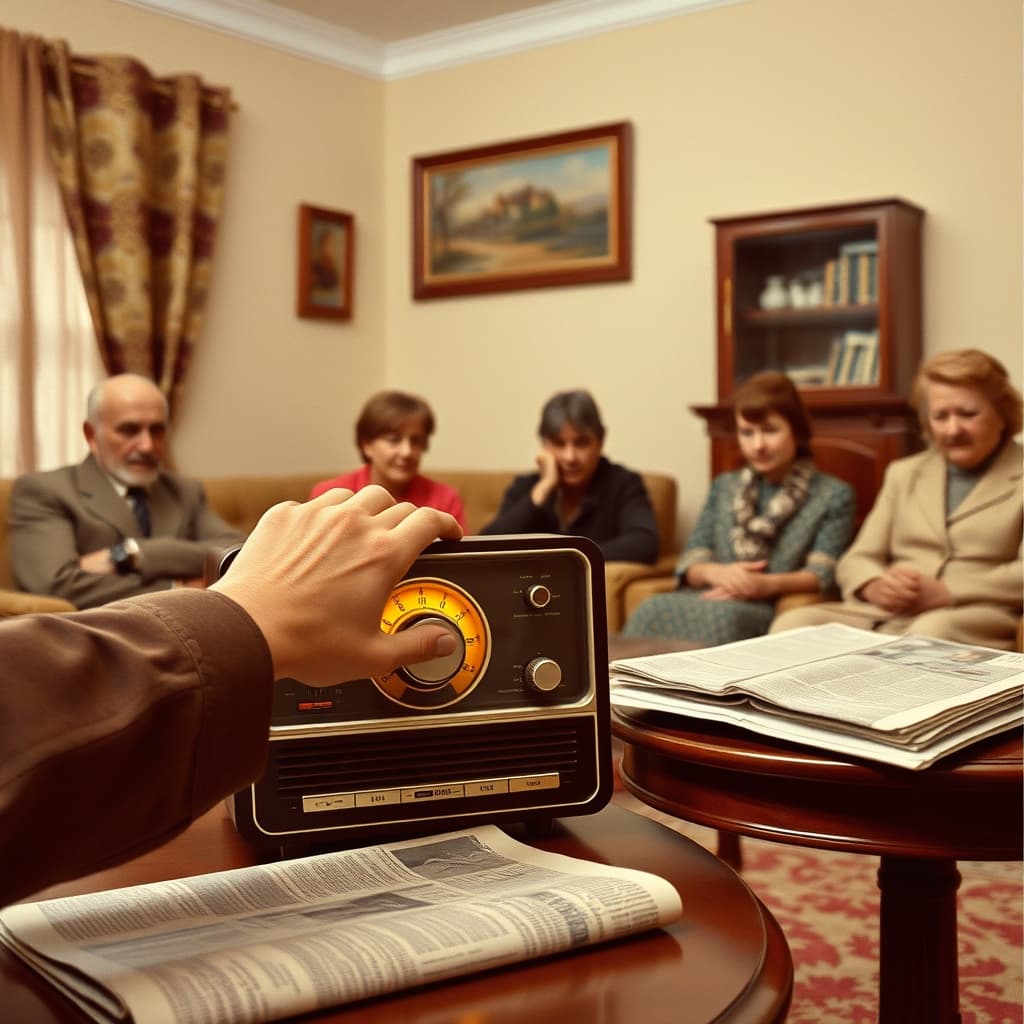
Before a radio programme began, somebody had to remember the time, prepare the set and find the station. That sequence is easy to overlook when a modern listener presses a saved preset. In a household radio session, listening together depended on small acts of coordination: a newspaper schedule or remembered announcement, a dial turned slowly, volume negotiated with the room and other tasks arranged around the broadcast.
The exact procedure varied with the receiver, place and period. Some sets displayed station names or frequency markings; reception changed with antenna position, weather, building materials and local interference. An archive should resist turning one family’s method into a universal technical rule. The useful record identifies the particular set where possible, photographs its controls and collects testimony about how people actually found programmes.
The Programme Began on the Household Clock
A broadcast had a fixed start even when domestic work did not. Meals, homework, visits and bedtime could be shifted or hurried. One person might remind the others; another warmed the receiver or adjusted the antenna. Missing the opening mattered because replay was not expected. This time discipline helps explain why a familiar signature tune could cause conversation to stop before the announcer spoke.
Programme information travelled through printed schedules, newspaper columns, earlier announcements and word of mouth. Those sources could be incomplete or changed at short notice. Preserve a clipping with its publication and date, not as an isolated image. Handwritten circles, corrections or notes may show what a household intended to hear, although they do not prove that everyone listened.
Tuning Was a Search, Not a Single Click
The operator moved across the scale, listening for speech or music to strengthen and interference to fade. Overshooting meant returning carefully. The apparent position of a pointer should not be used to claim a precise station today without model documentation and local frequency evidence. Components age, alignment changes and photographed controls may have been moved after the radio stopped working.
Volume was social as well as technical. It needed to serve people at different distances without overwhelming conversation, a sleeping child or a neighbour. The clearest seat might belong to an older relative or the person who had chosen the programme. These arrangements reveal authority and care, but they could also exclude: not everyone selected the station, understood the language or was free to remain in the room.
Record the Set Without Powering It Unsafely
An inherited radio should not be plugged in merely to recreate the sound. Perished wiring, capacitors, damaged insulation and improvised repairs may create shock or fire hazards even when the cabinet looks intact. Photograph the exterior, rear panel, plug, dial and repairs while disconnected. A qualified technician should assess an unknown mains-powered set before operation. Never bypass fuses, earth arrangements or safety components.
If the radio is safe to demonstrate, document the conditions: location, antenna, band, approximate tuning process and source of the broadcast. Do not present modern audio played nearby as sound from the receiver. For a silent object, oral testimony, manuals and period schedules can reconstruct use honestly without staging electrical risk.
The room itself belongs in the record. Curtains, furniture, open windows and the position of the set affected audibility and social arrangement. Note who sat, who continued working and who moved closer during quiet passages. Such details prevent “the family gathered around the radio” from becoming a decorative cliché; they show the practical distribution of attention inside a home.
Copyright and privacy apply to surviving recordings and recollections. A home tape of a broadcast may include family speech, while a programme remains protected independently of the physical carrier. Catalogue titles, dates and context without assuming that owning a tape grants publication rights. Seek permission before sharing identifiable domestic voices.
The excitement of analogue radio did not live only in warm sound. It came from anticipation and from the possibility that the desired signal might be missed. Programme time, dial movement and household cooperation turned reception into an event. A Digital Nostalgia Archive preserves that event best when it records both the audible programme and the quiet work required to make the room ready for it.