 Eski Pano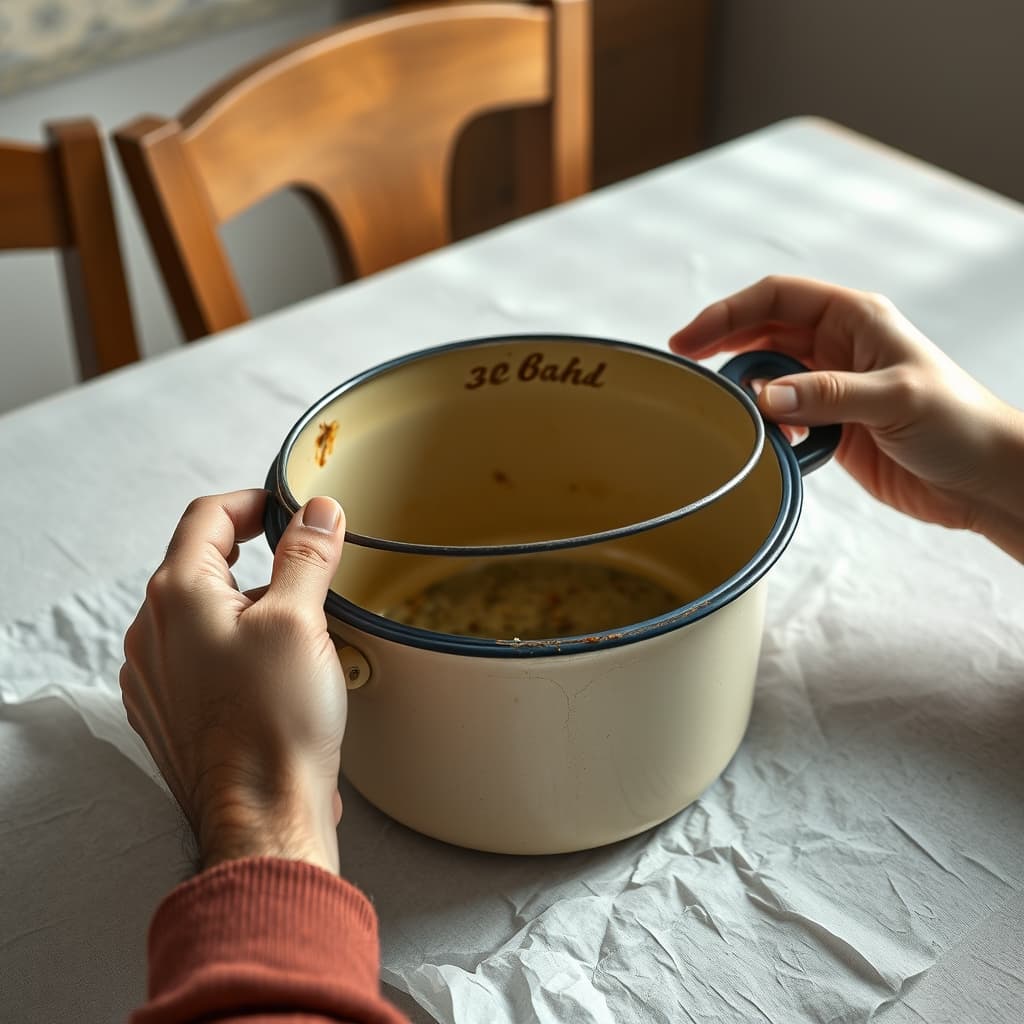
An enamel pot can remain on a family kitchen shelf long after its last meal. Its coloured surface, dark rim and familiar handles may look durable, but age does not affect every part equally. Fired enamel can chip, exposed metal can corrode, handles can loosen and an old repair can conceal weakness. Deciding whether the pot should cook again is therefore a safety question, not a test of affection or authenticity.
Start with documentation rather than washing or heating. Photograph the pot from all sides, inside, base, rim, lid, handles and any maker’s mark. Note dimensions, colour, decoration, chips, cracks, rust, distortion and residue. Record what relatives remember about its use, but label those memories as testimony. A pot described as “grandmother’s soup pot” still needs physical assessment before contact with food.
Interior Damage Matters More Than Decorative Wear
Small marks on the exterior may be mainly cosmetic, while damage on the cooking surface can expose metal and create places that are difficult to clean. Rust, flaking, sharp edges, deep pitting, spreading cracks or unknown deposits are reasons to stop and seek informed advice. Do not scrape aggressively to discover what lies underneath. A clean-looking surface is not proof that a coating, repair or previous use is food-safe.
The underlying metal and age of manufacture may be uncertain. Imported, handmade and industrial pieces can differ, and later repainting may not be suitable for heat or food. Home test kits and internet colour charts cannot establish every coating or contaminant. If continued culinary use matters, consult a conservator, product-safety authority or other appropriately qualified specialist who can evaluate the actual object.
Handles and Lids Carry Hidden Loads
A loose handle becomes more dangerous when the pot is hot and full. Check fasteners, cracks around attachments, corrosion and movement without forcing them. A lid that no longer sits correctly may fall or trap pressure in a way the vessel was not designed to manage. Never use an old enamel pot as a pressure vessel, and do not improvise wire, adhesive or a non-heat-resistant screw for a working repair.
Heating can enlarge existing cracks through expansion. Rapid temperature change, an empty pot on a flame and impact against a hard sink can worsen damage. Even an apparently stable heirloom should not be “tested” at high heat for a photograph. A modern food-safe pot can carry the family dish while the historic vessel remains nearby as a clearly identified display object.
Gentle Cleaning Preserves Evidence
Before cleaning, decide whether soot, staining or a repair documents use. Remove loose dust with a soft brush. Avoid steel wool, abrasive powder, bleach, long soaking and strong acids, which can scratch enamel or accelerate corrosion at exposed edges. Keep water away from unstable cracks and dry a stable object promptly. When the material or residue is unknown, professional conservation advice is safer than a household remedy.
Storage should support the base and protect chipped rims from contact. Do not stack heavy pans inside the pot or hang it from a weakened handle. Use inert padding between lid and rim, keep the object dry and avoid direct sun and rapid temperature changes. Detached fragments should remain labelled with the pot. Adhesive labels and tape do not belong on the enamel.
If the pot is retired from cooking, its story does not end. Display can include a photograph of it in the kitchen, a written account of the dishes associated with it and an image of a modern pot continuing the tradition. Avoid filling the historic vessel with soil, candles or wet flowers; a decorative second life can cause damage as easily as cooking.
Catalogue historic repairs rather than erasing them. A replaced handle, a patch or a different lid may reveal scarcity, ingenuity and the value assigned to the vessel. At the same time, a resourceful old repair is not automatically safe by current standards. Cultural meaning and operational approval are separate judgements.
The quiet splendour of enamelware lies partly in the tension between resilience and vulnerability. The pot survived because it was useful, repaired and kept, but survival does not guarantee unlimited service. A Digital Nostalgia Archive honours the kitchen skill around it by recording wear honestly and choosing preservation when heat, food or lifting would place the object—and the people using it—at risk.