 Eski Pano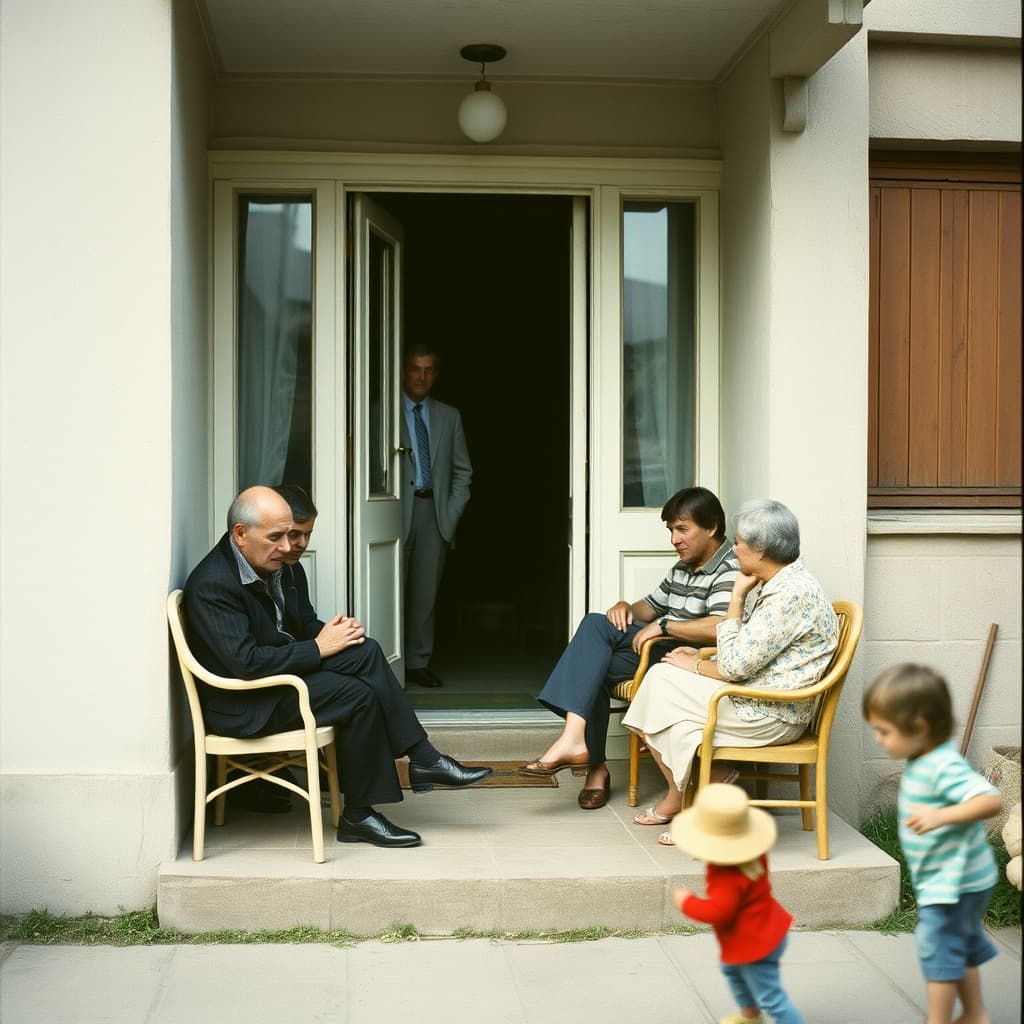
A doorstep conversation occupied an uncertain space: neither fully inside the home nor completely anonymous like a passing encounter. A chair, low stool or section of step could become a temporary meeting place, particularly on a mild holiday afternoon. Familiarity made joining look effortless, but the gathering usually had rules about who sat where, how long one stayed, what could be repeated and when hospitality became an obligation.
Those rules differed by street, household, gender, age and period. They are best reconstructed through several testimonies rather than a single affectionate memory. Ask participants where people positioned themselves, whether the doorway remained open, who brought chairs, how children entered the conversation and what signalled that it was time to leave. Record disagreement; it may reveal boundaries that nostalgia smooths away.
The Threshold Controlled Access
The physical doorway allowed a host to remain connected to work inside while acknowledging the street. A person could peel vegetables, watch a child or listen for a kettle without receiving a formal guest. Yet not everyone could occupy that threshold equally. A tenant, newcomer, young woman, disabled neighbour or someone from another social group might encounter different expectations. Calling the doorstep a shared living room hides those unequal permissions.
Seating expressed duration and standing. A passing exchange required no chair; offering one invited a longer stay. The shaded place, the wall that supported an older person and the position with a view of playing children all had practical value. Photographing the setting should include these spatial relations rather than arranging chairs into an ideal semicircle that never existed.
News Travelled With an Obligation to Judge It
Doorstep talk carried notices about illness, work, visitors, repairs, ceremonies and children. It could mobilise help quickly, but it also carried rumour. A careful archive distinguishes “people heard” from a verified event. Names and sensitive details should not be published merely because they circulated publicly years ago. Repetition in a neighbourhood is not consent.
Trust grew through reciprocity: watching a doorway briefly, returning a dish, sharing a tool or alerting someone to a delivery. Such acts had limits and could create debts or surveillance as well as comfort. A neighbour who always knew who arrived might provide security to one person and unwanted scrutiny to another. Both experiences belong in an honest account.
Timing Protected the Household
Holiday leisure did not mean unlimited availability. Meal preparation, rest, prayer, work shifts and care duties shaped when conversation was welcome. A changed tone, a standing host or chairs being collected could close the meeting without a direct dismissal. Visitors learned these cues. Missing them could turn sociability into burden, especially for the household repeatedly expected to serve tea or supervise children.
Sound also marked the boundary. Voices carried into open windows and across narrow streets. Participants might lower their volume for family matters, move closer or postpone a subject. Others could overhear without being part of the circle. When collecting oral history, ask what was deliberately kept indoors; silence is part of the communication system, not an empty space to fill with speculation.
Children learned local relationships from the edge of these gatherings. They delivered messages, listened, interrupted and were sent away when topics changed. The experience could offer belonging and informal supervision, but children also deserve privacy. An archive should not present adult access to every child’s movement as inherently safe, nor publish current routines in the name of recreating community.
Modern apartment entrances, traffic, climate control, work patterns and digital messaging have altered the conditions for spontaneous doorstep talk. The practice has not simply vanished; it appears in courtyards, building fronts, benches and brief exchanges. Revival cannot be achieved by placing chairs outside alone. It requires consent, accessible space, respect for quiet and freedom to participate or decline.
The sense of security associated with doorstep conversation came from repeated recognition, not from an architecture that guaranteed kindness. Its strength was rapid mutual awareness; its danger was that awareness becoming judgement or exclusion. A Digital Nostalgia Archive should preserve both. The threshold matters precisely because it shows neighbourhood trust being negotiated in small choices—inviting, listening, helping, withholding and knowing when to let someone close the door.