 Eski Pano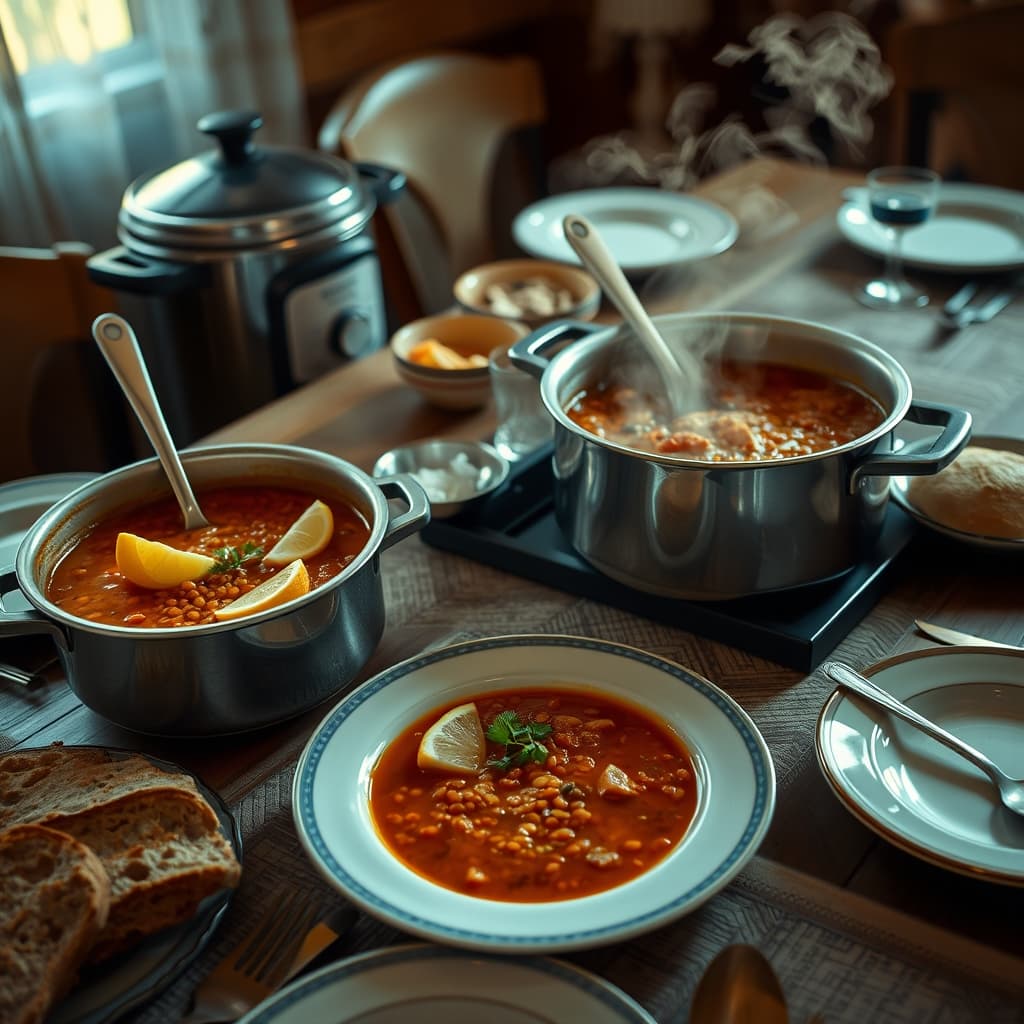
“Mother-style lentil soup” usually names a relationship before it names a formula. The phrase may recall a particular thickness, the smell of onion in the kitchen, a squeeze of lemon at the table or the sound of bowls being placed for a crowded meal. Another household can use the same words for a noticeably different soup. Preserving the memory therefore requires more than converting affection into exact measurements that nobody actually used.
Begin with an interview beside the utensils and ingredients, if possible. Ask the cook to describe the sequence before asking for quantities: what entered the pot first, what changed colour, when water was added, how softness was judged and whether the soup was strained, blended or left textured. Record uncertainty openly. “Enough water for this pot” is meaningful evidence when the pot’s capacity and the cook’s visual cue are also documented.
Texture Can Be Recorded Without Pretending to Measure It
Words such as thick, smooth, grainy or light depend on the speaker. Photograph a spoonful and the way soup settles in a bowl, while noting temperature and whether it had rested. Ask what would make the cook add water and what would count as too thin. A short video of safe preparation may preserve movement better than forcing an estimated gram value into the transcript.
Ingredients vary across region, season, budget and household preference. Red or green lentils, onion, flour, potato, carrot, tomato products, butter, oil and spices may appear in different combinations. The archive should not declare one list original or authentic without strong historical evidence. Instead, identify the family, place and approximate period connected to the version, and record later substitutions separately.
The Crowded Table Changed the Pot
Cooking for many people affected consistency and service. The pot might be extended when an unexpected relative arrived, while lemon, dried mint, chilli or bread allowed individuals to adjust their bowls. Serving order could follow age, work schedule or whoever was nearest the kitchen. These details reveal household organisation, but should be collected as that family’s practice rather than a rule for Turkish tables.
The person credited as “mother” may not have worked alone. Someone sorted lentils, carried bread, set bowls, watched the stove or washed the pot. Naming this labour prevents the warm image of a crowded meal from hiding effort. Ask who learned the method, who later changed it and whether younger cooks understood the visual cues differently.
Food Safety Belongs Beside Memory
Dry lentils should be checked for foreign material and stored according to current guidance. Hands, surfaces and utensils need ordinary hygiene, and ingredients with uncertain condition should not be used for a reconstruction. Hot soup can cause serious burns: stable handles, clear walking routes and careful serving matter, especially around children. An old enamel or repaired pot should be assessed before culinary use; a modern vessel can reproduce the method without risking an heirloom.
Cooked soup should be served or held, cooled, refrigerated and reheated according to the advice of the relevant food authority. A family recollection of leaving a pot out overnight is not a practice to reenact. Note allergens and dietary needs, including ingredients added to stock, seasoning or garnish. The archive can preserve taste while clearly separating historical testimony from present-day safety guidance.
A reconstructed tasting benefits from version control. Date the trial, list the ingredients actually used, identify every departure from the testimony and invite the original cook to comment without treating memory as a laboratory result. If the texture is wrong, retain the failed notes; they may reveal an unspoken technique such as resting, pan shape or heat level.
Photographs should avoid manufacturing a false historic scene. A modern cooking session can include the inherited ladle or tablecloth if safe, but the caption must say it is a reconstruction. Obtain permission before identifying relatives or publishing a handwritten recipe. Food stains, corrections and marginal notes on the page may be culturally valuable and should be digitised before cleaning or display.
The strongest archive record may contain several versions: an oral account, a later written card, a sibling’s correction and a modern attempt. Their differences are not defects to edit away. They show how a household dish moved between memory, available ingredients and new kitchens.
A Digital Nostalgia Archive preserves mother-style lentil soup by keeping this movement visible. The goal is not to freeze one bowl as the national standard, but to document how a particular family recognised its soup and made room at its table. Sequence, texture, labour, variation and safe contemporary interpretation together carry more truth than an invented perfect recipe.