 Eski Pano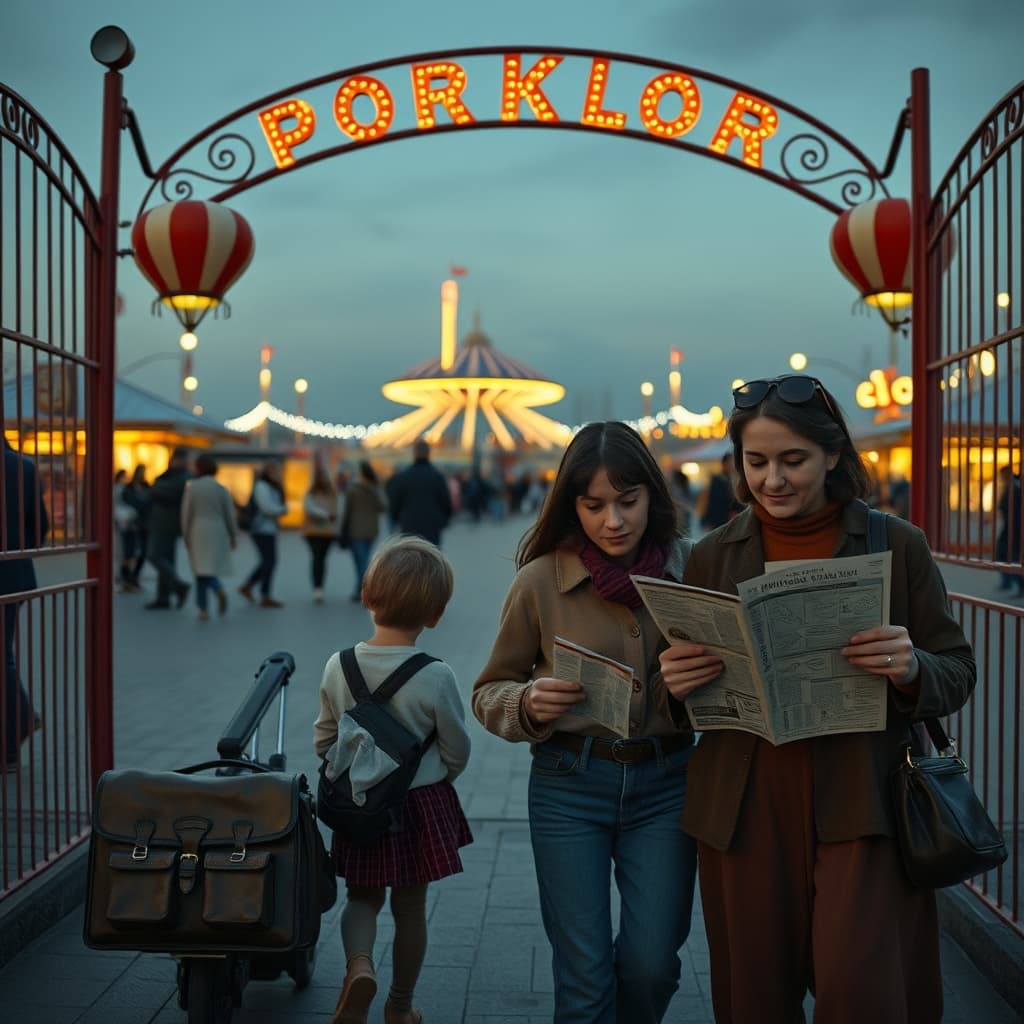
A family memory of the fairground often begins with arrival: a gate seen beyond a crowd, a ticket held carefully, lights coming on before the journey home. Yet the visit was not a single glowing scene. It required transport, money, timing, food, meeting places and decisions about which halls could be seen before children tired. Reconstructing that day from evidence reveals how a seasonal fair became a practical part of city life rather than only a symbol of national progress.
Gather the surviving items before writing a narrative. Tickets, leaflets, envelopes, receipts, photographs, newspaper advertisements and notes on a calendar may each answer a different question. Photograph front and reverse, record dimensions and transcribe visible information. Keep items together when their relationship is known, but do not assume that every loose brochure was collected on the same visit. A printed year establishes production, not necessarily attendance.
The School Bell Narrowed the Visiting Day
When a fair season overlapped with school, families often worked within a smaller window. The child might change clothes after class, eat early or travel directly with an adult. This timing affected which entrance they used, how long queues felt and whether evening illumination became part of the memory. It should be presented as family testimony unless school and fair schedules can be confirmed independently.
Ask each participant to draw the route separately. Mark the home area only broadly for privacy, then compare tram, bus or walking segments, gates, halls and reunion points. Conflicting routes do not automatically mean somebody is wrong; families may have attended more than once, entered from different sides or merged two years in memory. A map should display uncertainty with notes or alternative lines instead of forcing one neat path.
A National Showcase Was Built from Individual Stands
The phrase “the country’s shop window” can hide the work of exhibitors, cleaners, ticket staff, food sellers, technicians and transport workers. Identify what was actually displayed from catalogues, pavilion plans and dated photographs. Avoid claiming that one stand represented an entire industry or region. Promotional language shows how organisers wanted the fair to be understood; it does not prove that every visitor experienced it that way.
Children might remember scale and novelty more strongly than institutional purpose: a machine moving, a model house, a sample in a paper bag or an unfamiliar food. Adults might remember price, craftsmanship, employment possibilities or the difficulty of keeping a group together. Recording both views prevents the family visit from becoming either a policy summary or a sentimental childhood montage.
Photographs Show Choices as Well as Scenes
A camera was often used selectively. Film cost, lighting and crowd pressure could limit photographs to the entrance or a notable display. The absence of an image does not show that an event was unimportant. Examine clothing, shadows, temporary barriers, floor surfaces and objects being carried, but confirm identities and locations before naming them. Keep the original scan alongside any crop or colour correction.
The reverse may contain a studio stamp, processing date or handwritten caption. These clues need evaluation: processing could occur later, and captions may have been added years afterwards. Compare handwriting and paper with other family material. Treat an approximate date as approximate. Precision invented for a digital catalogue makes the record less reliable, not more useful.
A fair visit also had limits. Admission prices, travel distance, disability access, gender expectations, work schedules and crowded conditions could exclude people. Memories of abundance should sit beside evidence about who could enter and what they could afford. The fairground may have broadened horizons for some visitors while remaining distant or exhausting for others.
Rights and privacy require attention before publication. Tickets and maps may contain protected design; photographs include identifiable visitors and sometimes children. The family owning a print may not own the photographer’s rights. Record source, creator where known, permission and restrictions. Blur or limit display only where necessary, while preserving an unaltered archival master under appropriate access controls.
The strongest reconstruction does not claim to restore the whole fair. It follows one visit honestly from school bell or workplace to gate, selected halls, rest points and return journey. A Digital Nostalgia Archive can then show how the grand promise of a national showcase met the ordinary constraints of a family day. That meeting—between public display and private itinerary—is where the fairground left its most specific mark on city memory.