 Eski Pano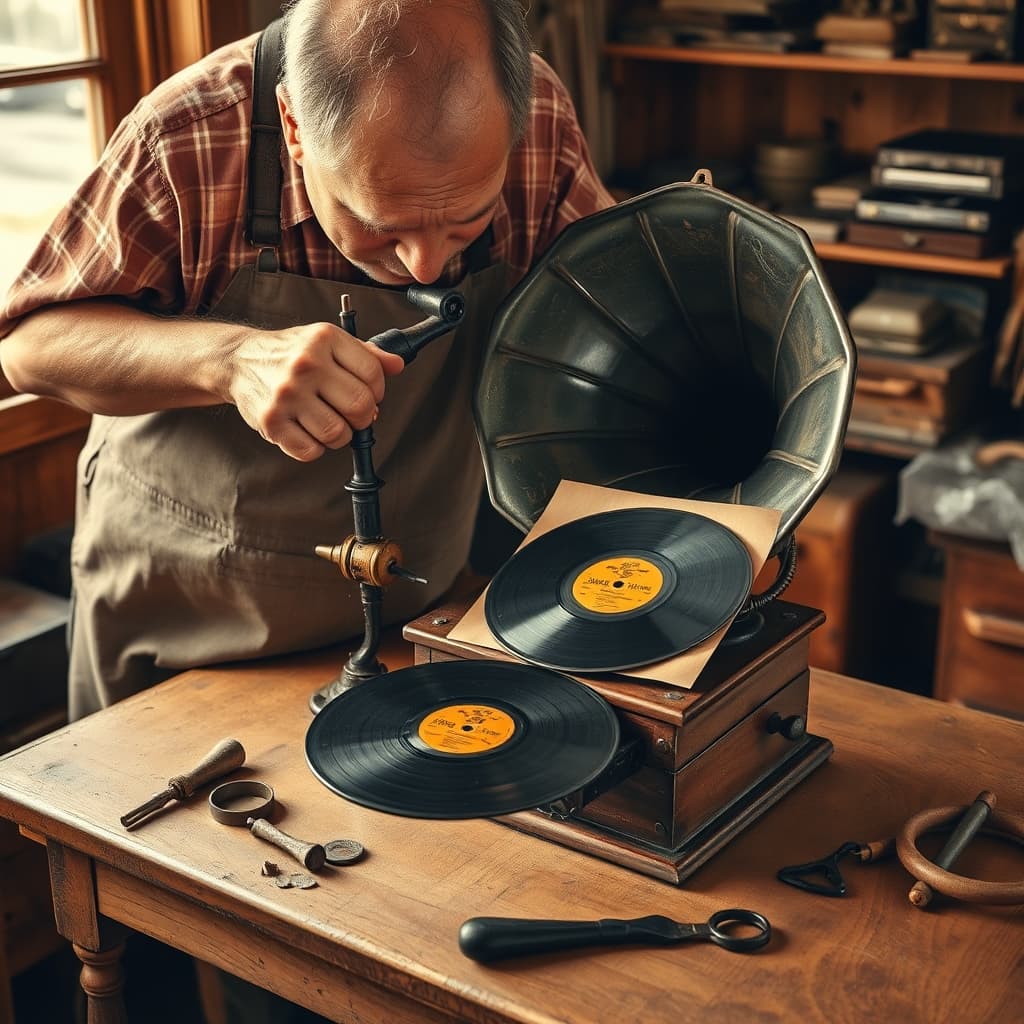
A gramophone brought to a repair bench did not receive its second life with the first turn of the crank. A careful repairer began by looking, listening without a record and deciding what should not be forced. The machine stored energy in springs, transferred movement through gears and placed mechanical load on a fragile disc. Treating it as simple furniture with a handle could damage both the mechanism and the recording someone hoped to hear.
Document the object before opening or cleaning it. Photograph cabinet, turntable, crank, brake, speed control, tonearm, soundbox, needle fitting, horn or grille, hinges, screws, labels and previous repairs. Record what arrived separately: records, needles, winding key and loose parts. Do not assign a model or date from decorative style alone; confirm markings in reliable catalogues or service material.
Resistance at the Crank Was Information
A crank that will not move, turns without resistance, slips, knocks or suddenly tightens is reporting a condition. More force is not diagnosis. A wound spring can release energy violently, so opening its housing is specialist work. The repairer observes movement, sound and stopping behaviour while protecting hands and mechanism. An owner should not imitate dismantling from a short online video.
The turntable should be checked without sacrificing a valuable record. Hardened grease, worn bearings, damaged gears or a deteriorated governor may affect rotation. Universal oiling is not a solution: the wrong lubricant or excess quantity can migrate onto friction surfaces and records. Existing service instructions and the actual mechanism must guide treatment.
The Soundbox Carried Weight to the Groove
The tonearm and soundbox need free, controlled movement. Stiff pivots, cracked gaskets, loose screws or a damaged diaphragm can distort sound and increase risk. Needle type and condition matter because a worn or unsuitable point can cut the groove. A new appropriate needle may be required for each play according to the machine and record format, but a specialist should confirm compatibility rather than relying on appearance.
Many early discs commonly described as shellac are brittle and can crack from impact, poor support or sudden temperature change. Labels and groove condition should be photographed under gentle light. Do not wash an unidentified disc with household cleaner or alcohol; materials vary, and liquid can damage labels and compounds. A cracked, flaking or rare disc is better digitised by an experienced audio archive than tested repeatedly.
Playback Is the Last Test, Not the First
Once the mechanism has been assessed and serviced, a repairer can choose a suitable non-unique test record and begin conservatively. Speed markings on the control are not proof of exact rotation after decades of wear. Measurement and trained listening may be required. The stylus should enter and leave the groove without being dropped, and the brake must work predictably.
A gramophone’s acoustic volume cannot be reduced like an electronic amplifier. Room placement, doors or shutters on some designs, and the selected recording affect loudness. Covering vents, obstructing movement or adding improvised weight to the arm is unsafe. The demonstration area should be stable, clear of children’s hands and away from table edges.
Repair records are part of the heritage. Note the complaint, observations, parts retained, reversible interventions where possible and every replacement. Keep an original worn component in a labelled packet if safe and useful. A machine that contains later parts is not historically worthless; the changes may document decades of practical maintenance. They should be disclosed rather than disguised.
Digitisation separates access from repeated mechanical wear. Record the disc with suitable equipment and preserve an unedited master before noise reduction. Photograph the label and link the audio file to the physical item’s catalogue number. Copyright and performer rights may continue even when the machine and disc are old, so online publication requires a separate rights decision.
Hours beside a gramophone are often remembered through music, but the repair bench reveals another rhythm: inspect, test, stop, adjust and document. A Digital Nostalgia Archive preserves that patience by refusing the dramatic first crank. The repairer’s real gift was not simply making the turntable move; it was learning which movement, needle and record the machine could safely carry again.