 Eski Pano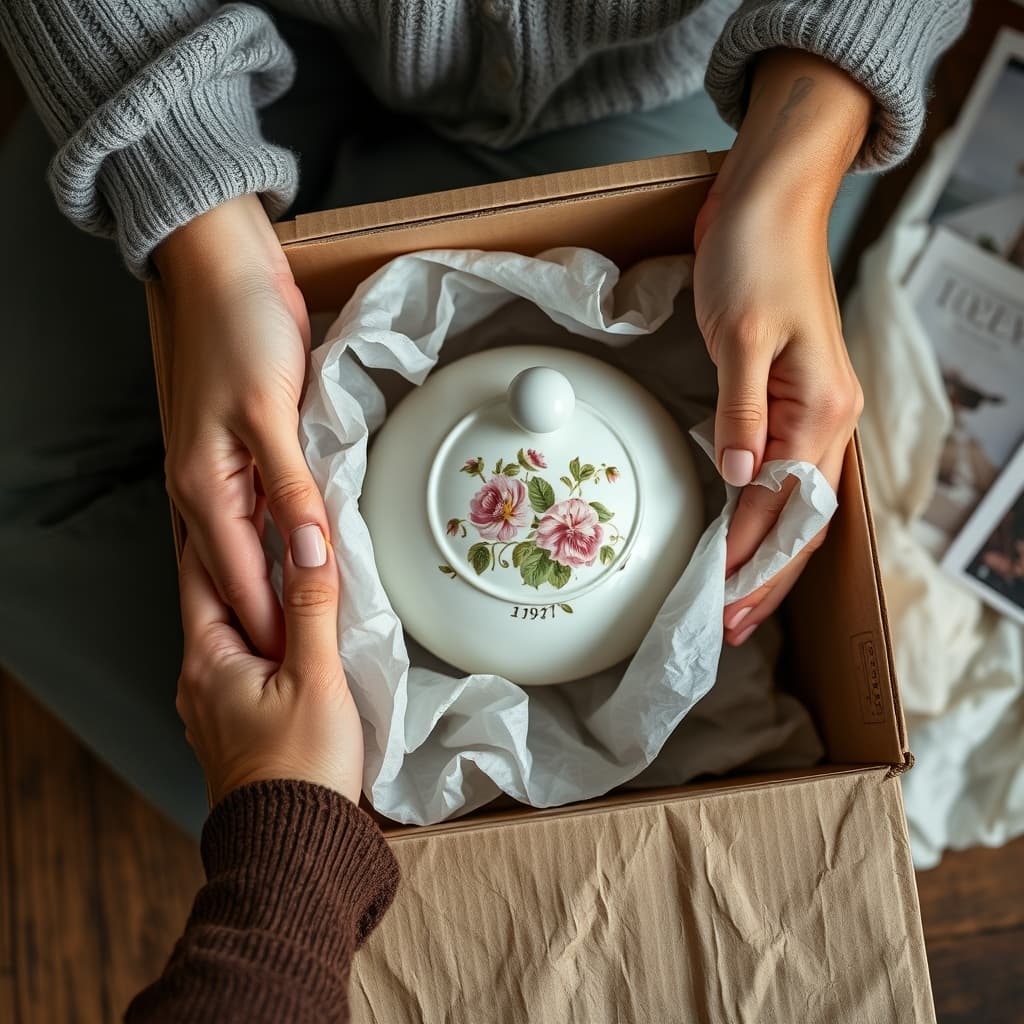
A porcelain sugar bowl often survives a house move because somebody decides it should travel by hand rather than disappear among ordinary kitchen boxes. Its lid, handles, foot and thin rim make that decision sensible. The object may look compact and strong, yet a hairline crack or old repair can fail under vibration. Packing it safely begins before wrapping, with a record of what the family is actually moving.
Photograph the bowl in neutral light from every side, then separately record the interior, base, maker’s mark, lid, knob, handles, decoration, chips and repairs. Use a scale and assign one catalogue number to the set while noting that lid and bowl are separate components. Write down who owned it and in which homes it was remembered, but distinguish family testimony from verified manufacture or date.
Empty the Bowl Before Assessing It
Sugar, sachets, coins or sewing items sometimes remain inside because the vessel acquired new uses. Remove contents carefully and catalogue any meaningful association separately. Food residue can attract pests and hold moisture. Do not wash an unstable object immediately; first determine whether decoration, gilding, adhesive or a repaired section could be affected by water.
Examine under gentle light without pressing on suspected cracks. A dull sound test, tapping, hot water or other improvised challenge can turn a stable hairline into a break. If the surface flakes, a handle moves or an old join opens, stop handling and seek a ceramics conservator. Home glue may stain porous edges, misalign fragments and complicate future repair.
The Lid Should Travel as Its Own Object
Leaving the lid seated allows it to knock against the bowl. Wrap each component separately in clean, non-abrasive archival tissue or another appropriate conservation material, then add cushioning that does not place pressure on the knob, rim or handles. Do not tape directly to porcelain. Small detachable pieces belong in a labelled enclosure inside the same clearly identified package.
Choose a rigid box with enough space for cushioning on every side but not so much that the object can migrate. Support hollow areas without forcing material tightly into them. Keep heavy objects out of the box and avoid stacking weight above it. Mark orientation and handling instructions on the outer container, while keeping an inventory copy separately in case labels are lost.
Transport Preserves Provenance as Well as Porcelain
Record the old address only at the privacy level appropriate for the archive, the packing date, packer, destination and condition at departure. On arrival, photograph the unopened package if damaged and then compare the object with the earlier condition images. This chain makes new chips distinguishable from historic wear and prevents a later family story from assigning every mark to a distant move.
Temperature and humidity changes matter, especially when an item moves from a damp store to a heated home. Allow a securely packed object to acclimatise before rapid unpacking if conservation advice recommends it. Never leave the box in a hot vehicle, wet entrance or unstable pile. Insurance and professional art handling may be appropriate where value, rarity or fragility is significant.
Once unpacked, store the bowl on a stable shelf away from edges and direct sun. A support or discreet museum-grade barrier can reduce sliding without gluing the object down. Do not lift by handles or lid knob. If displayed with the lid, ensure both are stable; otherwise store them separately but cross-reference their locations.
The sugar bowl’s decoration may reflect changing domestic taste, but pattern alone should not carry an unsupported social history. Compare marks and form with reliable ceramic sources, and state uncertainty. A worn gilded line can show handling; it cannot by itself identify who served guests or how wealthy a household was. Use and status need documentary context.
Moving an heirloom is a moment when memory becomes physical responsibility. The decision to wrap the lid separately, retain an old repair and write down the sequence of homes protects more than porcelain. A Digital Nostalgia Archive can preserve the sugar bowl as a travelling household object whose biography rests on evidence—condition, provenance and careful transfer—rather than a decorative story invented after the box is opened.