Eski Pano
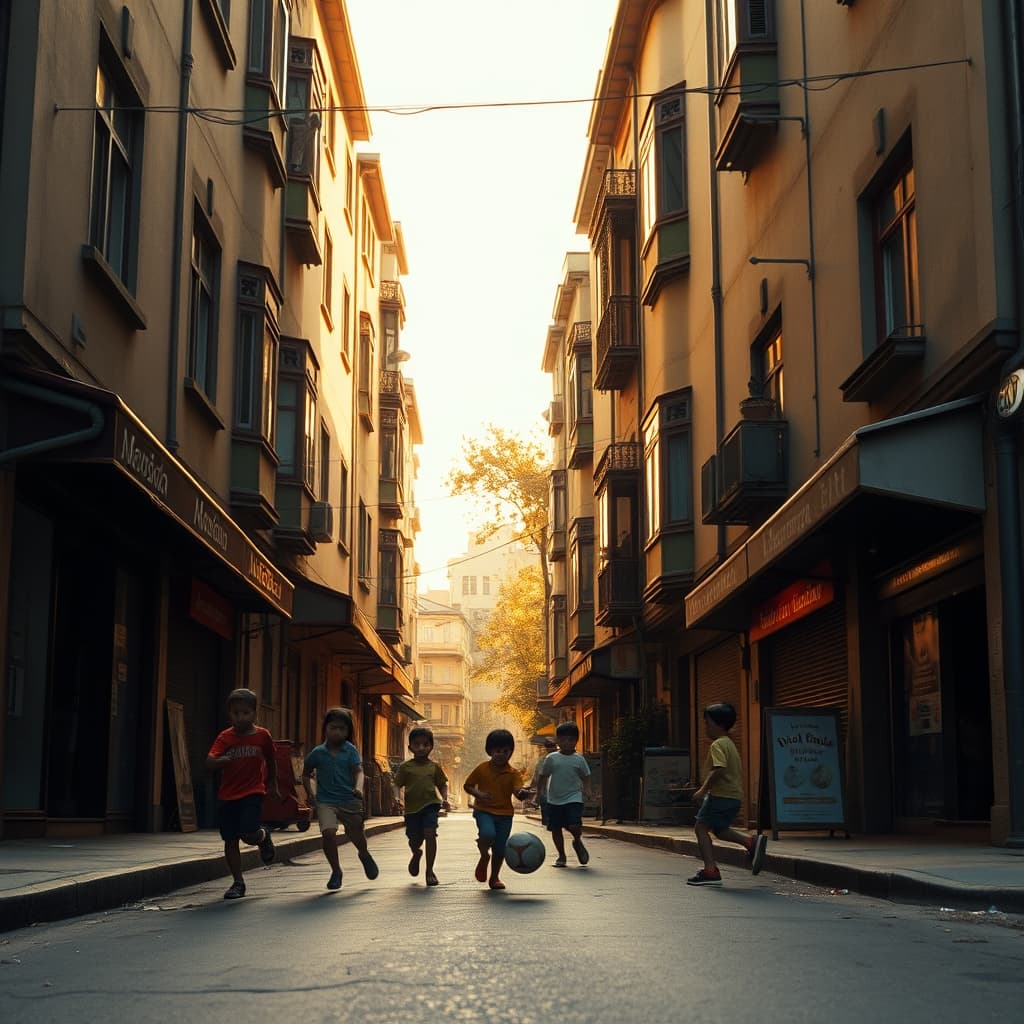
In old city life, children running after a ball were doing more than playing; they were setting the rhythm of the street. In the hours between afternoon and evening, the sounds rising from apartment entrances, shop fronts, and narrow side streets made it clear that the neighborhood was still fully alive. A ball struck the pavement, someone shouted, "pass it here," a mother sent a short warning from a window, and the grocer pulled a crate a little farther inside. The game created a shared order whose rules were unwritten yet known by everyone. While children ran through the very middle of urban life, adults took their own daily places around that motion. Part of the warmth that feels missing today was hidden precisely in that visible togetherness.
From the perspective of neighborhood culture, old street play was not merely children's entertainment, but a public school of coexistence linking generations. Children learned where they could run, which wall could become a goal, and near which window they should lower their voices. This gave not only game intelligence, but the etiquette of living together. Invisible rules such as not crashing into the greengrocer's display, slowing down when an elderly neighbor passed, or sending the fastest rather than the youngest child to fetch a runaway ball formed the neighborhood's common mind. Adults did not act as direct referees, yet their glances reminded everyone of limits. In that way the street produced a warmth that was both free and guided; a child felt not abandoned, but visibly held within a surrounding social frame.
The reason the same warmth is not found in today's housing compounds lies not only in architecture. The deeper difference concerns the way life touches life. In the old street, play happened in the middle of everyday activity: someone carrying bread home, someone seated on a stool, someone lowering a shop shutter, all while the voices of children mixed into the scene. The surroundings of play were alive. In modern compounds, by contrast, separated playgrounds are often safe yet isolated. Children's movement remains not at the center of life, but in a sterilized section reserved for it. This may provide comfort, but it weakens the feeling of encounter that once created neighborhood warmth. Warmth is born not only from closeness, but from different ages and habits entering the same frame.
Running after a ball in old city life also carved space deeply into childhood memory. Which wall made the ball bounce harder, which neighbor ended the game near evening prayer, under which window the cat slept, which grocer handed out water: all of these turned the neighborhood from an abstract address into a lived map. A child came to know the street not merely as a place one passed through, but as a space where one left a voice, made mistakes, was forgiven, and tried again. For adults too, such games were more than the sight of youthful energy. The future, noise, and liveliness of the neighborhood were growing before their eyes. A group of children chasing a ball was in fact a small engine that kept the feeling of neighborliness working every day.
When we look for that same warmth today, what we miss is not only stone streets or fewer cars. What we miss is a life in which people knew one another from nearby rather than from a distance. When children's play was visible, the neighborhood itself became visible; everyone entered one another's rhythm a little and adjusted a little in return. That is where the warmth left by children running after a ball in the middle of old city life comes from. In those streets, play was a natural language of social closeness. Today's compounds may offer comfort, but producing the same warmth requires not only space, but relationship. That is why the remembered scene remains so strong: the sound of the ball and the sound of neighborliness echoed in the same street.
Children Running After a Ball in the Very Middle of Old City Life: Why Is the Same Warmth Not Found in Today's Housing Compounds?