 Eski Pano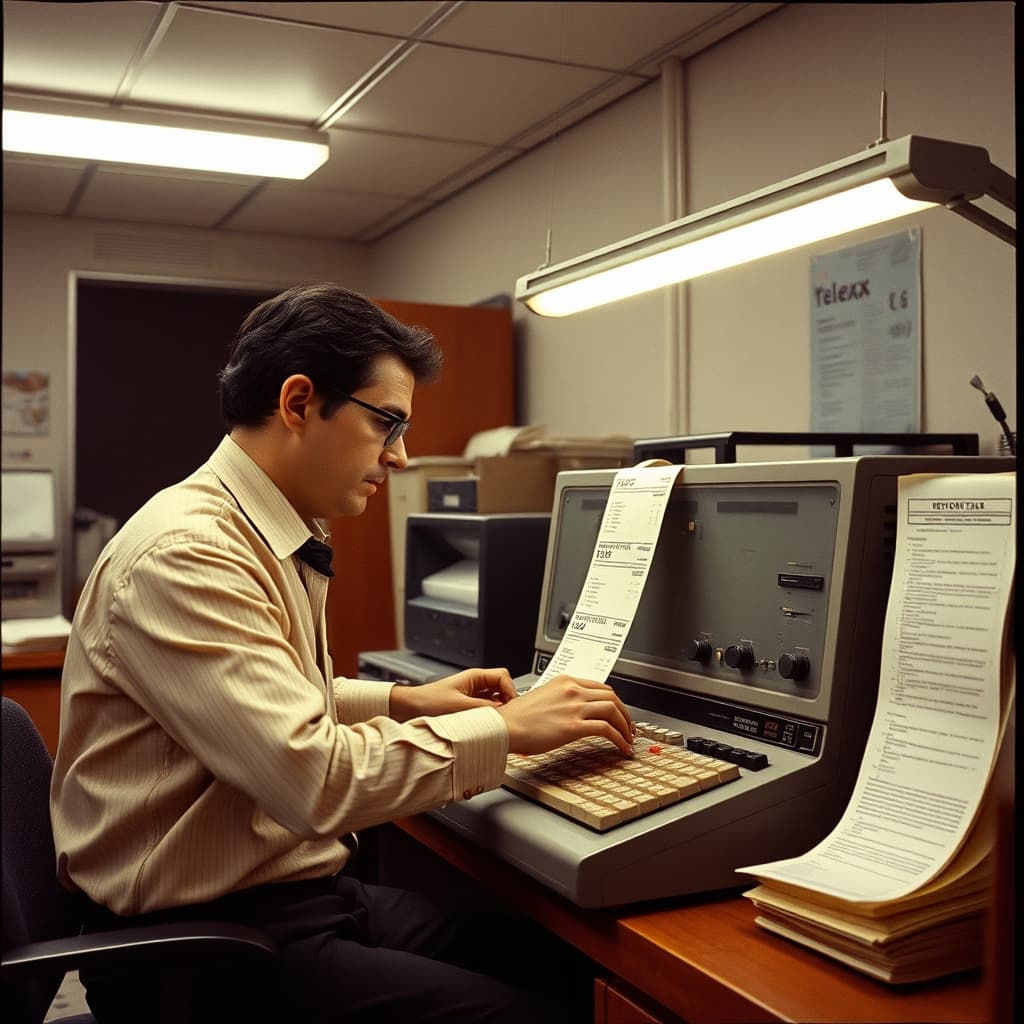
The telex machine belonged primarily to the working office, newsroom, travel agency, shipping desk, bank, and public institution. Its importance came from combining a keyboard, a telecommunications network, and a receiving printer. A message typed in one place could emerge as written text in another, giving organisations a fast record that telephone conversation alone did not provide. The machine's clatter was therefore not family entertainment; it was the sound of information becoming operational.
Sending a telex required more than improvising at the keyboard. Names, numbers, abbreviations, dates, and instructions needed checking because an error could travel immediately. Operators learned network procedures and the conventions of concise business language. They understood that connection time cost money and that a badly planned message occupied equipment needed by others.
Why Paper Tape Came Before the Connection
Many workflows used perforated paper tape to prepare text offline. A punching device translated characters into patterns of holes. The operator could check the tape, correct or recreate a section, and then feed it through a reader once the connection was established. Preparation reduced expensive network time and allowed a message to be sent at machine speed rather than typing speed.
The tape was both data carrier and fragile object. It could tear, fold, tangle, or be read in the wrong orientation. Rolls and strips needed labelling if they were retained. Their holes look abstract today, yet they encode exact choices made by an operator. Preserving a tape without its related message, machine standard, date, or office context leaves much of its meaning inaccessible.
Answerback and Mechanical Confidence
Telex networks used identifying codes, often called answerback sequences, to help confirm that the correct destination had answered. The remote machine could transmit its identity, giving the sender evidence about the connection. This did not eliminate every mistake, but it added a mechanical check to a human procedure. Operators still needed to compare codes and recognise when a connection was wrong or incomplete.
Printed copies created a record at both ends. They could be stamped, annotated, filed, or passed to another department. This material trail supported decisions about cargo, reservations, payments, reporting, and administration. It also created responsibilities around confidentiality. A message left on an unattended machine or discarded without care could expose information, reminding us that data security existed before digital screens.
The Operator Was Part of the System
Accounts of communication technology often celebrate the machine while overlooking the trained person beside it. Operators managed queues, formatted messages, diagnosed simple faults, changed paper and ribbon, and knew when to call a technician. They interpreted urgency without abandoning accuracy. Their work joined language, dexterity, memory, and institutional trust.
Maintenance shaped reliability. Paper dust, worn printing parts, ribbon problems, electrical faults, and network interruptions could degrade a message. Repair technicians used service manuals, test routines, and specialised tools. A machine that appears complete in a collection may still be unsafe to power, so electrical assessment should precede demonstrations. Historic paper should be handled cleanly, supported, and stored away from damaging light and humidity.
The telex lost its central role as fax, computer networks, and electronic mail changed office communication. Yet it offers a valuable lesson about digital culture's mechanical ancestry. Messages were encoded, transmitted, identified, printed, and archived through a chain that users could hear and touch. The school-route rush and turning calendar pages mentioned in later memories belong to the world outside the office; inside, the telex marked deadlines in another way. Its paper tape, answerback code, and operator's annotations show how urgent words acquired evidence before they became action.