 Eski Pano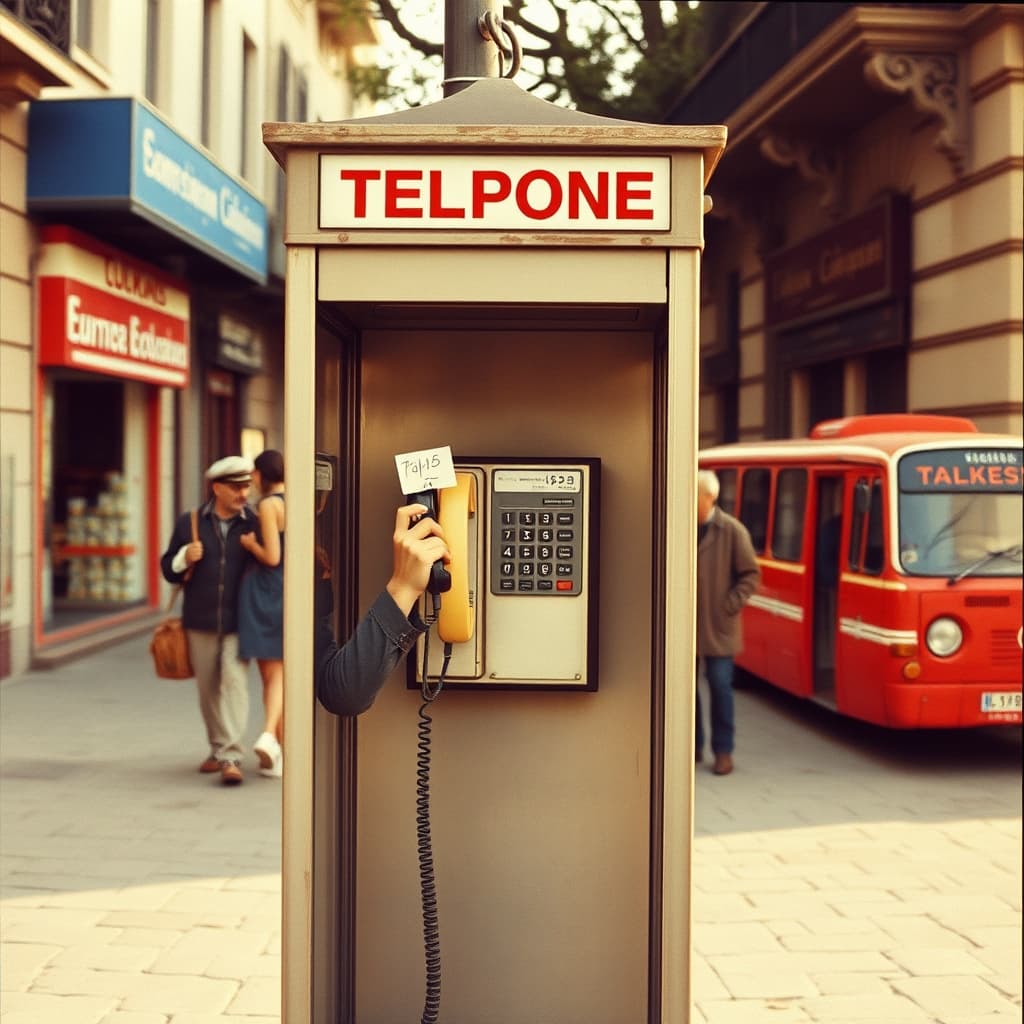
On a warm stone street, a telephone booth could turn a few impatient minutes into a family story. Someone arrived with coins, a written number, and news that could not wait for a letter. Through scratched glass, passers-by saw a hand lift the receiver and a face change as the distant voice answered. The booth was public architecture, yet the call inside might concern birth, illness, work, travel, or a long-awaited safe arrival.
Public telephones took different forms across place and period: enclosed booths, open wall units, counters in post offices, and instruments supervised by a shopkeeper or attendant. Payment might involve coins, tokens, cards, or a charge recorded at the counter. Memories often combine these systems, so an accurate account begins by identifying the city, provider, date, and kind of apparatus rather than treating every old telephone as identical.
The Call Began Before the Receiver
Preparation mattered because time and credit were limited. Callers copied numbers into notebooks, checked area codes, gathered change, and rehearsed what to say. A wrong digit consumed money and patience. Long-distance connections could require an operator or waiting period, depending on the network and decade. The queue outside created pressure: affection, apology, and practical instructions had to fit into a conversation whose cost remained visible.
Finding the booth was part of urban knowledge. Residents gave directions by a mosque, cinema, square, pharmacy, or transport stop. A working telephone became a landmark, particularly in districts where household lines were scarce or installation lists were long. Taxi drivers, travellers, students, workers, and new arrivals relied on it differently. Access was shared, but never equal; disability, literacy, language, safety, and money shaped who could use the service comfortably.
Privacy Had Thin Walls
A closing door offered only partial seclusion. People waiting nearby could hear a raised voice, while the caller watched the remaining credit or worried about belongings outside. At night, lighting and location affected safety. Women and younger users might choose a busy, supervised place rather than an isolated booth. The familiar cinematic image of a private confession therefore rested on public exposure and a constant awareness of the street.
Courtesy developed around scarcity. Callers kept conversations short when others waited, passed change, explained a faulty unit, or knocked when a call ran too long. Conflicts also occurred. A receiver left off the hook, vandalised coin box, jammed card, or broken directory could remove an important connection for an entire area. The booth made communication communal not because everyone behaved perfectly, but because one device forced strangers to negotiate time.
A Network of Invisible Labour
The instrument depended on cables, exchanges, technicians, cleaners, cash collection, directory printing, and fault reporting. Weather and construction damaged lines; receivers and cords wore under heavy use. Repair teams restored service, sometimes repeatedly. A photograph of a booth captures only the visible end of this system. Maintenance logs, tariffs, maps, and workers' testimony reveal the infrastructure that allowed a voice to travel beyond the street.
Mobile phones gradually reduced the booth's everyday role, but disappearance was uneven. Public units remained useful for people without personal devices, during emergencies, and where coverage or batteries failed. Removing them changed the visual street and also removed a form of anonymous access. Surviving booths may now be reused, displayed, or abandoned; each condition raises different questions about conservation and public memory.
A Digital Nostalgia Archive can connect photographs, tokens, phone cards, directories, tariffs, repair records, and recollections of particular calls. Personal stories require consent, especially when they involve grief or private news. The telephone booth appears bright in memory because it concentrated distance into a physical place. For a few charged minutes, a person stood in the middle of the city and waited for another world to answer.