 Eski Pano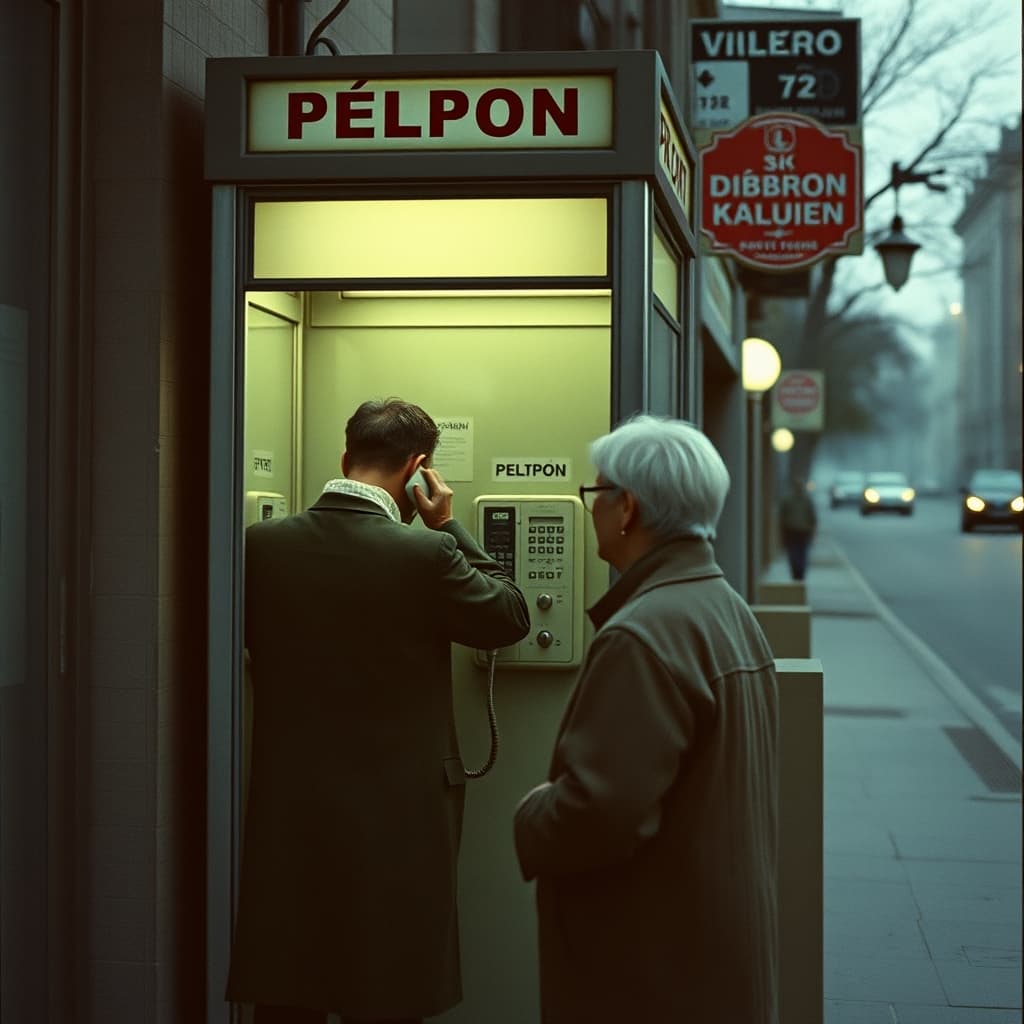
Outside a telephone booth, waiting was visible. A caller could see another person beyond the glass, while the next person could see whether the receiver was still raised. That mutual visibility gave a private conversation a public edge. News might be urgent, but access was shared; the caller had to balance what needed saying with the knowledge that somebody else also needed the line. The impatient minutes belonged to both sides of the door.
Booths, payment systems and services differed across places and periods. Coins, tokens or cards could shape the preparation, but none should be assumed from the word booth alone. The useful cultural record identifies what the particular telephone accepted and where it stood. A photograph can establish a location or design; it rarely explains the whole routine of calling from that spot.
A Place in Line Was an Informal Agreement
The queue did not always resemble a tidy row. People stood under shelter, near a wall or a little apart for privacy, remembering who had arrived first. A newcomer might ask who was last rather than simply approaching the door. Such arrangements required recognition and could fail. Disagreement, an interrupted call or someone claiming urgency belonged to the same street culture as courteous waiting; nostalgia should not remove them.
Weather made the wait physical. Cold hands complicated finding payment, rain narrowed the sheltered area and traffic could make hearing difficult. Someone carrying shopping or accompanying a child had additional work. A booth offered access, not equal ease. Its height, doorway, condition and surroundings could also make use difficult for people with mobility or sensory needs.
The Call Had to Find Its Shape Quickly
A caller might rehearse a number and the first sentence before entering. Once connected, identifying oneself and giving the essential news early reduced uncertainty. The need to conserve payment or respect a queue encouraged short exchanges, but not every brief call was emotionally simple. A few words could carry arrival, illness, reassurance or a request that required a much longer conversation later.
A failed connection extended the uncertainty. The line could be busy, the number wrong or nobody available to answer. Trying again was a decision about both the caller’s need and the waiting people. An archive should not describe every delay as technical failure without evidence; the obstacle might be at the receiving home, where a shared telephone also depended on someone being present.
Glass Did Not Guarantee Privacy
The booth’s enclosure reduced some street noise but did not necessarily conceal speech or emotion. Waiting people could turn away, step back or avoid looking directly inside. These gestures created a fragile boundary without making the conversation fully private. A caller sometimes lowered their voice precisely when clarity was most important, negotiating audibility against the risk of being overheard.
Objects supported the exchange: a scrap with a number, a pocket notebook, payment kept separately and perhaps a bag set near the feet. They show preparation, not a universal kit. When documenting surviving notes or photographs, protect telephone numbers and personal news. The fact that a conversation occurred in public space does not make its contents public property.
Mobile communication has removed many queues without removing the underlying negotiation. People still shorten calls in company, step aside for privacy and signal that an exchange matters. These habits should not be claimed as direct descendants in every case, but the old booth makes their social function especially visible: access, attention and discretion were never solely technical questions.
A Digital Nostalgia Archive can preserve the booth through this small shared choreography. The remembered impatience was not only the wait for a distant answer. It was also the raised receiver, the next person outside and the effort to make important words fit into a connection that briefly belonged to one caller but had to remain available to the city.