 Eski Pano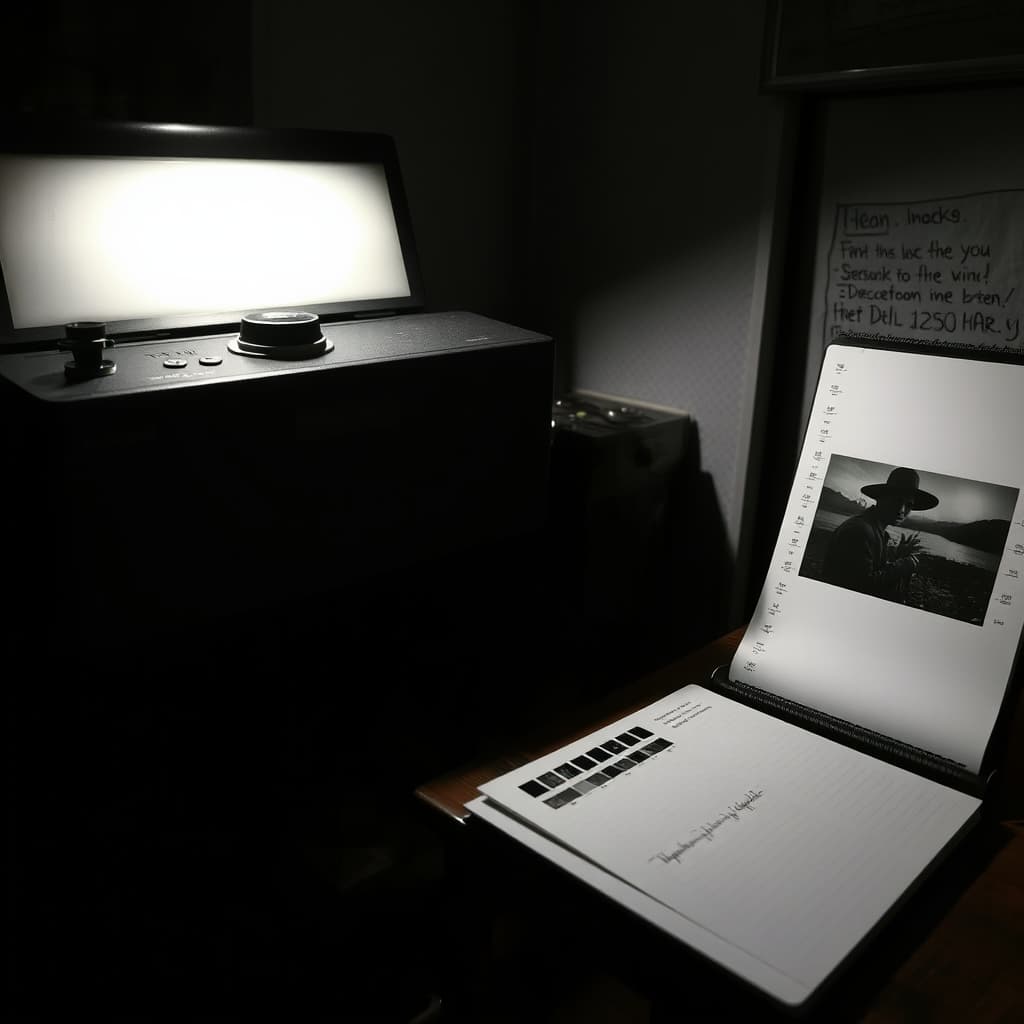
A finished darkroom print looks decisive. Beside it, a test strip may look disposable: a narrow piece of paper with bands of different darkness. Yet the strip holds a record of hesitation and comparison. Under the enlarger, the printer did not simply enlarge a negative and accept the result. They tested how light, paper and processing would translate that negative into a photograph someone could hold.
The enlarger projected the negative’s image onto photographic paper. A test strip sampled different exposures, commonly by covering parts progressively, though exact procedures varied. It was not a miniature finished picture. Its purpose was to show how selected areas responded under particular conditions. A strip without notes can be suggestive, but cannot reliably supply every setting used for the final print.
Choosing the Test Area Was Already Editing
A strip across an important face, a deep shadow or a bright surface answered different questions. The printer had to decide what information mattered and where it should remain visible. Testing an unimportant corner could produce a useful exposure for that corner and a poor result elsewhere. The small experiment therefore carried priorities before the larger sheet ever entered the easel.
Different bands could be compared for highlights, shadow detail and overall balance. The darkest band was not automatically the best, nor was a light band necessarily underexposed for every intention. Paper, negative density, contrast controls and processing affected interpretation. An archive should preserve the printer’s explanation where available instead of judging a surviving strip solely through a modern scan.
A Notebook Made the Experiment Repeatable
Exposure time meant little without the surrounding conditions. Enlarger height, aperture, paper type, contrast setting and processing method helped define the test. A printer might write on the reverse, in a notebook or on a working print. These notes link the physical evidence to a decision. Do not fill missing values with plausible numbers; an incomplete working record remains valuable when its gaps are visible.
The next experiment could change one variable or begin again after a larger adjustment. A full work print then revealed relationships that a narrow strip could not show. Local lightening or darkening might follow, guided by further tests. The final photograph condensed these decisions, which explains the ritual quality of enlarger work: concentration came from controlled repetition, not theatrical darkness alone.
Working Paper Belongs With the Photograph
When collections retain only the exhibition print, they lose the route to it. Test strips, rejected prints and annotations show which alternatives were considered. Keep their order if known and record uncertain associations. Two strips found beside one negative do not necessarily belong to the same session. Similar subject matter is a lead, not proof.
Digitisation should preserve both image and material. Photograph front, reverse, borders, written notes and the strip’s relation to the full print. Record scale and keep an unedited master. A scanner’s automatic contrast can make bands look more alike or more dramatic, replacing the original comparison with software’s interpretation. Document adjustments and avoid using a corrected scan as evidence of exact darkroom settings.
A contemporary demonstration requires suitable equipment, ventilation, chemical handling and electrical safety according to the actual materials and instructions. This article is not a processing recipe. Unknown old chemicals and damaged equipment should not be used merely to recreate a scene. Silent documentation and oral testimony can preserve the workflow without reenacting its hazards.
The test strip makes authorship visible in a modest form. It records where a printer looked, what they compared and what they declined to accept. For a Digital Nostalgia Archive, that narrow paper is not waste beside the important photograph. It is evidence that the final image emerged from a sequence of judgements, and that the enlarger’s ceremony was above all a disciplined way of learning what a negative could become.