Eski Pano
There was a time when the arrival of news into daily life was not as silent and invisible as it is today. The telex machine, standing in government offices, station buildings, or the back rooms of newspapers, worked like a strange mechanical heart connecting the rhythm of writing to the wider world. Even when it did not enter every home directly, the excitement of the analog age touched ordinary people like a rumor traveling through daily life. While families gathered quietly in the living room waiting for the evening bulletin, there was comfort and wonder in knowing that somewhere lines were falling onto paper with metallic sounds. In those towns where children hurried along the road to school and paused for breath under the shade of a plane tree, technology was often imagined as the thing that linked the news of faraway places with the intimacy of nearby life.
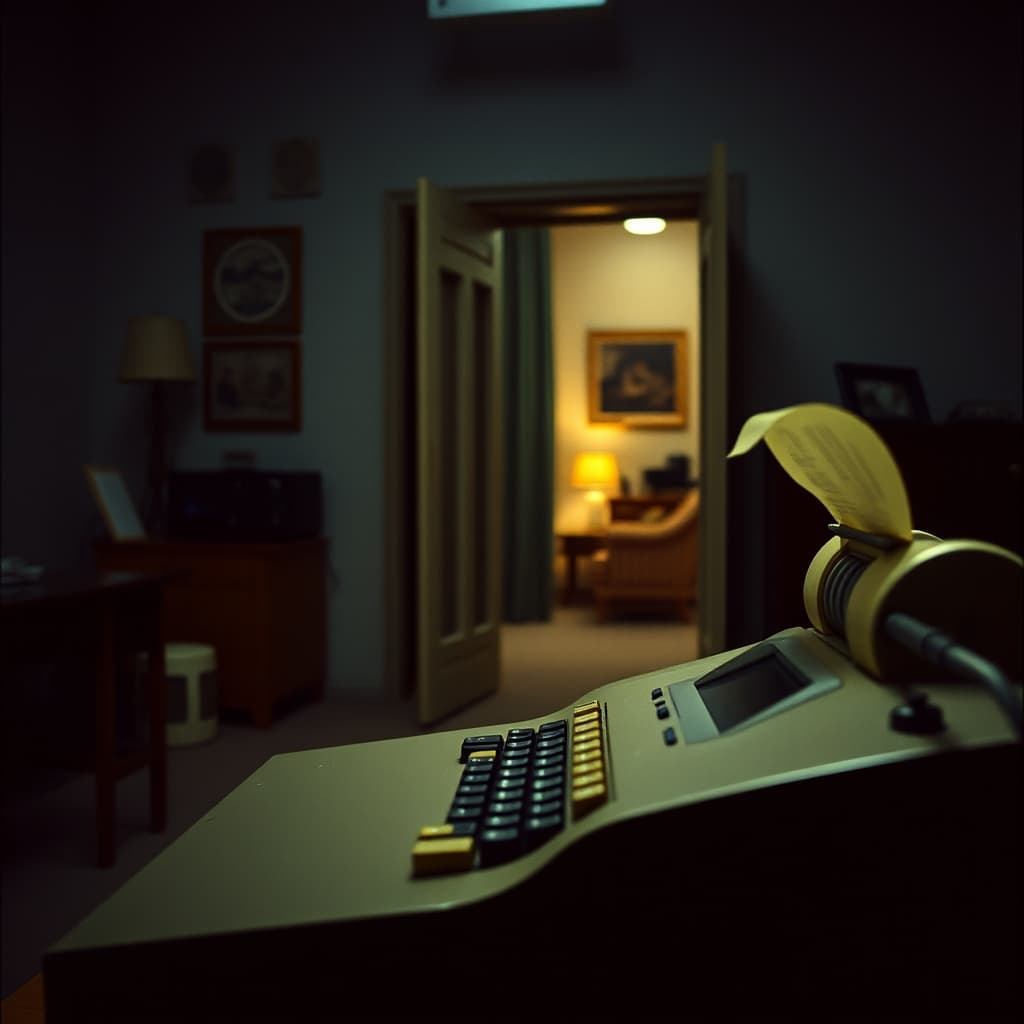
As a part of technological heritage, the telex was not merely a communication device, but a threshold where speed first became official. The telephone carried voices, but the telex fixed words onto paper and sent the discipline of typewriter keys across distance. In old newspapers, stock data, foreign dispatches, official notices, and commercial correspondence arrived through telex, and this traffic of mechanical writing mixed with the smell of print created a new sense of time. What made telex striking was that it was as tangible as a handwritten letter, yet far quicker. People did not necessarily see the clerks waiting beside the machine, but when someone said "the news has arrived," everyone understood that behind that sentence stood a machine, a paper strip, and the trembling impact of metal strikes. Part of the excitement of the analog age came from exactly this: the message appeared suddenly, yet behind that suddenness remained labor, mechanical order, and human attention.
The reason this feeling was never forgotten also lies in the bond between domestic life and the outside world. While families sat together in the living room listening to the radio or watching the evening news, the very way the world reached them became part of the imagination. For children, the telex was often a machine never seen but frequently heard about, something like a typewriter that could speak to places far away. A child returning from school and staring at the headlines in front of the newspaper stand touched, without knowing it, the rhythm of modern life, because some of those lines may have arrived by telex. That child setting down a satchel under a plane tree, taking a breath in the rush of the school road, knew the world first as the neighborhood. Yet through the messages carried by telex, other cities, other countries, and other voices entered that neighborhood. Technology therefore touched not only those who operated it, but everyone who lived around the news it delivered.
The telex machine speaks of the unforgotten excitement of the analog age partly because that excitement lived in its sound. Its steady strikes, the advance of the paper, the appearance of words line by line felt like modernity made tangible. Where a digital notification now appears and disappears in silence, words once left a physical trace. The telex carried at once a discipline of receiving news, a sense of official seriousness, and a fascination with technology. When joined to the quiet thrill of families gathered in the living room, the rush of the school road, and the memory of pausing beneath a plane tree, the machine becomes more than an office object. It turns into one of the symbols that remind us how the analog age built invisible bridges between far and near. That is why the telex machine still occupies a place even in the memory of homes that never used one directly: what it tells is not only a story of communication, but of the first astonishment felt toward modern time itself.
The Telex Machine: It Tells the Unforgotten Excitement of the Analog Age Within the Quiet Thrill of Families Gathering in the Living Room, Taking Shelter in the Rush of the School Road Under a Plane Tree's Shade