Eski Pano
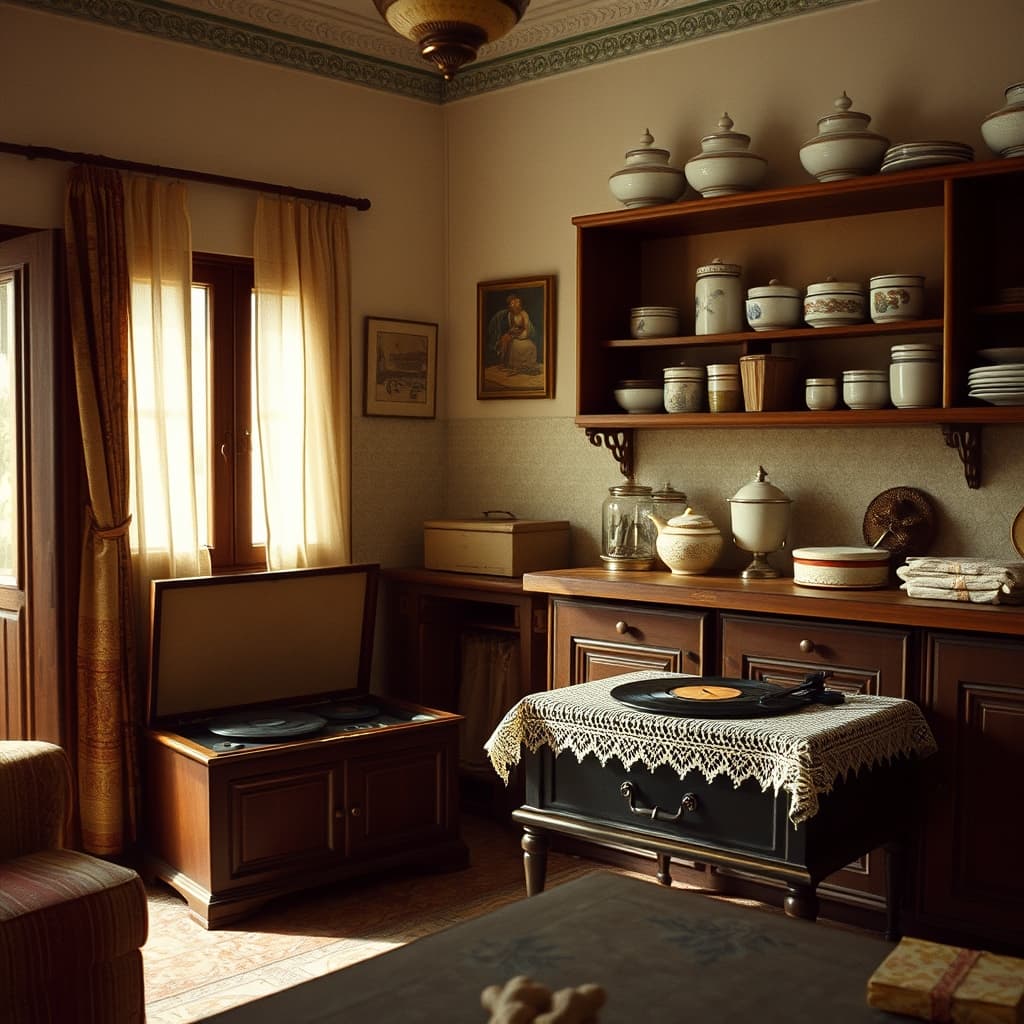
There was once a quiet care hidden even in the most modest corners of the home. The record box standing by the side of the living room seemed like the companion of the turntable waiting beneath its lace cover, while the jars lined up on kitchen shelves, enamel plates, and neatly folded cloths created the unseen aesthetic of daily order. These objects were never just things. They were small signs that determined how a household used its time, how guests were welcomed, at what hour tea was brewed, and what music entered the evening silence. This was the very meaning of quiet splendor: a sense of order, taste, and domestic discipline never loudly displayed, yet felt in every detail.
Seen as object stories, the record box and the kitchen shelf are more closely related than they appear. In one, sound is stored; in the other, the rhythm of everyday life. When the lid of the record box is opened, it releases not only music, but the spirit of certain evenings, the atmosphere of certain visits, and the distinctive voice of the home itself. The plates, glasses, jam jars, and copper coffee pot standing on kitchen shelves similarly hold the repeated gestures of domestic living. It is no accident that old magazines and newspaper supplements so often emphasized the idea of a "well-ordered home." A beautiful house was completed not only by large furniture, but by the alignment of cups on a shelf, the careful preservation of records, and the grace carried by daily-use objects. The place where design touched ordinary life was precisely within those details that appeared so ordinary.
The way this quiet splendor shaped household rituals becomes clearest in the moments when these objects were used. When guests were expected, the most suitable cup set was chosen from the kitchen shelf, plates were selected for what would accompany the tea, and in the living room someone considered which record ought to be played. For the host, these choices were not merely practical matters, but signs of refinement. If, on a Sunday morning, the sound of plates from the kitchen was joined by soft music rising in the living room, all the rooms of the house fell into a shared rhythm. Children wanted to lift the lid of the record box in curiosity, and adults warned them gently to be careful, protecting both the object and the memory bound to it. Kitchen shelves in the same way were not only storage spaces, but stages for domestic discipline and aesthetic feeling. Jars aligned evenly, plates shining clean, cloths folded properly: all of these gave household life a quiet but firm sense of order.
Looking back today, it becomes easier to understand why these objects are remembered so strongly. The record box and the kitchen shelf are two powerful symbols summarizing a whole idea of home. One carried feeling, the other order; one beautified the evening, the other sustained the day. Quiet splendor is exactly the atmosphere formed by their companionship. People did not merely live in those homes; they listened, served, tidied, waited, and learned ways of being together through objects as well. That is why, when an old record box or enamel plates lined along a shelf are seen today, it is not only the objects that return, but also the rituals created around them. The shape of home life was formed partly by the patient presence of such things, with a grace far from ostentation, yet capable of leaving a deep mark on memory.
The Quiet Splendor Hidden in the Record Box and on Kitchen Shelves: How Did It Shape the Rituals of Home Life?