 Eski Pano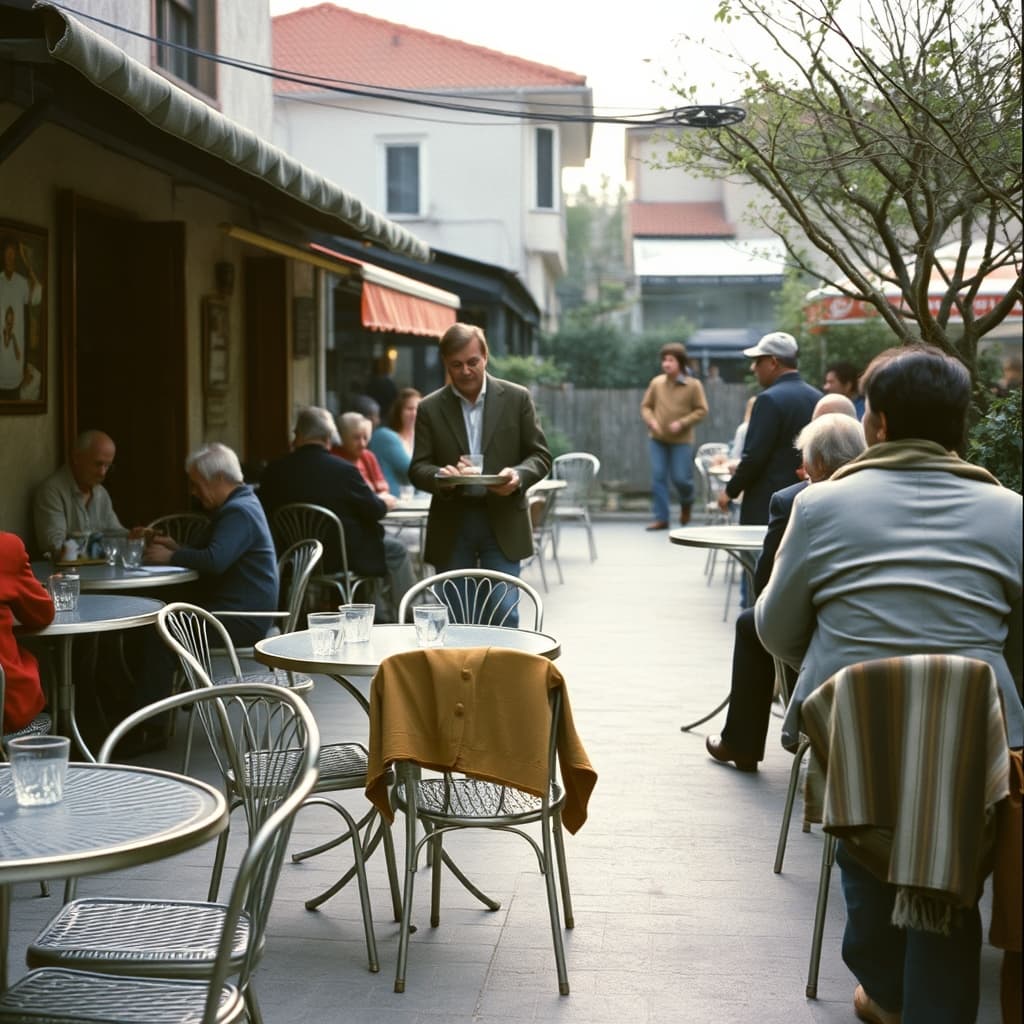
A tea-garden table could look unclaimed even when everybody nearby understood that it was not free. A jacket on a chair, a half-finished glass or a person standing briefly at the counter served as quiet evidence. Summer afternoons in Turkish tea gardens depended on such small readings of space. Friendship accumulated there partly because visitors learned to remain together without treating every chair, waiter or hour as exclusively their own.
Tea gardens differed by town, neighbourhood, period and management. Some occupied waterfronts or public parks; others sat beside busy streets. Their furniture, menus and customers changed accordingly. Rather than describe them as one timeless institution, it is more useful to examine the conduct that made a crowded open-air setting workable: asking before taking a chair, allowing a passage between tables and recognising when another group was waiting.
An Empty Chair Was Sometimes a Conversation
Borrowing a chair could begin with eye contact and a short request. The answer depended on whether another guest was expected, whether the table needed room for a child and whether the chair could be moved without blocking service. The exchange was ordinary, yet it acknowledged that shared space had temporary custodians. A chair belonged neither permanently to one party nor automatically to the quickest hand.
Joining tables required another level of negotiation. Regular visitors might know which arrangements staff accepted, while newcomers learned by watching. Moving furniture could help a larger group sit together, but it could also obstruct a route used for trays. The ease of an afternoon therefore rested on practical cooperation among customers and workers, not simply on the apparent informality of outdoor seating.
A Small Order Still Occupied Real Work
A glass of tea could support a long conversation, but its modest price did not make the labour around it invisible. Water had to be heated, glasses washed, trays carried and tables cleared. Patient service was part of the atmosphere remembered by customers; patience from customers mattered as well. Calling repeatedly, changing seats without notice or leaving a crowded table covered with personal belongings shifted extra work onto staff.
The rhythm of ordering also signalled whether a visit continued. A fresh round extended the table’s life; stacked saucers or gathered belongings suggested departure. These were tendencies rather than universal rules. Staff knowledge, local habits and the pace of business shaped what was understood. A careful memory should identify a particular garden and its routines instead of turning one family’s custom into a national code.
When the Cardigan Returned to the Chair
Late-summer or early-autumn evenings altered the same space. A cardigan laid across the back of a chair was practical warmth and a marker of a longer stay. Light faded earlier, leaves began to gather near table legs and groups adjusted their departure to the cooling air. The publication date does not prove a seasonal scene, but remembered clothing and weather can locate a specific visit more honestly than a generic calendar reference.
Tea-garden sociability was not equally comfortable for everyone. Smoke, noise, steps, tightly placed furniture, household restrictions or the cost of repeated orders could limit participation. Remembering friendship should include who served the table, who could remain after dark and who found the setting difficult. Such questions give the familiar image social depth without cancelling the pleasure that many visitors found there.
An oral history of a tea garden can begin with a table plan. Mark the counter, paths used by trays, favourite seats, shade and the place where spare chairs were kept. Ask how a guest knew where to sit and how a group knew it was time to leave. The answers preserve an unwritten system of consideration. What survives from those afternoons is not only the taste of tea, but the habit of noticing other people before moving one more chair.