 Eski Pano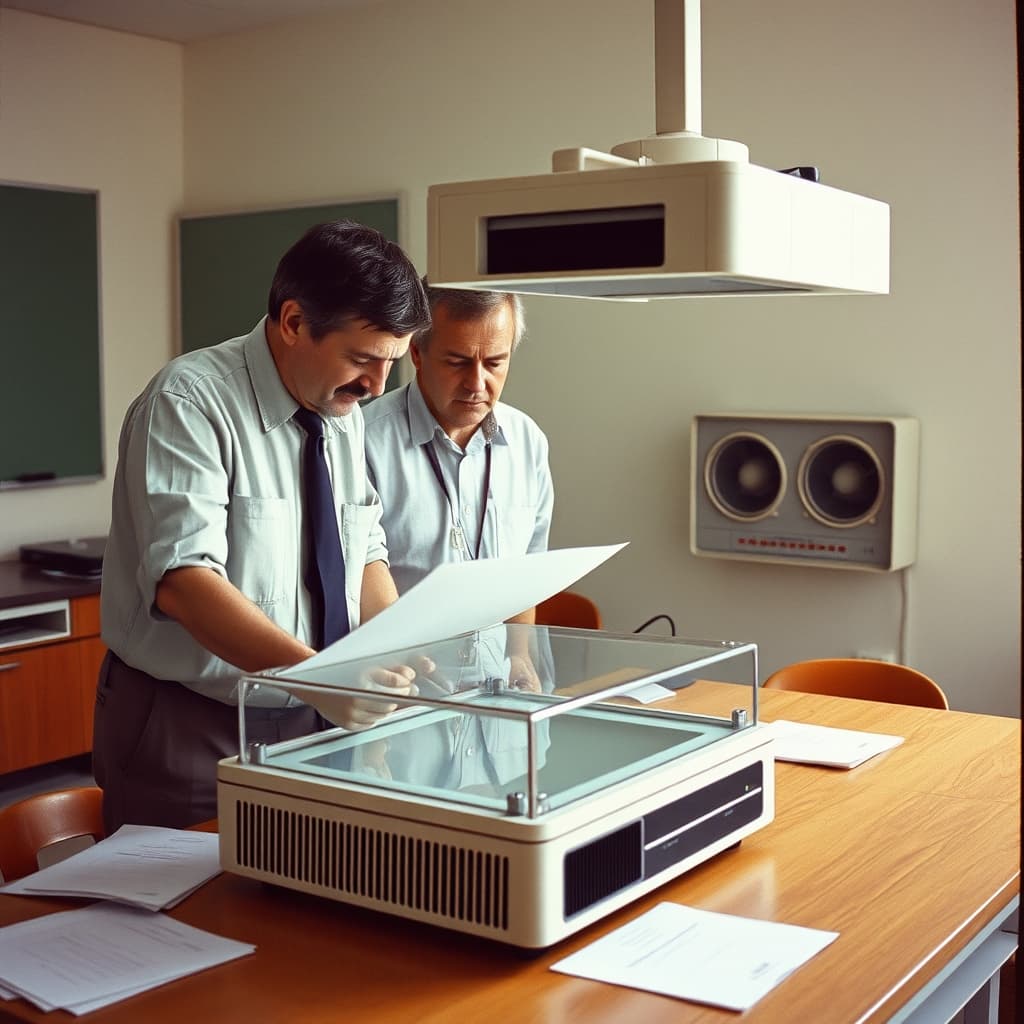
An overhead projector could be repaired and still produce a disappointing image because the problem was resting on top of it. A curled transparency, greasy fingerprint or unsuitable pen travelled onto the wall as a magnified distraction. Keeping the machine useful therefore involved two kinds of care: technicians maintained heat, light and focus inside the body, while teachers and office workers prepared the transparent sheets through which every lesson or diagram had to pass.
Models and transparency materials varied, so surviving instructions matter. Some sheets were made for writing by hand, others for a particular copying or printing process. A sheet that looked clear could react badly to heat or leave residue. The safe choice comes from the device manual and the material’s documented purpose, not from experimenting inside a hot machine.
The Stage Enlarged Every Speck
The flat glass stage needed to support the sheet evenly. Dust, dried marker and adhesive fragments could soften a line or create a shadow far larger than the dirt itself. Cleaning began only after the projector was switched off, unplugged and fully cool. A soft method appropriate to the surface was safer than scraping. Liquid should not run into vents, seams or the optical path.
Transparencies benefited from clean hands and protected edges. Holding them away from the image area reduced fingerprints. If several sheets were stacked to reveal a diagram step by step, their alignment mattered; curled corners could shift the image or approach a hot part. Improvised tape and unknown plastic increased risk. Reusable teaching devices worked best when their accompanying materials were treated as equipment rather than disposable stationery.
Cooling Time Belonged to the Presentation
The bright lamp produced heat, and fans or ventilation openings moved that heat away. Blocking a vent with papers, fabric or a bag could shorten component life and create danger. Unusual smell, smoke, repeated shutdown, a failing fan or damaged cable required the projector to be disconnected and assessed by a qualified repairer. Opening the housing could expose electrical charge, hot surfaces and fragile optical parts.
A replacement lamp was not simply any bulb of convenient shape. Compatibility, handling and installation depended on the model. Touching some lamp surfaces, forcing a holder or bypassing a safety switch could cause failure. The original part number, manual and repair record should stay with the projector. Removed components can be labelled and retained when safe, preserving evidence of how the machine changed over its working life.
Writing for the Wall, Not the Desk
A transparency had to be legible after enlargement. Letter size, spacing, line weight and contrast needed testing from the back of the room. Too much information created a bright but unreadable field. Handwritten additions allowed a speaker to build an explanation in real time, yet the correct marker mattered: ink that never dried could smear across the sheet and stage; permanent ink complicated later reuse.
After the session, sheets should cool if necessary, then return to sleeves or folders that kept them flat and in order. Captions can be stored on the enclosure rather than written across an original historical sheet. When digitising, photograph or scan each layer separately before reproducing the sequence. Names, grades, medical information or internal business details require review before classroom material enters a public archive.
The second life of an overhead projector depends on more than restoring illumination. Its usefulness lived in the relationship between a clean stage, stable transparency, moving air and a presenter who knew what the back row could see. A Digital Nostalgia Archive can preserve that whole working arrangement: projector, compatible sheets, annotations, manual, repairs and the careful pause that allowed the lamp to cool before the machine was carried away.