 Eski Pano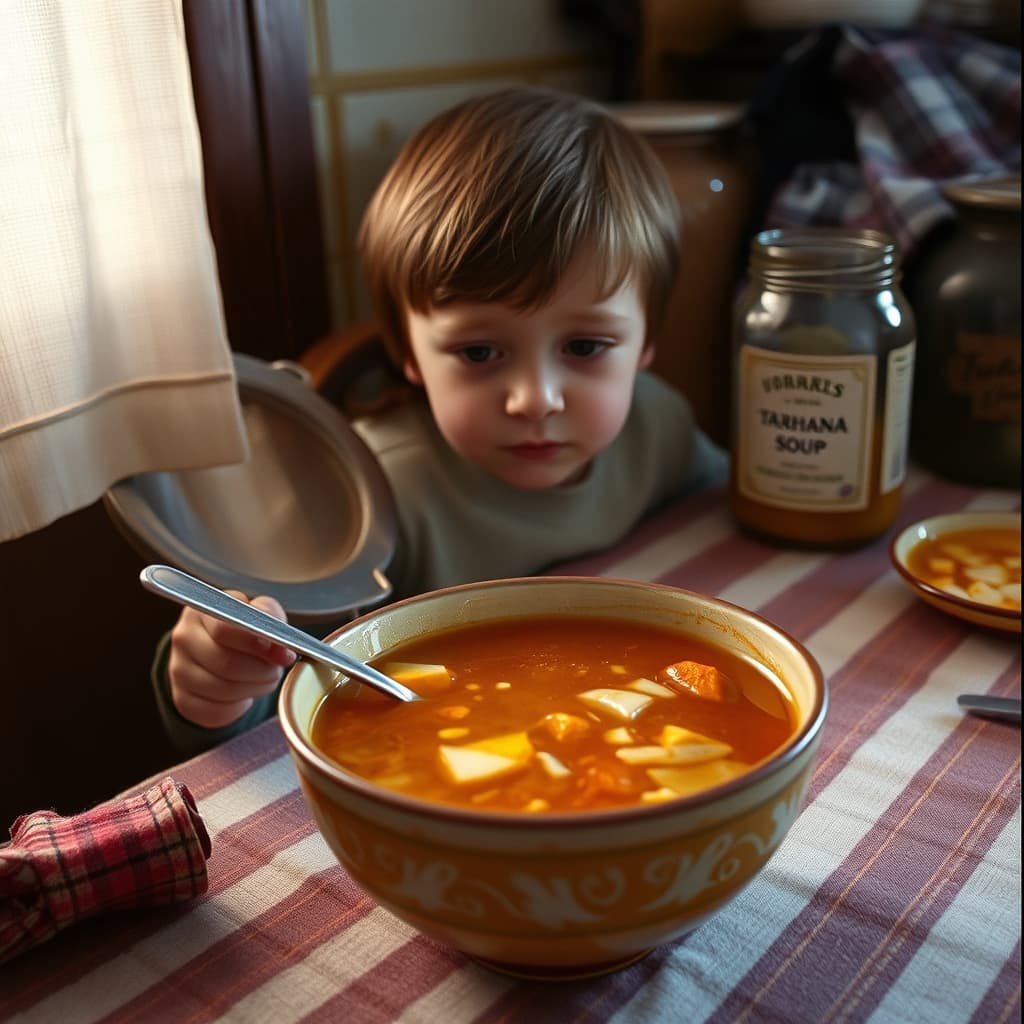
The first spoon of tarhana after school can describe a kitchen more clearly than a formal menu. The soup arrives quickly, smells of fermented grain and vegetables, and warms a child who has crossed changing weather. Yet its speed at serving time depends on work completed weeks earlier: selecting ingredients, fermenting a mixture, drying it, breaking it down, and storing it for the colder season.
Tarhana names a family of foods rather than one formula. Wheat flour, cracked grain, yoghurt or another fermented dairy base, tomato, pepper, onion, herbs, pulses, sourdough, or other ingredients appear in different regional and household methods. Some tarhana is dried as crumbs or sheets; some remains moist; colour, acidity, texture, and cooking vary. Maker, place, date, ingredients, process, and local name should be recorded.
Fermentation Created Flavour and Scheduling
Microorganisms from ingredients and environment transform the mixture under conditions shaped by acidity, salt, temperature, time, moisture, and handling. Family practice often judged change through smell, taste, bubbling, texture, or a remembered number of days. Those observations are historical evidence, but they do not by themselves guarantee safety for a modern batch.
Reliable preparation requires clean food-safe vessels, sound ingredients, appropriate temperatures, protection from contamination, and a validated method. Visible mould, unexpected colour, putrid odour, pest activity, or uncertain storage should not be corrected by adding spice or prolonged boiling. Current guidance from food-safety authorities or qualified specialists should govern production, especially for community sale or public demonstration.
Drying Concentrated Household Knowledge
After fermentation, the mixture might be spread, divided, crumbled repeatedly, sieved, and dried. Thickness, airflow, humidity, sun, shade, insects, dust, rain, and overnight damp all affected the result. Trays occupied rooms, roofs, balconies, courtyards, or tables, making the work visible. Incomplete drying could shorten storage life, while rough handling introduced contamination.
Someone monitored the weather, carried trays, turned pieces, protected them, broke them by hand, cleaned equipment, and judged final dryness. Women frequently organised this knowledge across generations while balancing other work and care. Children could help with suitable tasks, but the cheerful image of many hands should not conceal repetitive labour, heat, dust exposure, or responsibility placed too early.
The After-School Bowl Was Carefully Timed
Dried tarhana made a quick soup possible, but cooking methods differed. Some cooks dispersed it first in cool water to limit lumps, while others added it to a pot with fat, tomato, stock, mint, or pulses. Thickness changed with family preference. A child's portion had to cool enough to prevent burns, and the meal's timing depended on school distance, household schedules, and who was home to cook.
The bowl may recall comfort, but not every child liked its sourness or had the same access to a hot meal. Caregivers, older siblings, grandparents, neighbours, or the child might prepare it. Fuel cost, water, kitchen equipment, and time shaped the routine. A responsible account leaves room for dislike, scarcity, school meals, allergies, and homes where nobody could be waiting.
Allergen information must follow the actual recipe. Wheat and gluten are common; milk and yoghurt introduce dairy; pulses or other additions may matter. Fermentation does not reliably remove these allergens. Salt can be substantial depending on preparation and serving. Public tastings need ingredient lists, cross-contact controls, safe temperatures, and alternatives rather than relying on the dish's familiar reputation.
A Digital Nostalgia Archive can connect tarhana with grain and yoghurt sources, fermentation vessels, drying cloths, sieves, weather notes, school timetables, fuel, bowls, recipe notebooks, and recorded cooks. The first spoon tells the character of a home kitchen because long preservation work met a child's immediate need. Preserving that meaning means keeping flavour beside regional difference, microbial uncertainty, women's expertise, drying labour, allergens, safe serving, and the varied realities of coming home.