 Eski Pano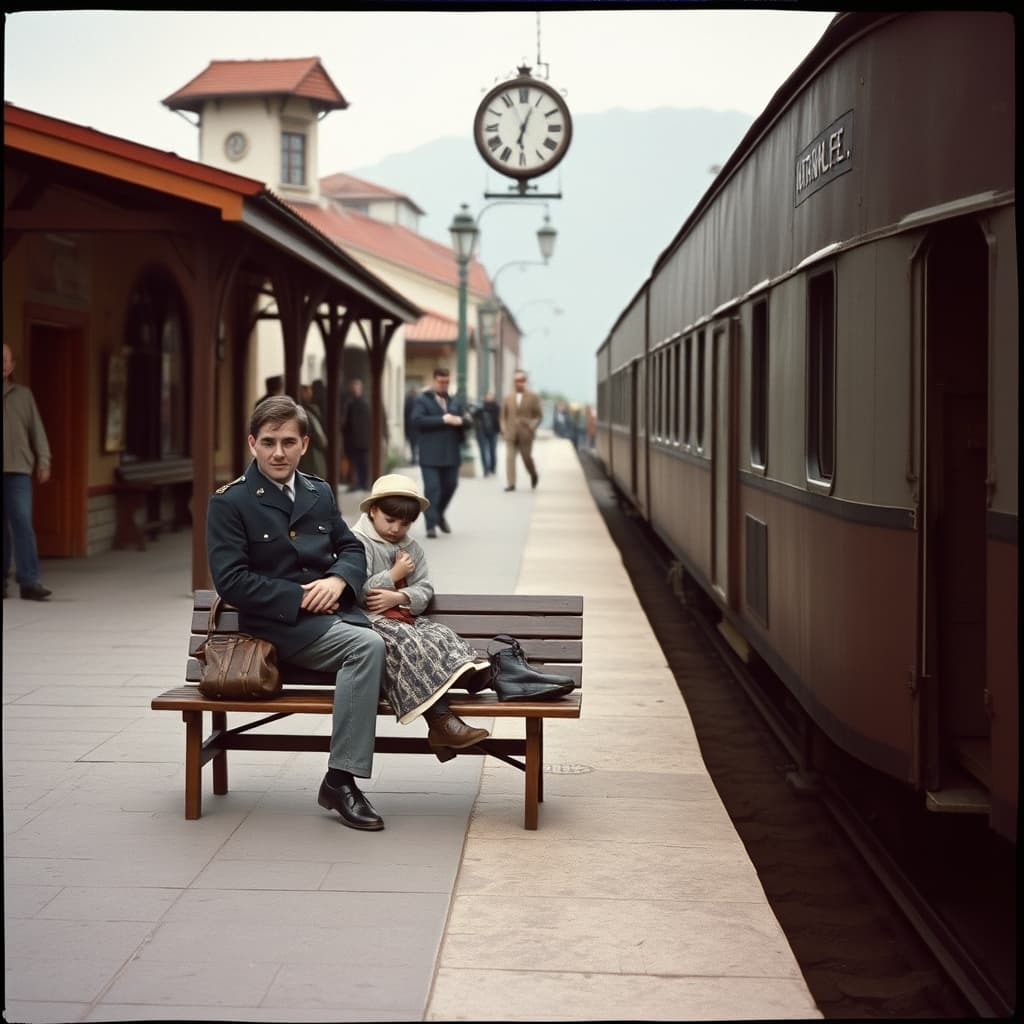
A bench at a small-town station could hold farewell and reunion within the same hour. One family arranged parcels beside a departing student, another searched the platform for a returning worker, and a traveller waited alone beneath the station clock. The bench remains vivid in memory because it gave emotion a fixed place inside a system built to move people onward.
Small-town stations differed by railway line, period, operator, architecture, service frequency, local economy, and political history. Some connected agricultural districts to markets; some served military, school, migration, pilgrimage, or administrative journeys; others became junctions or quiet halts. Timetables, tickets, route maps, station registers, photographs, newspapers, and oral histories should define the setting before one remembered platform represents every town.
Waiting Was Organised by Railway Time
The posted timetable translated a national network into local hours. Travellers arrived early because missing a train could mean a long delay, an overnight stay, or a lost appointment. Bells, whistles, clocks, announcements, signal changes, and staff instructions structured the wait. Weather, mechanical failure, track work, congestion, and missed connections made that promised order uncertain.
Tickets and luggage also shaped the bench. Someone counted coins, checked a destination, tied a case, protected food for the journey, or guarded a place while another relative bought a ticket. Porters and station workers moved baggage, answered questions, cleaned rooms, handled freight, checked documents, and kept passengers away from hazards. Emotional memories depend on this largely invisible labour.
Mobility Was Never Equally Available
Travel required fare money, permission, time away from work, suitable documents, and the ability to reach and use the station. Women, children, conscripts, seasonal workers, disabled passengers, minorities, and people travelling under social pressure encountered different levels of freedom and scrutiny. A reunion photograph does not explain why someone left, whether the departure was chosen, or who could not afford to follow.
Waiting rooms could be divided by ticket class, gender expectation, smoking practice, or informal custom. Seating was limited, and the most sheltered places might be occupied first. Toilets, lighting, heating, water, signs, and help with luggage affected dignity. A complete station history includes passengers who felt welcome and those who experienced exclusion, harassment, language barriers, or official suspicion.
A Heritage Platform Must Remain a Safe Platform
Railways contain live operational risks: moving trains, electrification, uneven platform edges, restricted tracks, heavy doors, and sightline limits. Visitors should never enter track areas or stage photographs near moving services. Heritage interpretation must follow the operator's rules, provide clear boundaries, and keep emergency and passenger routes unobstructed.
Historic benches, signs, clocks, luggage scales, ticket windows, and masonry need material-specific conservation. Sanding away paint layers, repainting without evidence, replacing boards, or removing graffiti can erase chronology. Documentation should record measurements, construction, maker's marks, repairs, paint stratigraphy, location, and the relationship between object and platform before intervention.
Accessibility is not an optional modern addition to historic character. Step-free routes, tactile warnings, readable signs, audible and visual information, suitable seating heights, lighting, accessible toilets, and staff assistance allow more people to use the station. Adaptation can be designed sensitively, but nostalgia should never be used to preserve a dangerous platform edge or an exclusionary entrance.
A Digital Nostalgia Archive can connect the bench with timetables, tickets, staff rosters, porter tools, luggage labels, letters, migration records, station plans, sound recordings, and testimonies from travellers and railway workers. The same seat held departure and return because infrastructure concentrated many journeys in one place. Preserving that intensity means keeping emotion beside labour, unequal mobility, operational safety, accessibility, and the historical reasons people travelled or stayed behind.