 Eski Pano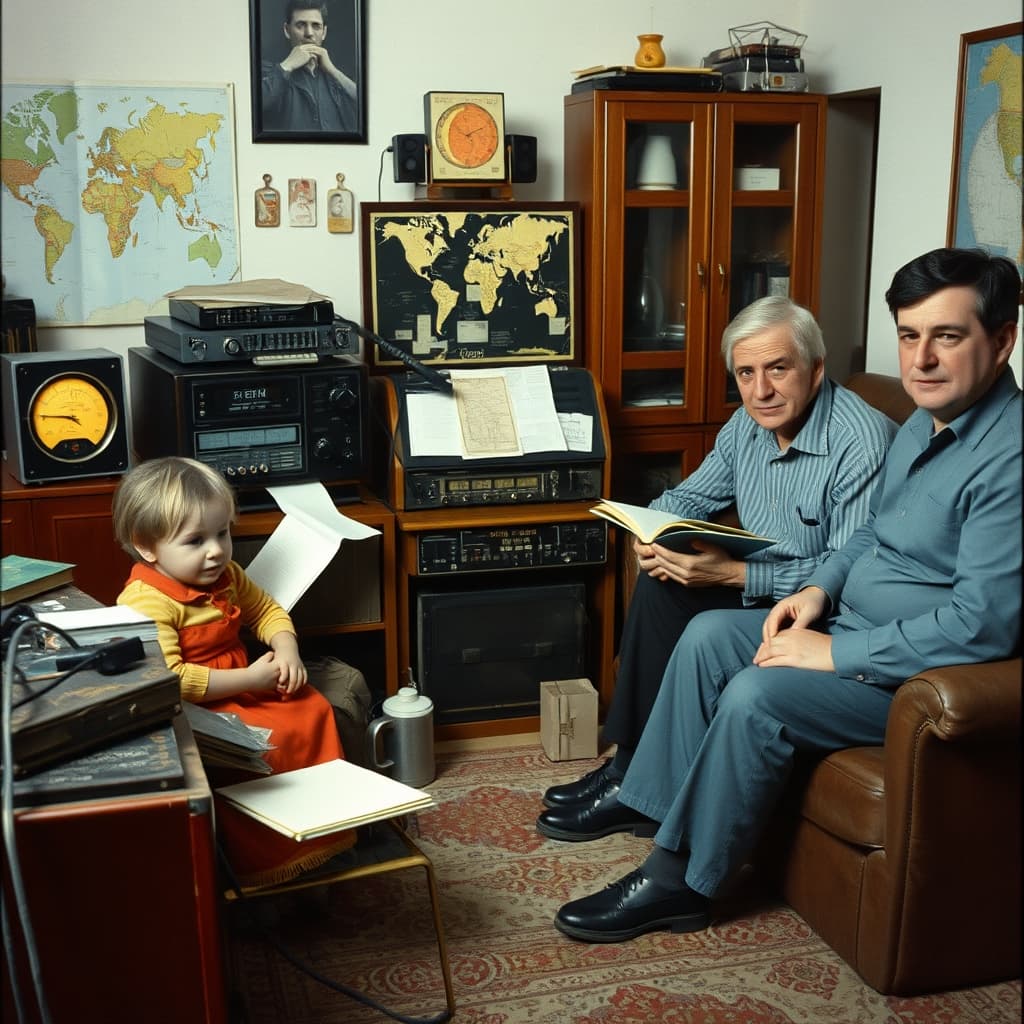
An amateur radio station could turn one corner of a sitting room into a listening post. A receiver warmed, a dial moved slowly across noise, and family members waited to hear whether a distant voice would emerge. The excitement was not simply technological. It came from knowing that a carefully identified operator, using shared rules and limited conditions, might answer from another town or country.
Amateur radio is a licensed communications service, not the same as broadcast listening, citizens-band radio, military equipment, maritime radio, or an unlicensed toy transceiver. Frequency privileges, power limits, examination requirements, call signs, logging, and permitted content vary by country and period. A device, photograph, or family story should be identified through model, licence, call sign, band, date, and regulatory context.
Listening Came before Transmitting
Operators learned band behaviour, tuning, interference, propagation, phonetic alphabets, signal reports, and local procedures. They listened for a clear frequency, identified with a call sign, kept exchanges concise, and logged contacts. Waiting through static was part of the discipline. A dramatic distant contact depended on equipment, antenna, atmospheric conditions, other operators' courtesy, and technical knowledge.
QSL cards confirmed contacts and created a paper geography of radio. A card might record date, time, frequency, mode, signal report, station details, and a personal image. Logs and cards can verify claims, but they may expose home locations or personal information. Digitisation should consider living operators' privacy and current security before publishing addresses or full station details.
The Home Station Involved the Whole Household
Even when one licensed operator controlled the microphone or key, the station affected everyone nearby. Family members tolerated wires, scheduled quiet, radio-frequency interference, late listening, visitors, and equipment costs. They might help write cards, study maps, learn call signs, or listen during a special contact. Someone also made space, cleaned dust, served tea, supervised children, and negotiated the room's other uses.
Participation was not automatically equal. Technical confidence, licensing access, money, gender expectations, language, education, and control of household space shaped who could transmit. An archive should record the named operator and also the people who supported, shared, resisted, or were excluded from the station. Family excitement should not erase domestic labour or unequal authority over equipment.
Antennas and Power Demand Professional Safety
Transmitters, amplifiers, mains supplies, capacitors, batteries, grounding systems, masts, feed lines, and antennas can create electric shock, fire, lightning, fall, and radio-frequency exposure risks. Old equipment may retain dangerous voltage after disconnection. Only qualified people should open or restore it, and current electrical, structural, planning, exposure, and lightning-protection standards must govern operation.
An antenna should never be installed near power lines or where a falling mast can reach them. Roof access requires fall protection and permission. Improvised earth connections, damaged insulation, overloaded sockets, and unknown modifications are unsafe. A historic station can be interpreted with disconnected equipment, recordings, diagrams, or supervised demonstrations rather than energising an unassessed transmitter.
Amateur radio can support emergency communication, technical learning, international friendship, and public service, but those roles should be described accurately. Operators do not replace emergency authorities, and frequencies must remain available for authorised traffic. Private, sensitive, encrypted, commercial, or prohibited content is governed by law; rules change and should be checked with the relevant national regulator and amateur-radio organisations.
A Digital Nostalgia Archive can connect a station with licences, logs, QSL cards, manuals, circuit notes, antenna plans, repair invoices, club newsletters, audio recordings, and interviews with operators and family members. The sitting room became a listening post because discipline made distance intelligible. Preserving that excitement means keeping curiosity beside regulation, technical skill, household negotiation, electrical safety, emergency limits, and privacy.