 Eski Pano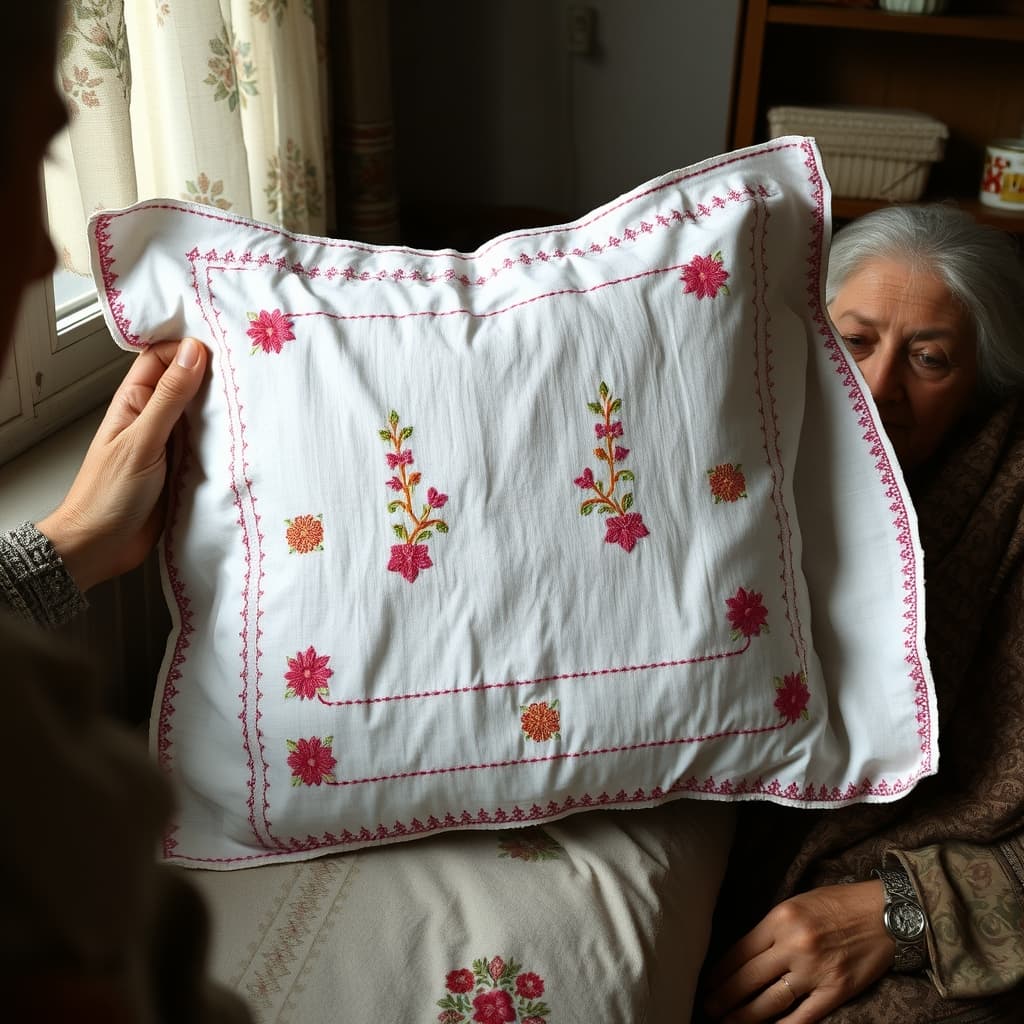
An embroidered pillowcase kept on a kitchen shelf may look like a quiet decorative remnant, but it can carry an unusually dense family record. The cloth identifies available materials, the stitching records skill and time, repairs show continued use, and its storage place reveals how the household balanced display, protection, and convenience. It becomes heritage when these connections are documented rather than merely admired.
Pillowcases vary in fibre, weave, dimensions, closure, intended pillow, embroidery technique, thread, motif, and use. Cotton, linen, silk, rayon, synthetic cloth, or mixtures may be present. Hand embroidery, machine stitching, crochet edging, lace, drawn-thread work, and later repairs can coexist. Technique and regional meaning should be assigned only after close examination and consultation.
Attribution Begins with Specific Questions
Who selected the cloth, drew or transferred the design, stitched each section, bought thread, washed the finished piece, and decided where it was stored? Was it made for daily bedding, a guest room, a dowry, a birth, a wedding, sale, teaching exercise, or gift? Family phrases such as grandmother's pillowcase may collapse several makers and owners into one remembered name.
The reverse can be as informative as the front. Knots, thread paths, starts, corrections, tension, backing, transferred outlines, and later mending reveal process. Comparing related textiles, photographs, letters, receipts, pattern sheets, and oral testimony may support attribution. Uncertainty should remain visible: probable maker is more honest than a confident name unsupported by evidence.
Storage on a Kitchen Shelf Left Material Evidence
A shelf kept the textile close and perhaps protected from handling, while exposing it to cooking vapour, grease, soot, humidity, water leaks, insects, light, cleaning chemicals, acidic wood, and pressure from stacked objects. Fold lines, yellowing, odour, staining, faded thread, rusting pins, and brittle elastic can indicate that environment. These changes are evidence as well as conservation concerns.
The object may have been folded inside paper, a bag, chest, or bundle with other linens. Original order and packaging should be photographed before removal. A label written by a family member can be historically important even if technically harmful. It may be preserved separately and linked through an identifier rather than discarded during rehousing.
Care Should Preserve Meaning without Inventing Newness
Washing can make dyes bleed, shrink cloth, distort embroidery, remove finishes, and weaken old fibres. Bleach, stain remover, starch, perfume, adhesive tape, direct ironing, and untested detergents can cause irreversible damage. A textile conservator should assess fibre, dye, soil, and structural weakness before cleaning. A historic pillowcase need not become bright white to be valued.
Suitable storage uses clean hands, stable dry conditions, controlled light, pest monitoring, archival-quality support, and padded folds or flat storage when appropriate. Heavy beads or dense embroidery need support. Identifiers should not pierce or permanently mark the cloth. If displayed, light exposure and mount strain should be limited and recorded.
Digitisation should capture front, reverse, edges, closure, stains, repairs, labels, scale, colour reference, and associated bundle order. High-resolution images help compare stitches but do not replace the physical textile. Family consent may be needed when motifs, inscriptions, dowry circumstances, or personal histories are sensitive. Named makers deserve credit, including women whose work was previously described only as family handiwork.
A Digital Nostalgia Archive can connect the pillowcase with needles, thread cards, pattern sources, shelf photographs, dowry lists, household inventories, washing tools, repairs, and interviews with makers and users. The object becomes a family inheritance through provenance: who made it, why, how it travelled, and what happened to it. Preserving that chain means keeping beauty beside labour, ambiguity, material damage, social expectation, consent, and responsible care.