 Eski Pano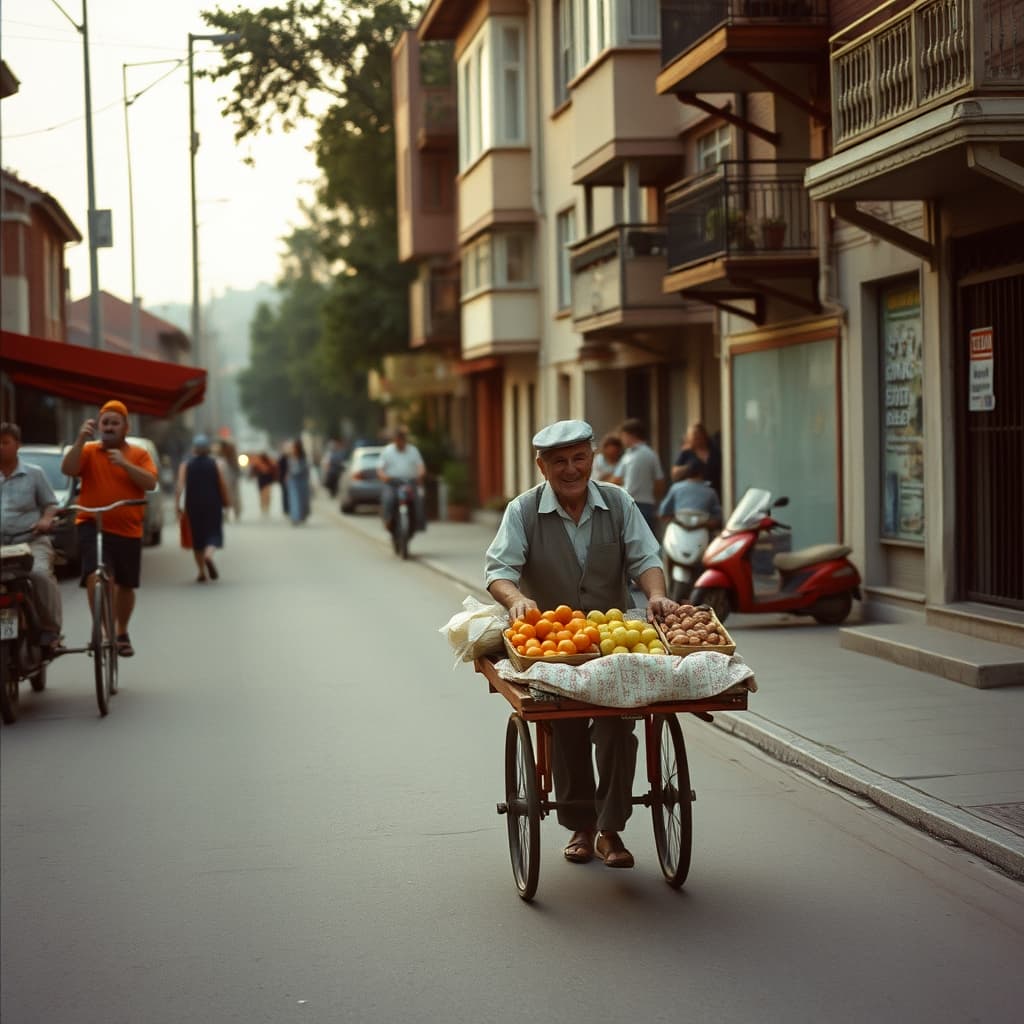
A street vendor's call could make a summer evening legible before the cart appeared. Residents recognised melody, rhythm, repeated words, and the time a particular seller entered the street. Windows opened, children asked for coins, and neighbours leaned toward the sound. The call strengthened familiarity because commerce announced itself in a voice tied to a route and season.
Street vending covered many trades and products: fruit, vegetables, yoghurt, ice, sweets, simit, corn, household goods, repairs, recycling, or other services. Calls varied by city, district, language, product, regulation, and individual seller. A remembered phrase should be connected to a named trade, approximate date, route, and speaker rather than treated as a timeless national sound.
The Call Was a Working Tool
A vendor needed to be audible above traffic, conversation, radios, and buildings without exhausting the voice. Pitch and phrasing distinguished one product from another and signalled where the cart had reached. Regular timing let customers prepare containers or money. The call was branding before many small sellers had printed signs, but it was also physical labour repeated over long distances.
Recognition could support trust. A seller knew which household wanted a certain quantity, who needed change, and where an older resident required extra time to reach the door. Informal credit or reserved goods sometimes helped neighbours. These arrangements could also expose debt, create pressure to buy, or favour established customers over newcomers. Familiarity was negotiated, not automatically benevolent.
The Cheerful Sound Came from Demanding Work
Before entering the street, someone sourced goods, checked quality, loaded weight, found ice or shade, planned a route, obtained permits where required, managed cash, and accepted the risk of unsold stock. Pushing or carrying a load through heat and hills strained the body. Sellers faced traffic, weather, harassment, theft, enforcement, uncertain income, and limited access to toilets and rest.
The romantic figure of a male caller can hide women, children, family packers, wholesalers, growers, kitchen workers, and recyclers who supported the trade. Childhood help must be described carefully: age-appropriate participation is not the same as hazardous labour or missed schooling. Oral histories should include workers' own accounts of dignity, fatigue, conflict, and economic necessity.
Public Space Requires Rules and Mutual Care
Licensing, permitted goods, route restrictions, taxation, hygiene, weights, waste, and hours vary by municipality and period. A historic custom does not override current law. Carts must not block pavements, ramps, tactile routes, crossings, entrances, fire access, or traffic visibility. Queues should leave room for wheelchairs, pushchairs, children, and visually impaired pedestrians.
Food vendors need clean water where relevant, protected ingredients, temperature control, allergen information, hygienic utensils, pest prevention, safe fuel, and appropriate waste handling. Heat increases risk for perishable foods. Appearance, smell, or seller familiarity cannot prove food safety. Reenactments and festivals should follow current professional standards.
A call welcomed some listeners and disturbed others. Infants, ill residents, shift workers, students, and people with sensory needs may experience repeated volume differently. Reasonable hours, moderated amplification, and response to complaints are part of neighbourliness. Preserving a soundscape does not require reproducing it at full volume throughout a residential area.
A Digital Nostalgia Archive can connect calls with route maps, licences, carts, scales, price lists, photographs, packaging, worker testimony, and carefully made audio. Recording an identifiable vendor requires consent and context; an old recording may contain bystanders and private speech. The call became communal memory because a working voice mapped goods onto streets. Preserving it means keeping recognition beside labour, law, food safety, access, noise, economic precarity, and the speaker's right to control how that voice is reused.