 Eski Pano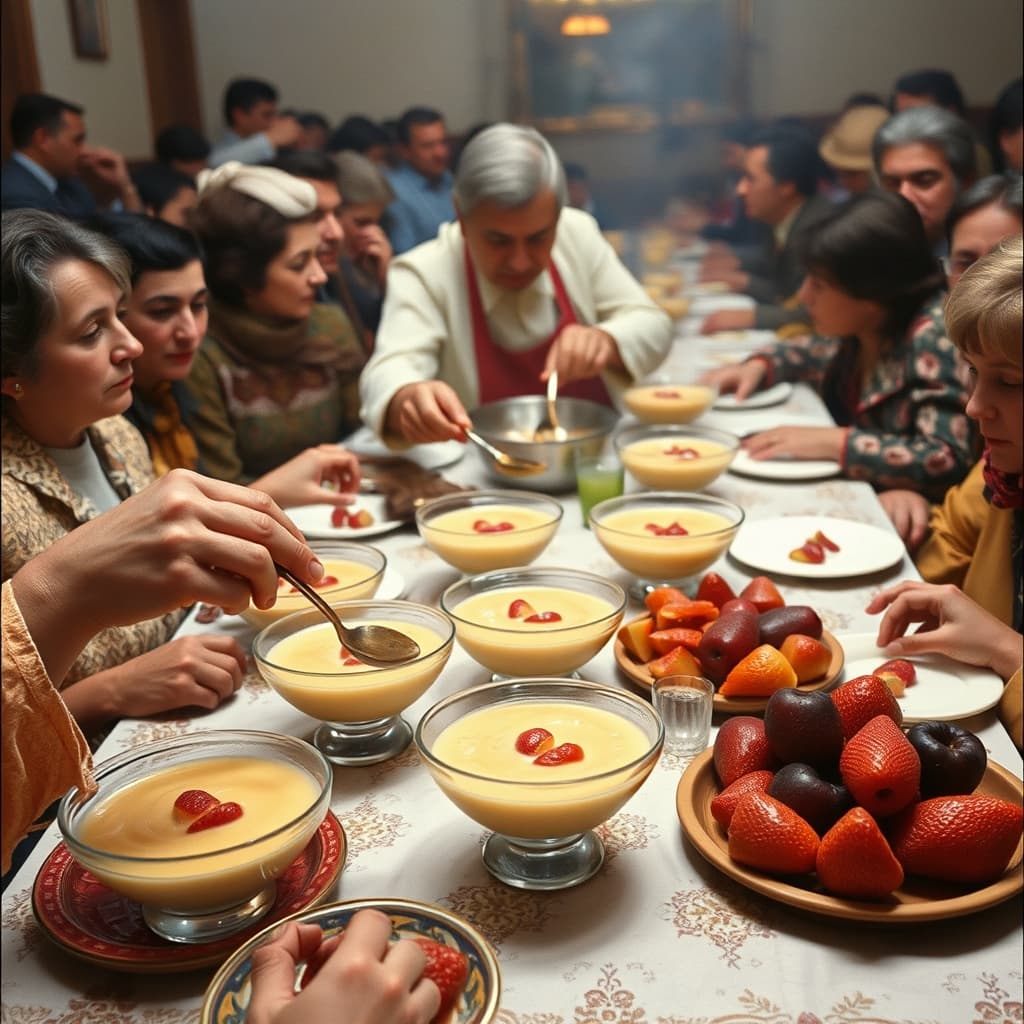
Old-style pelte could return childhood with the first cool spoonful because its texture was unmistakable: softer than a firm jelly, smoother than many puddings, and shaped by the fruit, starch, and serving dish chosen in one kitchen. At a crowded table, the dessert divided easily among bowls and offered colour after a meal without requiring an elaborate presentation.
Pelte does not identify one universal recipe. The word can describe starch-thickened preparations made with grape juice, sour cherry, apricot, mulberry, citrus, other fruit, water, sugar, or regional ingredients. Some versions are poured into bowls, others cut after setting, and related names may overlap. Ingredient list, locality, maker, date, texture, and serving custom should be recorded.
The Texture Came from Controlled Gelation
Starch granules absorb water and swell as a mixture heats, thickening the liquid. Type and amount of starch, acidity, sugar, fruit solids, temperature, stirring, and cooking time influence the final gel. Too little heat can leave a raw starch taste; excessive cooking, incorrect ratios, or prolonged holding may weaken texture. A family phrase such as cook until it looks right contains trained observation that should be translated into measurable notes where possible.
Cooks watched how the spoon moved, whether the mixture coated its back, how bubbles broke, and how a drop cooled on a plate. Those sensory cues were adjusted for the fruit and desired result. Recording weight, volume, vessel, heat source, approximate temperature, timing, yield, and cooling behaviour helps preserve the knowledge without pretending that every handful or tea glass had an identical size.
A Simple Dessert Carried Seasonal Decisions
Fresh fruit, bottled juice, pekmez, preserved pulp, or a strained cooking liquid could connect pelte to harvest and household storage. Sweetness changed with ingredient quality and family preference. Colour might come naturally from fruit, but some periods and products used added colouring or flavour. An archive should identify what is known and avoid recreating an assumed colour with unverified additives.
The recipe often belonged to a wider meal plan. A cook balanced available fruit, fuel, time, number of guests, and the need for the dessert to cool. Women commonly held this practical knowledge while also preparing savoury dishes, serving, supervising children, and cleaning. The ease of dividing pelte should not make the planning and repeated stirring disappear from the story.
Cooling and Serving Need Food-Safety Attention
Cooked starch desserts should be handled with clean utensils, poured into clean heat-safe dishes, protected from contamination, and cooled according to current food-safety guidance. A deep hot container cools slowly, while uncovered bowls can collect dust or insects. Room-temperature display time should be limited, especially when dairy, eggs, or other perishable ingredients appear in a local variation.
Hot pelte can burn, and its thick texture clings to skin. Children should be kept away from the cooking pot, and vessels need stable handles and heat-resistant placement. Glass can break through thermal shock. After cooling, storage time and refrigeration depend on the recipe. Smell and appearance cannot guarantee safety after improper handling.
Allergen information must follow the actual ingredients and shared equipment. Wheat starch contains gluten unless specifically processed and certified otherwise; corn, rice, or other starches differ. Nuts, milk, sesame, or garnishes may be added. Fruit acidity and sugar may matter to individual diets, but nostalgia does not make the dessert universally suitable or medicinal.
A Digital Nostalgia Archive can connect pelte with fruit sources, starch packets, serving bowls, spoons, handwritten recipes, harvest notes, fuel, photographs, and interviews with cooks and diners. The first bite remains powerful because material technique produced a family texture. Preserving it means keeping pleasure beside regional variation, measurable skill, women's labour, ingredient accuracy, safe cooling, allergens, and the honest limits of remembered recipes.