 Eski Pano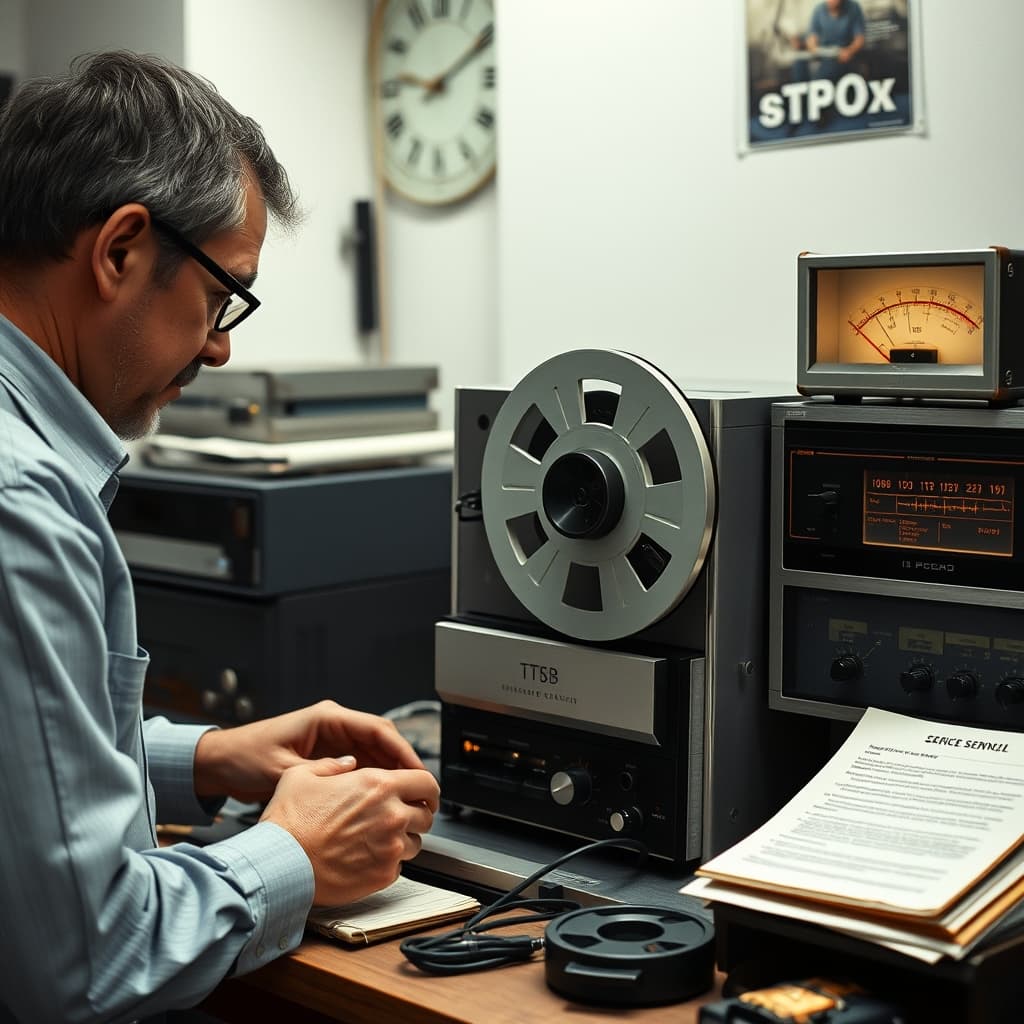
A tape recorder may need a second life not so that it can decorate a shelf, but so that one fragile recording can be heard and transferred safely. That purpose changes the repair goal. The machine does not have to become cosmetically new or suitable for daily entertainment. It must transport the correct tape steadily, reproduce its signal accurately, avoid damaging the carrier, and make every intervention traceable.
Recorders vary by reel size, track format, speed, tape width, equalisation, mono or stereo configuration, cassette type, power system, and intended use. A domestic reel machine, portable reporter's recorder, dictation unit, cassette deck, and studio transport are not interchangeable. Model, serial number, manual, head layout, connectors, accessories, and repair history should be documented before a family tape is loaded.
Mechanical Condition Comes before Sound
Belts can soften, stretch, harden, or turn to residue. Pinch rollers glaze, idlers crack, grease hardens, brakes drag, and clutches slip. These faults cause speed variation, poor winding, tape spill, edge damage, or the destructive wrapping of tape around a capstan. A technician inspects the entire path with the machine unplugged and uses expendable test media before any unique recording.
Tape guides, lifters, tension arms, heads, capstan, and roller must be clean and correctly aligned. Random solvents can attack rubber, plastic, paint, adhesives, and head laminations. Household oil migrates onto tape and attracts dust. Cleaning and lubrication should follow service information and material compatibility, with before-and-after photographs and no unnecessary polishing of historic wear.
Electrical Safety Protects People and Recordings
Old mains cords, switches, transformers, capacitors, insulation, grounding, and improvised repairs can present shock, heat, or fire risk. Applying power after decades of storage may destroy components or put dangerous voltage on a chassis. Qualified inspection, current limiting, isolation where appropriate, ventilation, and correct fusing belong ahead of nostalgic demonstration.
Audio faults can come from dirty switches, failed capacitors, corroded connectors, amplifiers, head wiring, bias circuits, or power rails. Replacing every old component without diagnosis removes evidence and may introduce errors. Archival playback requires measured performance: stable speed, channel continuity, low noise, correct equalisation, and alignment suitable for the recorded tape.
The Tape Determines the Final Alignment
Azimuth affects high-frequency clarity and phase. A recording made on a misaligned machine may reproduce best with a carefully adjusted playback head, but changing factory alignment has consequences for other tapes. Record settings, use a reversible method, and return the machine where appropriate. Multiple captures at documented settings may be safer than claiming one corrected sound.
The carrier itself may be brittle, mouldy, stretched, creased, poorly spliced, sticky, shedding, or wound unevenly. Suspected mould should be isolated and assessed in suitable facilities. Some tape formulations require specialised treatment, but internet recipes and domestic ovens can ruin unique recordings or create toxic and fire hazards. A media conservator should decide the workflow.
Capture should use appropriate converters, levels, sample format, channel mapping, monitoring, and uninterrupted storage. Preserve a high-quality master without aggressive noise reduction, then create documented listening copies. Keep machine, tape, box, labels, track sheets, leader order, repair notes, and checksums linked. A file without provenance is easier to lose or misidentify than the original box.
Voices may include people who did not consent to publication, private conversations, children, medical details, music under copyright, or culturally sensitive material. Repair permission is not automatic permission to share. Access decisions, contributor information, copyright, privacy, and takedown procedures belong in the project before a recording is placed online.
A Digital Nostalgia Archive can connect the recorder to model data, diagnostic measurements, replaced parts, test tapes, alignment settings, carrier condition, capture files, consent, and storage. The repairer's achievement is not simply making the reels turn. It is creating a controlled, documented path from fragile magnetic evidence to an accessible copy while preserving the machine, the tape, and the rights of the people whose voices return.