 Eski Pano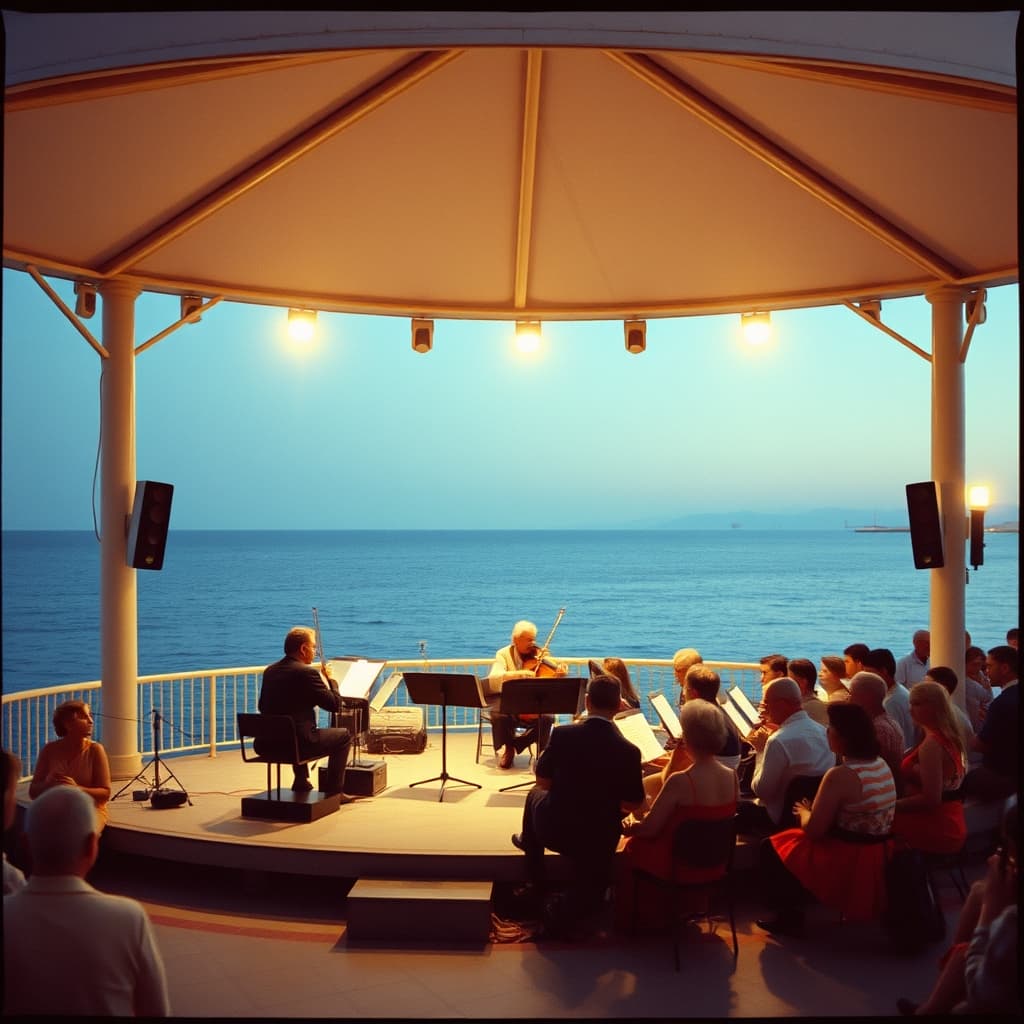
A summer orchestra beside the shore could make a holiday town feel brighter, but the music did not simply drift into existence with the evening breeze. A platform had to be prepared, instruments transported, electricity secured, repertoire rehearsed, chairs arranged, weather watched, and the return journey considered. The atmosphere remembered as effortless depended on public infrastructure and skilled work before the first note.
Seaside performances varied by city, decade, venue, sponsor, ensemble, audience, tourism economy, and political setting. A municipal band in a park, hotel orchestra on a terrace, dance group at a casino, military ensemble, and informal musicians on a promenade followed different rules. Programmes, permits, payrolls, photographs, newspapers, weather records, transport timetables, and oral histories help identify the actual event.
The Bandstand Was a Technical Workplace
Musicians needed a stable floor, adequate space, lighting, safe steps, chairs, music stands, and protection from wind. Salt air and humidity affected strings, reeds, metal, electrical contacts, and sheet music. Instruments could arrive by bus, truck, ferry, or handcart, with heavy cases carried across uneven ground. Stage crews, porters, electricians, cleaners, and organisers were part of the performance even when they remained outside photographs.
Amplified events required suitable cables, grounding, weather protection, loudspeaker placement, and electrical capacity. Improvised connections near water create shock and fire hazards. Historic equipment should not be energised for atmosphere without professional inspection. Modern reenactments need current electrical, structural, emergency, and accessibility standards rather than a visual copy of an old platform.
Weather and Sound Shaped the Audience Area
Wind carried sound unevenly and could lift stands or scatter pages. Humidity, sudden rain, extreme heat, cold, and sea spray affected performers and listeners. Organisers needed forecasts, shelter, drinking water, secure equipment, evacuation plans, and clear cancellation decisions. Thunder and lightning require professional safety procedures; nostalgia is not a reason to continue an unsafe show.
Open-air sound reached people who had not chosen to attend. Residents, hotel workers, babies, shift workers, hospitals, wildlife, and other businesses shared the acoustic space. Volume, bass, duration, orientation, and finish time mattered. A lively promenade can coexist with the right to rest only through measured sound, permitted hours, communication, and complaint procedures.
Repertoire Was Also a Public Decision
Dance music, popular songs, marches, folk arrangements, operetta, jazz, and requests could serve different audiences. Sponsors, authorities, musicians, censorship, copyright, available arrangements, and commercial expectation shaped the programme. A crowd's applause does not prove everyone shared the same taste or political meaning. Surviving set lists should be read alongside who was permitted to perform and whose music was absent.
Musicians' labour included rehearsal, travel, tuning, costume, waiting, performance, packing, and late-night return. Seasonal work could be irregular and insecure. Women, minority musicians, local performers, and hired professionals might receive different visibility or pay. Archival captions should name players when evidence allows and avoid describing paid expertise as merely spontaneous entertainment.
Crowd access required clear routes, seating choices, step-free areas, toilets, lighting, safe edges near water, child supervision, first aid, and transport after the final piece. Informal standing crowds can block promenades, tactile paths, emergency vehicles, or workers. The walk home remembered fondly depended on streetlights, ferries, buses, taxis, and the labour of people operating them after dark.
A Digital Nostalgia Archive can connect an orchestra photograph with venue plans, permits, electrical diagrams, weather, programmes, contracts, payrolls, sound complaints, transport, and the names of performers and crew. The night looked brighter because a civic system made music possible in public. Preserving its holiday spirit means hearing melody beside labour, infrastructure, unequal access, artistic control, weather risk, neighbourhood quiet, and the practical route that brought everyone safely home.