Eski Pano
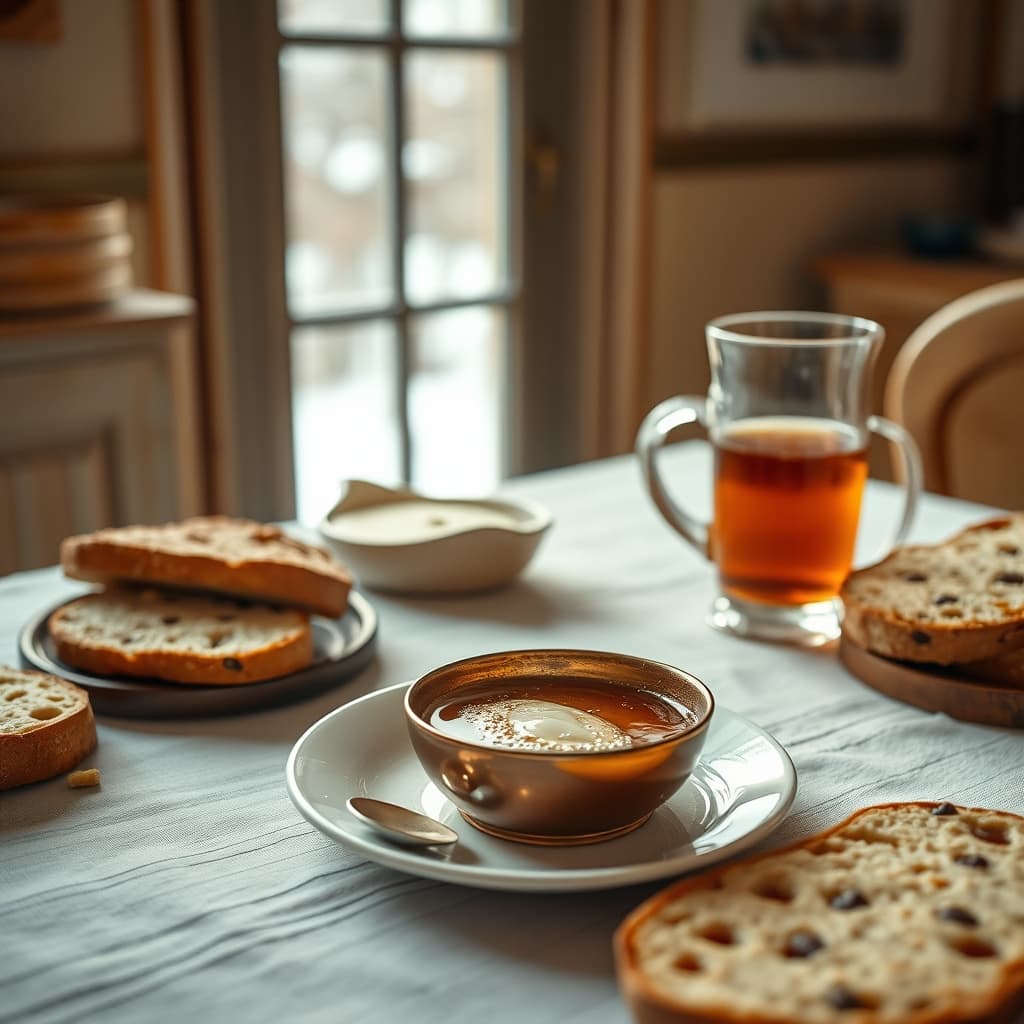
In some homes, when one entered the kitchen in the morning, there was an image as familiar as the hiss of toast or the steam of tea: tahini and molasses slowly being mixed together in a small bowl. With each turn of the spoon, dark brown and pale gold drew closer, first appearing streaked, then becoming a silky whole. This simple preparation may not have been the showiest element of breakfast, but it was one of its deepest-rooted habits. Breakfast with tahini and molasses belonged to old kitchen culture as something nourishing, comforting, and almost seasonal in its sense of balance.
From the perspective of culinary memory, the pairing of tahini and molasses represents more than flavor. It reflects a way of thinking in the kitchen. It was prepared to warm the body on winter mornings, keep a child full before school, sustain an adult through long work hours, or support recovery after illness. For that reason, the mixture was less a spread than a small domestic formula passed down between generations. Which molasses was thicker, how fluid the tahini should be, what consistency suited bread best: these choices followed each household’s own kitchen discipline, and nearly every family remembered the proportions a little differently.
Part of its power to recall forgotten kitchen habits lies in the slowness and simplicity of its preparation. Before packaged spreads and speed-driven breakfast culture, this mixture required a small but deliberate act in the kitchen. Choosing the bowl, hearing the spoon against it, waiting for the texture to even out, and thinking of it alongside fresh bread, sometimes walnuts, sometimes warm milk or tea, all turned breakfast into more than feeding. It became domestic order. Old kitchen culture often survives precisely in such simple but attentive preparations.
One of the strongest aspects of this breakfast is how carefully it attends to the relation between season and body. On cold days, tahini and molasses functioned as a balancing food long before nutritional charts or wellness advice. It was made so a child would not feel cold, so appetite would return, so morning heaviness would lift. Sometimes it belonged to convalescence, sometimes to school mornings. That is why its taste remains not only on the tongue, but in the feeling of being cared for. In many homes, a bowl of tahini and molasses was the quiet equivalent of saying, “May this do you good.”
It also keeps old kitchen culture alive because it preserves memory of local ingredients. Tahini from ground sesame and molasses boiled from grapes or carob arrived at the breakfast table as two concentrated products of Anatolian food knowledge. Their meeting on the table sustained not only a delicious blend, but a food culture tied to land, crop, labor, and season. Amid the standardized tastes of supermarket shelves, tahini with molasses remains a breakfast element whose origins are not forgotten.
Today the habit survives in some homes, but elsewhere it is remembered almost as a nostalgic relic. Yet its value lies not only in belonging to the past. It still offers practical kitchen wisdom for the present. It is easy to prepare, modest in ingredients, and emotionally resonant. When it returns to the table, one revives not merely an old taste, but a slower and more careful form of breakfast.
In the end, breakfast with tahini and molasses recalls forgotten kitchen habits while keeping old culinary culture alive because it contains preparation rather than haste, balance rather than display, and care rather than mere consumption. Mixed in a copper or ceramic bowl, this taste continues to remind us of morning quiet, trust in the kitchen, and the great cultural memory carried by simple things set on the table.
Breakfast with Tahini and Molasses: How Does It Recall Forgotten Kitchen Habits and Keep Old Culinary Culture Alive?