Eski Pano
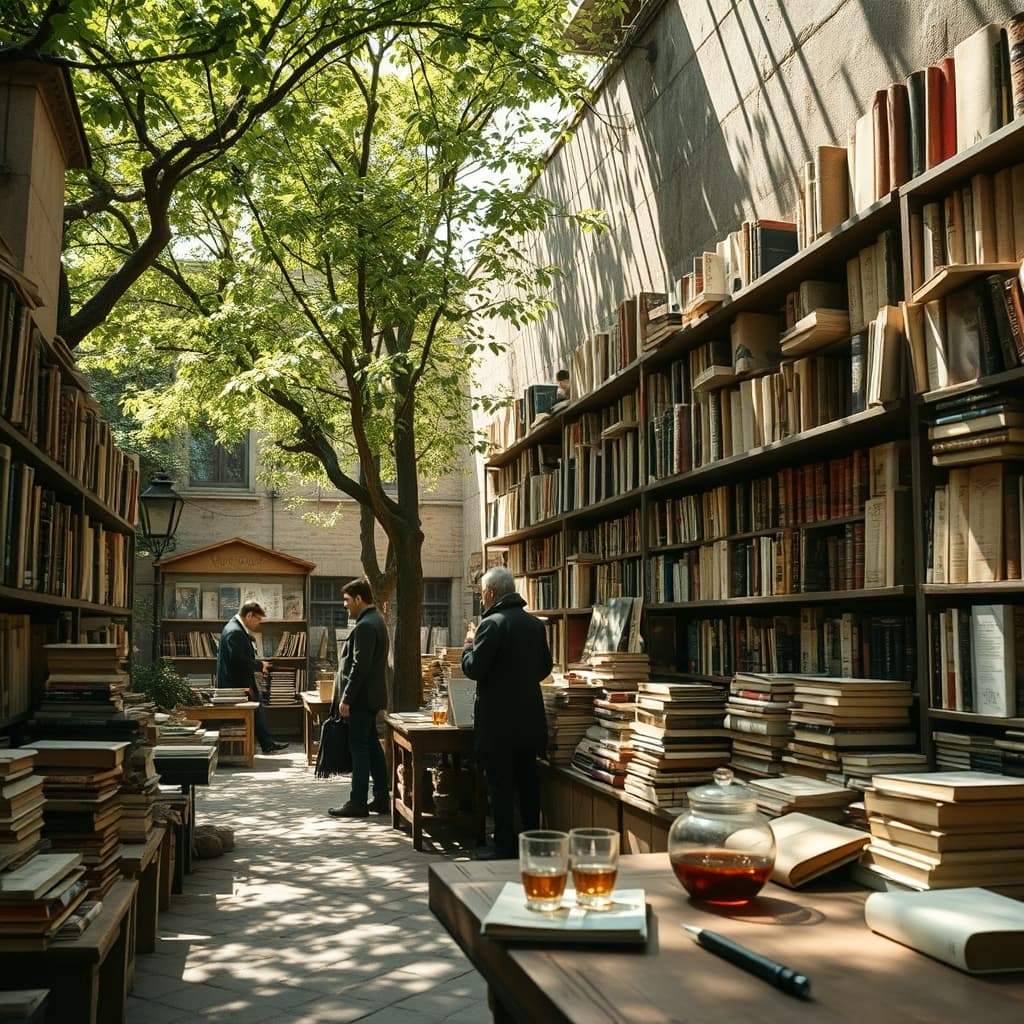
When the afternoon sun tilted between apartment blocks, time slowed at the narrow street leading into the secondhand book bazaar. Yellowing covers, stacked journals, and worn encyclopedias looked less like merchandise than open shelves of memory. At that hour, the market carried not only the smell of old paper but also the scent of linden drifting from nearby gardens. When those two fragrances mixed, one felt not merely like a browser of books, but like a walker entering the past. City noise stayed a few streets away, voices softened among the stalls, and the turning of pages became a kind of afternoon music.
Seen through the lens of historical memory, such bazaars were never only places where books were bought. They were civilian archives of everyday life. A dried flower inside a volume, a half-finished note, an old tram ticket, or the signature of an unknown student revealed small lives absent from official records. That is why visitors rarely searched only for a specific title. They searched for the sound of an era, the shadow of an old house, perhaps even a feeling once known in childhood and then misplaced. The object sought was often larger than the item on the shelf.
It was no accident that these markets gathered curious souls. Secondhand book culture belonged not to impatient consumption but to lingering. People wandered not simply to buy, but to hold a book, inspect its cover, read the inscription on the first page, pause at the publication date, return it to the shelf, and discover something even older nearby. Shopkeepers served as caretakers of memory. “This early edition is hard to find,” “the next issues of that journal arrived last week,” “readers who like this usually love urban memoirs too.” Such sentences did not open a sales pitch; they opened cultural conversation.
That is also why the image of gardens turning into linden scent remains so vivid. In many cities, book bazaars stood beside courtyards, old inns, and shaded passages. While reaching for a volume, one also heard the wind carrying blossom perfume, the faint clink of a teaspoon from a tea stall, the quiet detail of a bicycle leaning against a wall or a curtain moving in a window. Memory binds these details into one light. Looking back, the past appears brighter not only because it was beautiful, but because it was stored together with place, scent, and sound.
Those afternoons were also hours when slow thinking was still possible in the city. Newspaper columns might have been occupied with current debates, yet the shelves of the bazaar held voices from ten years earlier, twenty years earlier, sometimes from a forgotten century. A student, a retired teacher, a collector of records, or someone entering simply to cool down could all touch another era on the same shelf. That democratic intimacy made the secondhand book market one of the warmest public spaces of cultural memory.
Digital catalogues have made searching easier today, but ease does not preserve the same magic of accident. The true value of the bazaar lived in unintended encounters: finding a cover remembered from childhood while looking for something else, thinking for days about a book one never bought, walking home with the ache of “I should have taken that one too.” People often remembered not the item they purchased, but the possibilities they moved among.
If those afternoons appear brighter in memory now, it may be because they belonged to a rhythm that did not consume everything at once. Secondhand book bazaars taught curiosity through patience. Linden-scented gardens, worn pages, low conversations, and the walk home with a few books under one arm quietly formed a cultural inheritance. That inheritance survives because anyone touching the cover of an old book is also testing whether one unlost afternoon is still there.
In Those Old Hours That Revealed the Spirit of the Era, When Secondhand Book Bazaars Gathered Curious Souls in the Afternoon: Why Do Gardens Turning into the Scent of Linden Appear Brighter in Memory?