 Eski Pano
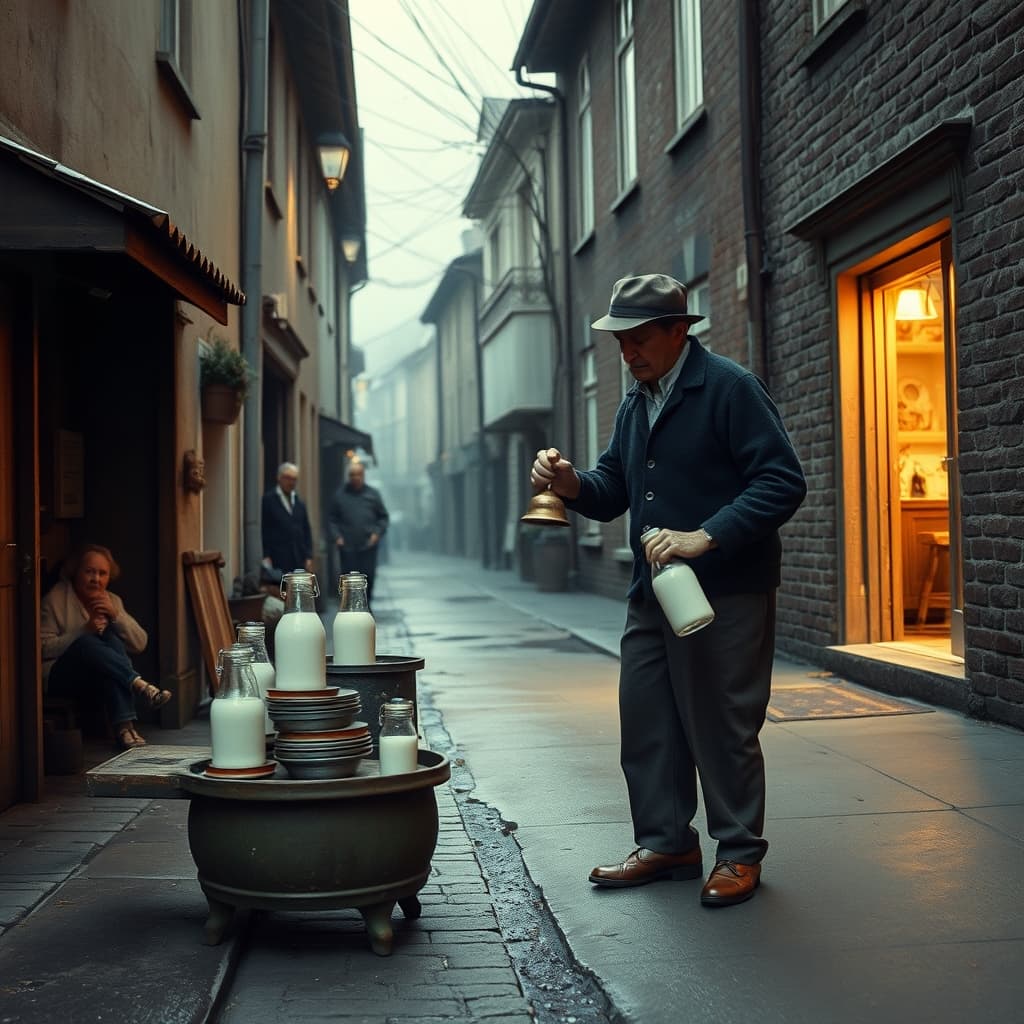
In old neighborhoods, what truly announced the beginning of morning was often not the clock, but a sound. Before the sun had fully climbed across the walls, a thin bell from the street would touch courtyards, stairwells, and kitchen windows at the same time. The milkman had arrived. Copper containers, enamel bowls, or glass bottles left near the door were gathered in haste, and slippered footsteps crossed apartment floors all at once. In some homes children raced to be the first to hear that bell. In others, grandmothers opened the window before it even rang. The milkman's bell was never only a call to buy. It told the neighborhood that preparation for the day had begun, that people would see one another, and that the feeling of a fresh morning had entered the street.
Within neighborhood culture, the milkman was one of the most familiar figures of old city life. Milk was not merely food; it was a daily trust delivered into the home. People knew which milkman came earliest, where he grazed his animals beyond the city edge, whose measure was generous, and opened their doors accordingly. This transaction did not resemble the anonymous purchase of a product from a supermarket shelf. The milkman's face was recognized, his voice memorized, and often the children in a household knew his name. The neighbor asking whether today's milk had more cream and the aunt requesting "a little extra" created the first small negotiation of the day. In that sense, the milkman represented one of the warmest links in the local economy.
What made the scene feel warm was not only the steam of fresh milk, but the everyday human picture that formed around it. Mothers throwing a cardigan over their pajamas, children running to the door with bowls in hand, neighbors meeting in the entrance and wishing one another good morning all fit into a movement lasting only a few minutes. Sometimes the milkman lingered, asking after one family's sick relative or hearing news about another family's wedding in their hometown. On winter mornings breath turned to mist in the cold, while in summer the smell of fresh milk mingled with the coolness of recently watered pavements. His arrival was therefore not just a delivery. It was a brief but concentrated gathering in which the neighborhood confirmed one another's presence before the day fully began.
When one looks back now, part of the reason that morning bell remains so warm in memory is the way it gently connected indoor life with the street. That sound included both the saucepan in the kitchen and the shoe marks outside within the same story. Once the milk entered the house, cream would gather on top, children's lips would carry traces of it at breakfast, yogurt would be cultured, and puddings would be made. The relationship that began at the door continued at the table. Like many old neighborhood trades, the milkman delivered more than a product. He brought rhythm, trust, and a recurring intimacy.
That is precisely what made the milkman's bell one of the warmest scenes in old neighborhoods. Its small sound rebuilt the threshold between home and street each morning, made neighborliness visible, and reminded everyone that the area around them was alive. To remember it longingly now, in the silence of pasteurized cartons, is not only to miss an old product. It is to miss an old form of relationship. Some sounds of the city did more than wake people up. They gently placed them back into the place to which they belonged.
Why the Milkman’s Morning Bell Was the Warmest Scene of Old Neighborhoods at the Very Heart of Old City Life